

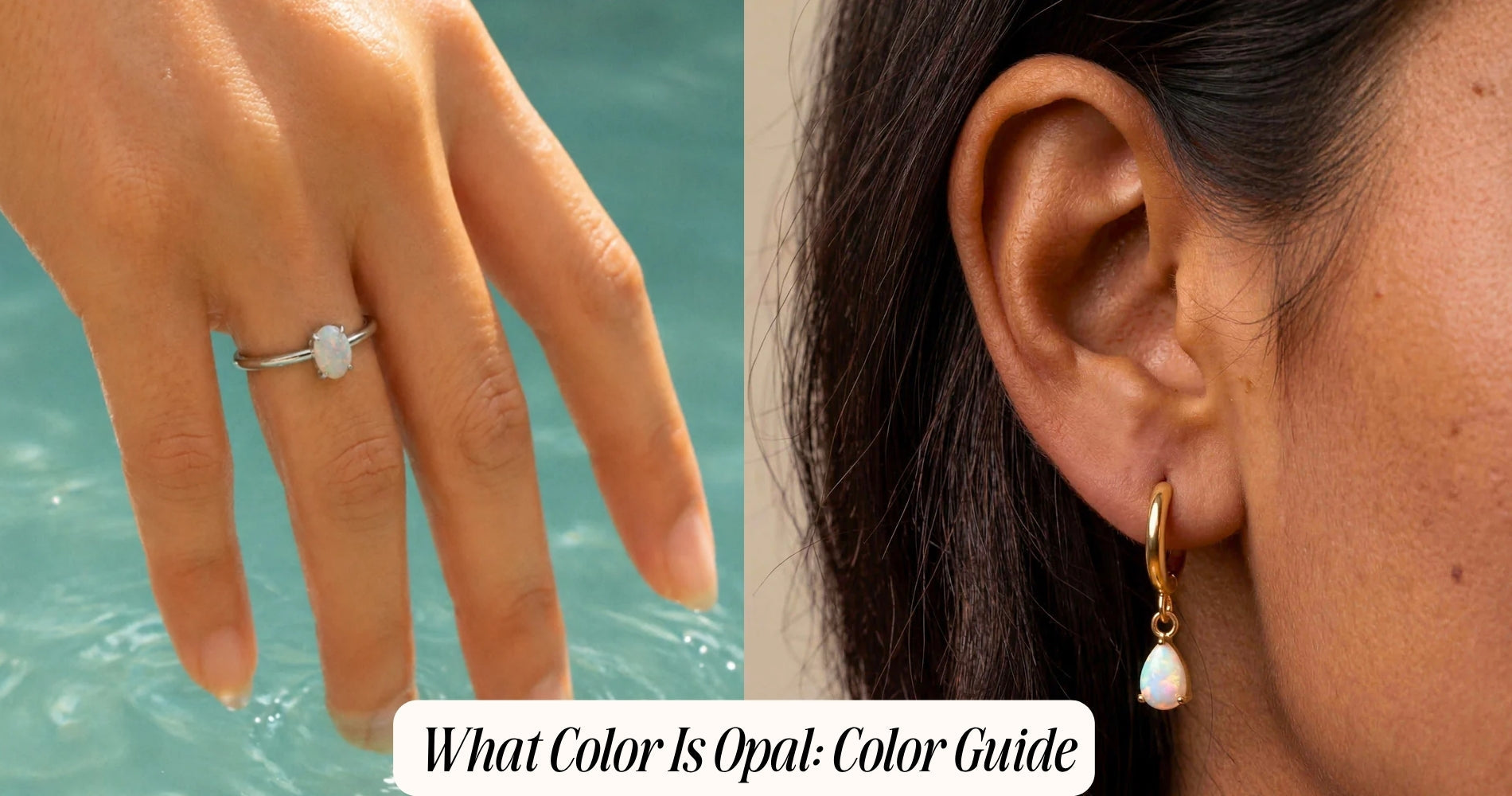
What Color Is Opal: Color Guide
Few gemstones spark as much curiosity as opal, mostly because there is no single answer to what color is opal. Unlike a sapphire, which is almost always thought of as blue, or an emerald, which is defined by its green hue, opal comes in an enormous range of colors and patterns that can shift and shimmer depending on the angle of light. If you are drawn to this one of a kind gemstone, our Stone Collection features a variety of opal pieces that showcase just how varied and beautiful this stone can be.
In this guide, we will explore the many colors opal can display, what causes its famous play of color, and how to choose the right type of opal for your personal style.
Why Opal Does Not Have Just One Color
Most gemstones get their color from specific mineral impurities within a fixed crystal structure, which is why a ruby is always red and a topaz is typically yellow, blue, or clear. Opal is different because it is not a crystal at all. It is made of tiny silica spheres arranged in a pattern, with water trapped between them.
This unusual structure means opal's color depends heavily on the size, arrangement, and spacing of these silica spheres, along with the base material the opal formed within. As a result, opal can occur in nearly every color of the rainbow, and many pieces display multiple colors within a single stone.

The Base Colors of Opal
While opal can display a rainbow of colors, gemologists typically categorize opal by its base body color, which serves as the backdrop for any additional color play.
White or light opal: Features a pale, milky background, often white, cream, or light gray, with flashes of color appearing across the surface.
Black opal: Has a dark background, ranging from deep gray to true black, which makes any color play appear especially vivid and dramatic. Black opal is considered one of the rarest and most valuable types.
Fire opal: Known for its warm, transparent to translucent orange, red, or yellow body color, often without the flashing color play seen in other opal types.
Boulder opal: Forms within ironstone, resulting in a brown or reddish background with veins of color running through the stone.
Crystal or water opal: Nearly transparent or semi transparent, allowing color play to appear as though it is floating within the stone itself.
Each of these base types can then display additional flashes of color across their surface, which is where things get even more interesting.

What Causes Opal's Play of Color
The shimmering, rainbow like effect seen in many opals is called play of color, and it is one of the most prized qualities in the gemstone. This effect happens when light passes through and diffracts off the tiny silica spheres inside the stone, splitting into different wavelengths and creating flashes of color that shift as the stone moves.
The size of the silica spheres determines which colors appear. Smaller spheres tend to produce blue and violet flashes, while larger spheres can produce the full spectrum, including reds and oranges, which are generally considered the rarest and most valuable colors to see in play of color opals.
Not all opals display this effect. Common opal, sometimes called potch, lacks the uniform structure needed to create play of color and instead appears as a single, solid color without any shimmer.

Common Opal Colors and What They Mean
Beyond base color and play of color, opal is often associated with specific meanings tied to its dominant hues.
Blue and green opal: Often associated with calm, clarity, and emotional balance, similar to the symbolism of other blue and green toned gemstones.
Pink opal: Frequently linked to compassion, comfort, and emotional healing, making it a popular choice for sentimental jewelry.
Fire opal: Associated with passion, energy, and confidence, fitting for its warm, vibrant coloring.
Black opal: Often tied to protection, mystery, and transformation, partly due to its rarity and striking visual depth.
While these meanings are largely symbolic rather than scientific, they add another layer of appeal for people choosing opal based on more than just its appearance.
Where Different Opal Colors Are Found
Opal is mined in several locations around the world, and geography plays a major role in which colors are most commonly associated with a given region.
Australia is the source of the majority of the world's opal, including most black opal and boulder opal, thanks to its unique geological conditions. Mexico is well known for producing fire opal, prized for its transparent orange and red tones. Ethiopia has become a significant source of opal in recent years, often producing vibrant play of color stones with a lighter, more translucent body.
Each region's geological conditions influence not just the color, but the overall structure and clarity of the opal produced there.

How to Choose an Opal Based on Color
When shopping for opal jewelry, personal preference plays a major role, but a few factors can help guide your decision. If you want a dramatic, eye catching piece, black opal with strong play of color offers striking contrast and depth. If you prefer something soft and versatile, white or crystal opal provides a delicate shimmer that pairs well with a wide range of outfits and skin tones. If you love warm, saturated color, fire opal delivers a bold, sunset like glow without needing strong play of color to stand out.
Considering how often you plan to wear the piece is also worth factoring in, since some opal types are more suited to occasional wear due to their softer, more delicate structure.
Caring for Opal Jewelry
Opal contains trapped water within its structure, which makes it more delicate than many other gemstones. Avoid exposing opal to extreme temperature changes, harsh chemicals, or prolonged direct sunlight, since these can cause the stone to crack or lose moisture over time. Clean opal gently with a soft, damp cloth rather than soaking it, and store it separately from harder stones to prevent scratching.
With proper care, opal jewelry can last for many years while maintaining its color and shine, making it a rewarding addition to any collection despite its more delicate nature.

Final Thoughts
So, what color is opal? The honest answer is that it depends entirely on the individual stone. Opal can range from milky white to deep black, warm orange to cool blue, and everything in between, often displaying several colors within a single piece thanks to its unique internal structure. This variety is exactly what makes opal such a beloved and endlessly fascinating gemstone.
Whether you are drawn to the dramatic depth of black opal, the warm glow of fire opal, or the soft shimmer of white opal, there is a shade and style to suit nearly every taste.
Frequently Asked Questions
1. What color is opal most commonly found in? White or light opal is the most common type, featuring a pale background with flashes of color across the surface.
2. What is the rarest opal color? Black opal is considered the rarest and most valuable, especially when it displays strong red and orange play of color against its dark background.
3. Why does opal show multiple colors at once? This effect, called play of color, is caused by light diffracting off tiny silica spheres inside the stone, splitting into different colors depending on their size and arrangement.
4. Is fire opal the same as other opal types? No, fire opal typically has a warm, transparent orange or red body color and often lacks the shimmering play of color seen in other opal varieties.
5. Where does most opal come from? Australia produces the majority of the world's opal, including most black and boulder opal, while Mexico is known for fire opal and Ethiopia for vibrant, translucent stones.









Leave a comment
This site is protected by hCaptcha and the hCaptcha Privacy Policy and Terms of Service apply.