

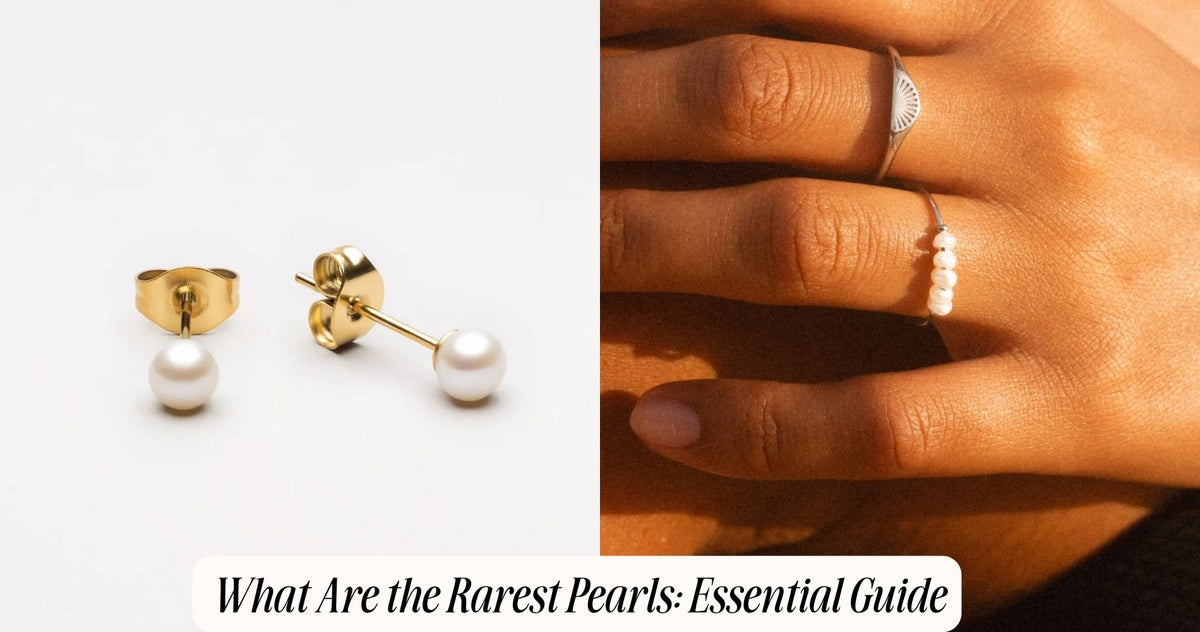
What Are the Rarest Pearls: Essential Guide
When most people picture a pearl, they imagine a classic round, white gem strung into a strand. But the rarest pearls in the world look nothing like that familiar image. Some come from sea snails rather than oysters, lack the layered nacre structure typically associated with pearls altogether, and appear in colors ranging from fiery orange to deep lavender. Understanding what are the rarest pearls reveals an entirely different, far less familiar side of the pearl world, one governed almost entirely by chance rather than farming.
In this guide, we will explore the pearls widely recognized as the rarest on earth, what makes each one so difficult to find, and why they command such extraordinary prices among collectors. If you love pearls in their more classic, accessible form, our Freshwater Pearls Jewelry collection offers genuine pieces worth exploring alongside these rarer treasures.
What Are the Rarest Pearls
The rarest pearls in the world are widely considered to be melo pearls, conch pearls, and abalone pearls, all of which are entirely natural, cannot be commercially cultured, and form in mollusks other than the pearl oysters most people associate with pearl production. Unlike Akoya, freshwater, South Sea, or Tahitian pearls, which are cultivated on farms using established, repeatable techniques, these rarer varieties can only occur by chance in the wild, making every single example a genuine one of a kind find.

Melo Pearls: Often Called the Rarest of All
Melo pearls are frequently cited by gemological sources and publications as the single rarest pearl variety in the world. They form not in an oyster, but inside a large marine sea snail known as melo melo, or the Volutidae, found primarily in the South China Sea and the Andaman Sea, with especially prized examples originating from the waters off Vietnam, Myanmar, and Thailand.
Why Melo Pearls Are So Rare
Melo pearls form in only a tiny fraction of the sea snails that could theoretically produce them, with estimates suggesting roughly one in several thousand of these snails ever yields a pearl at all. Because these snails cannot be farmed the way oysters can, every melo pearl is entirely wild and natural, discovered purely by chance rather than through any deliberate cultivation effort.
What Melo Pearls Look Like
Melo pearls are non nacreous, meaning they lack the layered nacre structure that gives traditional pearls their iridescent shimmer. Instead, they display a distinctive porcelain like surface, often marked with subtle flame like patterns, in colors ranging from pale tan and yellow to a deeply saturated, highly prized orange. The most valuable melo pearls display a pure, uniform, intensely orange color with minimal surface marbling.
A Note on Care
Melo pearls are notably sensitive to sunlight, with prolonged exposure known to cause their prized color to fade over time, making thoughtful storage away from direct light particularly important for anyone fortunate enough to own one.
Conch Pearls: A Flame Inside a Shell
Conch pearls form inside the queen conch, a large edible sea snail found throughout the Caribbean Sea, including waters off the Bahamas and into the Gulf of Mexico. Like melo pearls, they are non nacreous and entirely natural, discovered only by chance during conch harvesting rather than through any deliberate pearl cultivation process.
Why Conch Pearls Are So Rare
Estimates suggest that only about one in every 10,000 to 20,000 conch shells contains a pearl at all, and of those, less than 10 percent are of high enough quality to be used in fine jewelry. This combination of rarity within an already rare occurrence makes conch pearls exceptionally difficult to source, and conservation regulations affecting queen conch harvesting in some regions have further limited supply since the early 1990s.
What Conch Pearls Look Like
Conch pearls typically display soft, warm colors ranging from pale cream to peach and, most famously, a delicate pastel pink. Their defining visual feature is a distinctive flame like structure, a shimmering, silky play of light across the surface that shifts and moves as the pearl is turned, a striking effect entirely different from the reflective luster seen in nacreous pearls. The finest examples display a deep, saturated pink color paired with strong, clearly visible flame structure.
Abalone Pearls: Nature's Most Colorful Pearl
Abalone pearls form inside abalone, a marine gastropod prized separately for the vividly iridescent mother of pearl lining its shell. Found in coastal waters around the world, including notably productive populations off New Zealand, where abalone is known locally as paua, these pearls are treasured for offering some of the most vibrant, multicolored displays found in any pearl variety.
Why Abalone Pearls Are So Rare
Abalone pearls require an especially long development period, often eight to ten years, to form to a usable size. Because most abalone are harvested for food well before reaching this age, only a small fraction ever have the opportunity to develop a pearl at all, and like melo and conch pearls, abalone pearls cannot be reliably cultured on a commercial scale.
What Abalone Pearls Look Like
Abalone pearls display a strikingly iridescent surface, often shifting between blues, greens, and purples depending on the angle and lighting, mirroring the same vivid coloring found in abalone shell itself. Their shapes tend to be irregular rather than round, since they typically form along the shell's interior rather than as a freestanding, symmetrical object, giving each abalone pearl a genuinely unique, organic silhouette.
Giant Clam Pearls: An Even Rarer Curiosity
Beyond melo, conch, and abalone pearls, giant clam pearls represent an even more obscure category, forming inside giant clams and valued for their unusual, porcelain like white surface. These pearls are exceptionally uncommon even relative to other rare varieties, and their scarcity has made them a particular curiosity among serious pearl collectors specifically seeking the most unusual specimens available.
Why These Pearls Cannot Be Cultured
Cultured pearl farming, used for Akoya, freshwater, South Sea, and Tahitian pearls, relies on deliberately inserting an irritant into a mollusk to trigger nacre production in a controlled, repeatable way. Melo, conch, and abalone pearls form through entirely different biological processes that have not been successfully replicated through commercial cultivation techniques, meaning every single example of these rare pearls sold today came from a wild mollusk discovered purely by chance, typically during unrelated fishing or harvesting activity.
This complete reliance on chance, rather than deliberate farming, is the fundamental reason these particular pearls remain so much rarer than the cultured varieties most commonly seen in jewelry stores.

How Rare Pearls Are Valued and Priced
Because melo, conch, and abalone pearls cannot be reliably supplied through farming, their pricing follows a different logic than cultured pearls, more closely resembling how rare colored gemstones or fine art are valued. Individual pearls are typically priced based on size, color saturation, and the strength of their signature surface characteristics, such as a conch pearl's flame structure or a melo pearl's uniform orange coloring, with exceptional examples reaching tens of thousands of dollars or more for a single stone.
Because these pearls rarely occur in matching pairs or sets, they are most commonly featured as singular centerpiece stones in one of a kind jewelry designs rather than assembled into uniform strands the way cultured pearls typically are.
Are Rare Pearls Worth Seeking Out
For most jewelry lovers, cultured pearls like Akoya, freshwater, South Sea, and Tahitian varieties remain the most practical and accessible way to enjoy genuine pearl jewelry. Melo, conch, and abalone pearls occupy a different space entirely, appealing primarily to serious collectors and those seeking a truly singular, one of a kind piece rather than a classic, everyday pearl staple. Their extraordinary rarity and price point place them firmly outside the range most people consider for regular jewelry purchases, though their unusual beauty makes them fascinating to learn about regardless.

Final Thoughts
So, what are the rarest pearls in the world? Melo, conch, and abalone pearls stand apart from familiar cultured varieties, forming entirely by chance in sea snails and other mollusks that cannot be commercially farmed the way oysters can. Their striking, unconventional appearances, from melo's fiery orange glow to conch's flame patterned pink and abalone's iridescent rainbow hues, reflect just how much variation exists within the broader pearl world beyond the classic white strand most people picture first.
Whatever pearls you are personally drawn to, understanding just how rare some varieties truly are adds a deeper appreciation for the more accessible, beautifully consistent cultured pearls found in everyday jewelry.
Frequently Asked Questions
1. What is considered the rarest pearl in the world?
Melo pearls are widely regarded as the rarest, forming in only a small fraction of the sea snails capable of producing them and unable to be commercially cultured.
2. Why can't conch, melo, and abalone pearls be farmed like other pearls?
These pearls form through biological processes that have not been successfully replicated through deliberate cultivation techniques, meaning every example comes from a wild mollusk found purely by chance.
3. What makes conch pearls visually distinct from other pearls?
Conch pearls display a unique flame like structure, a shimmering, silky play of light across the surface, rather than the reflective luster typical of nacreous pearls.
4. Are rare pearls like melo or abalone a practical choice for everyday jewelry?
Not typically, since their extreme rarity and high price point place them in a collector focused category, while cultured pearls remain the more practical, accessible choice for everyday wear.









Leave a comment
This site is protected by hCaptcha and the hCaptcha Privacy Policy and Terms of Service apply.