

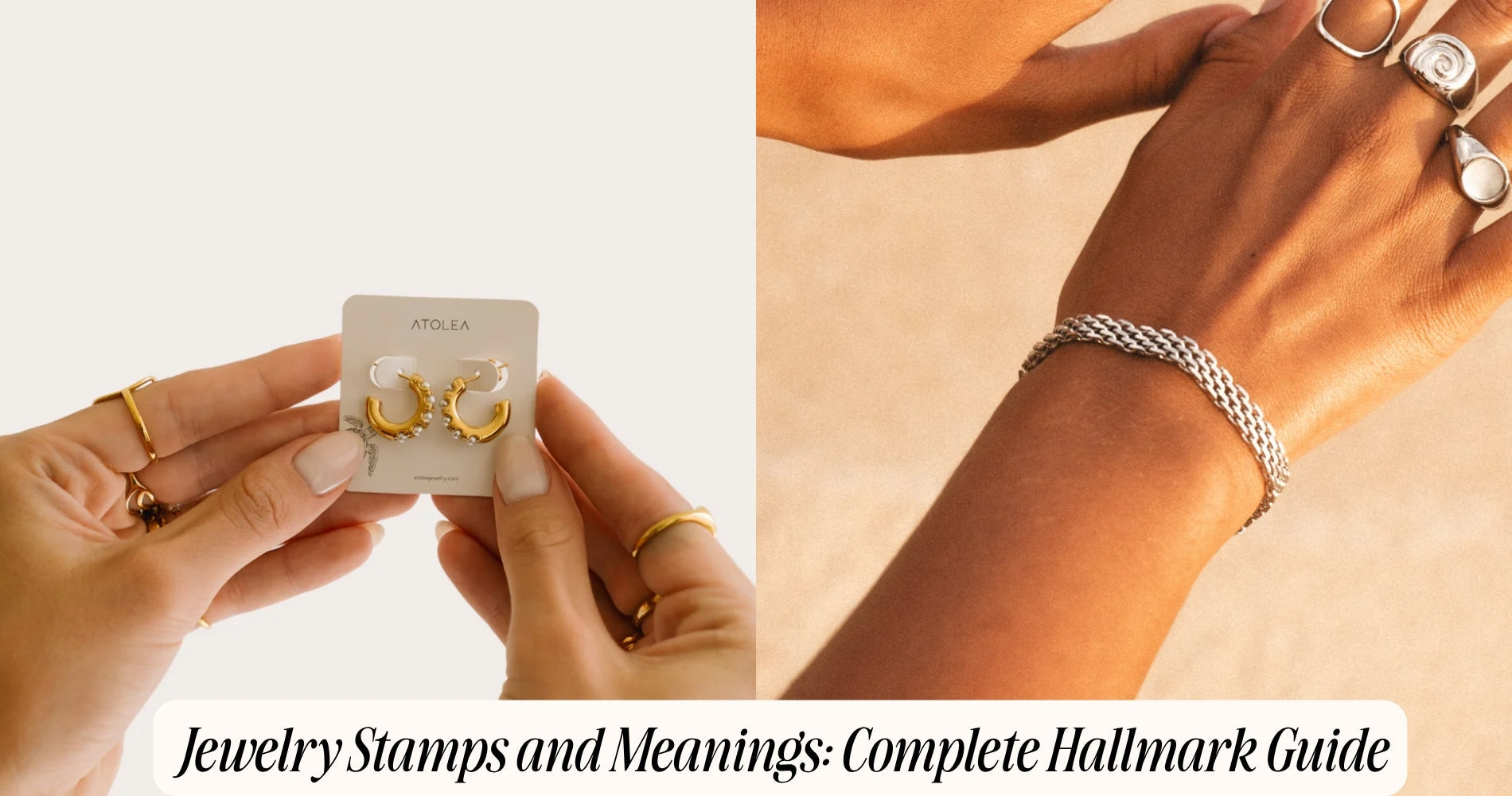
Jewelry Stamps and Meanings: Complete Hallmark Guide
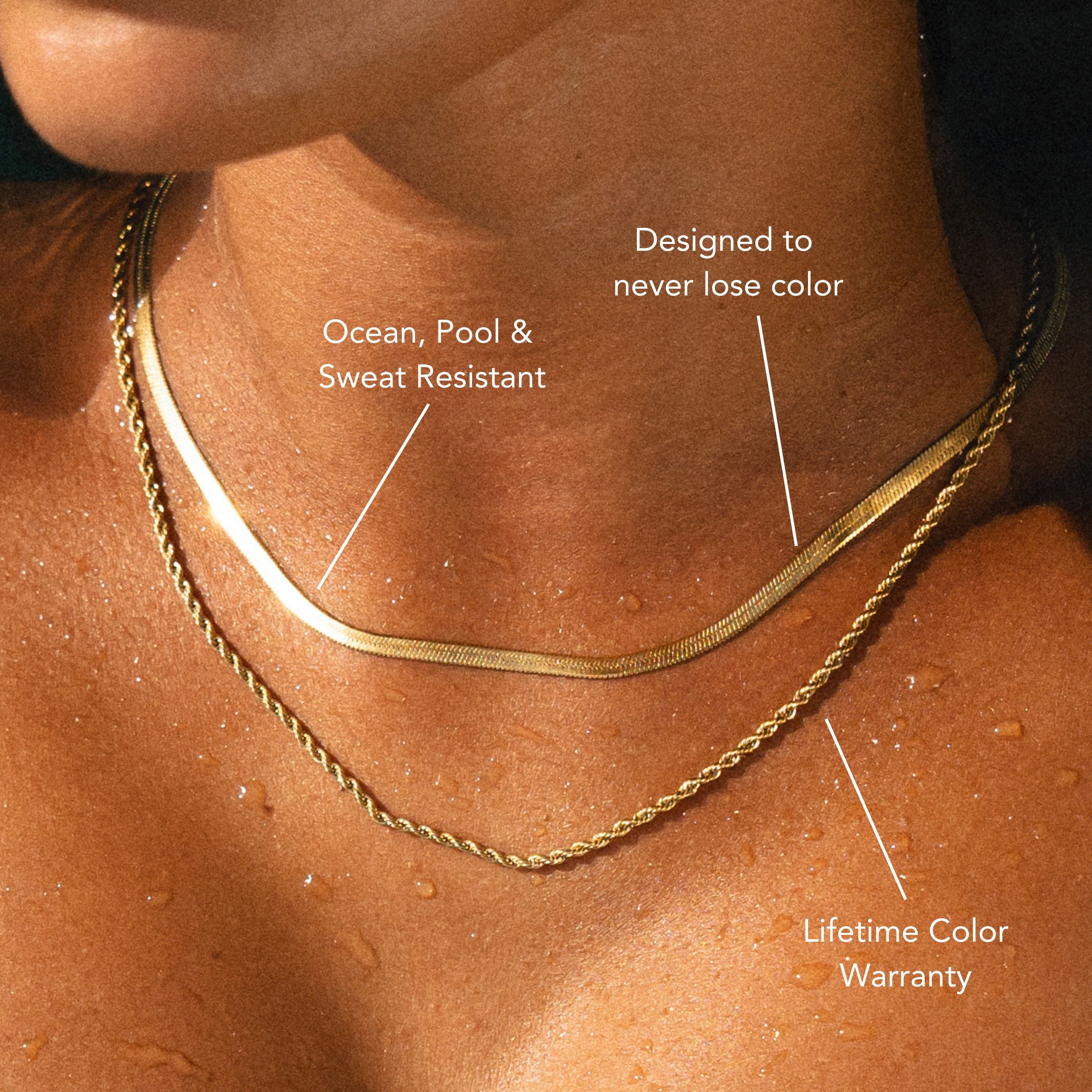
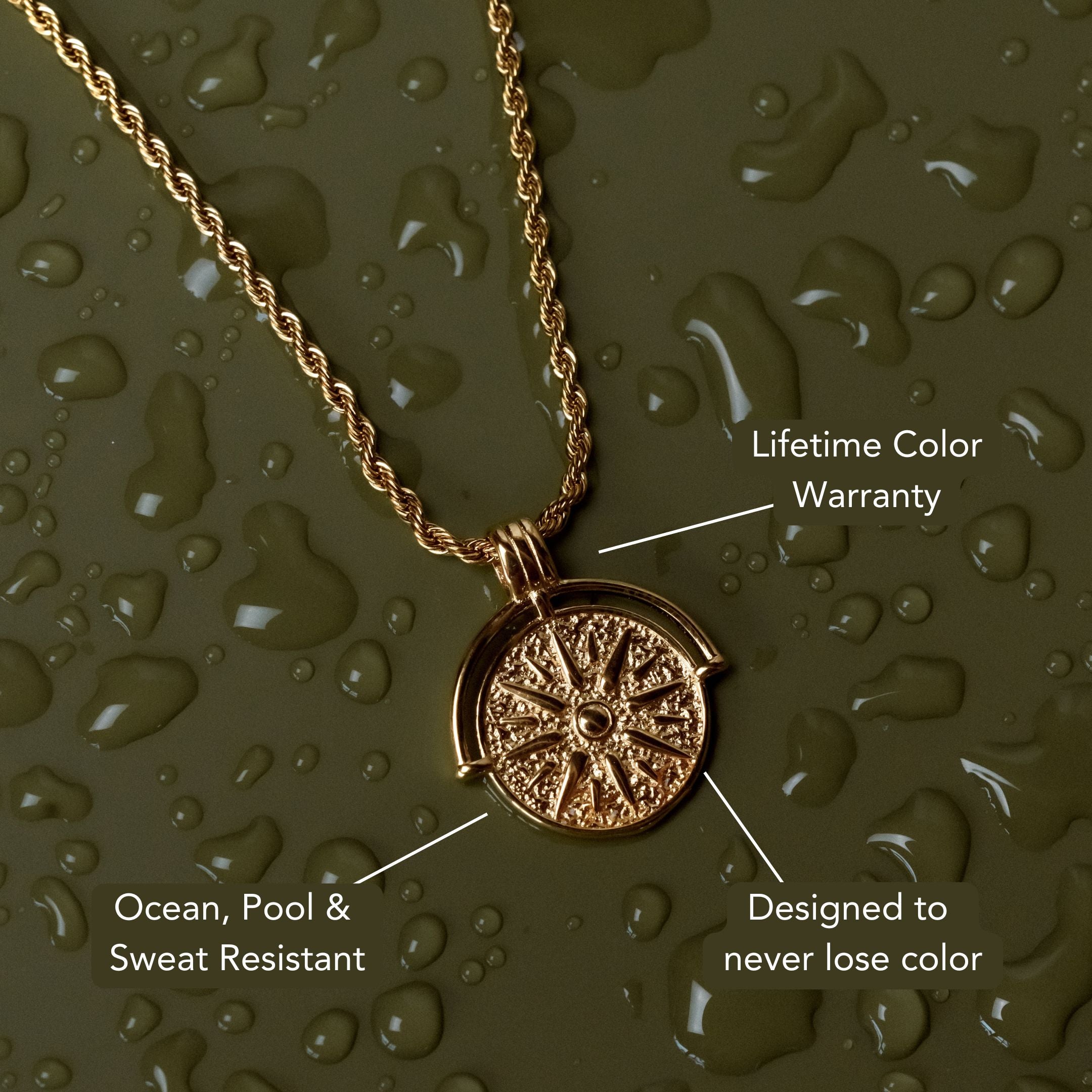
If you have ever flipped over a ring or looked closely at a necklace clasp, you may have noticed a tiny stamp etched into the metal. These small marks are not decoration. They are hallmarks, and understanding jewelry stamps and meanings can tell you exactly what your piece is made of, how pure the metal is, and sometimes even who made it. If you want jewelry that holds up beautifully to daily wear, browsing our Waterproof Jewelry collection is a great place to start, since every piece is clearly marked with accurate metal content you can trust.
In this guide, we will break down the most common jewelry stamps, what each one means, and how to use this information to shop smarter and protect your investment.
Why Jewelry Stamps Matter
Jewelry stamps exist to protect buyers. Precious metals like gold and silver are rarely used in pure form because they are too soft to hold shape or withstand daily wear. Instead, they are mixed with other metals to create a stronger alloy. The stamp tells you exactly how much precious metal is present, which affects both the value and durability of the piece.
Knowing how to read these marks helps you avoid overpaying for lower quality metal, verify that a piece matches its listed description, and understand how to care for your jewelry based on what it is actually made of.

Common Gold Stamps and Their Meanings
Gold purity is measured in karats, with 24 karat representing pure gold. Since pure gold is too soft for everyday jewelry, most pieces are stamped with a number indicating the percentage of gold present.
24K: Pure gold, extremely soft and rarely used in everyday jewelry.
18K or 750: Contains 75 percent gold, offering a good balance of richness and durability. The number 750 refers to the metric stamp used in many countries outside the United States.
14K or 585: Contains about 58.5 percent gold, one of the most popular choices for everyday jewelry due to its strength and affordability.
10K or 417: Contains about 41.7 percent gold, the most durable and budget friendly option, though with a lower gold content overall.
GP or GF: These stand for gold plated and gold filled. Gold plated means a thin layer of gold covers a base metal, while gold filled contains a much thicker layer of gold bonded to a base metal, making it more durable and longer lasting than plating alone.

Common Silver Stamps and Their Meanings
Sterling silver is one of the most popular metals for jewelry, and it comes with its own set of standard stamps.
925: This is the most common silver stamp, indicating the piece is 92.5 percent pure silver mixed with other metals, usually copper, for added strength. This is the industry standard for sterling silver.
900: Sometimes called coin silver, this indicates 90 percent silver content, historically used in coins and some older jewelry pieces.
958: Known as Britannia silver, this indicates a higher purity level than sterling, at 95.8 percent silver.
S925 or Ster: Both are alternative ways of marking sterling silver and carry the same meaning as a standard 925 stamp.
Platinum and Other Precious Metal Stamps
Platinum is another metal with recognizable purity stamps, often used in fine jewelry and wedding bands due to its durability and hypoallergenic properties.
PLAT or PT: Indicates the piece is platinum.
950: Often paired with the platinum stamp, this indicates 95 percent pure platinum, the most common standard for platinum jewelry.
900: Occasionally used for platinum alloys with slightly different compositions, though less common than the 950 standard.
Stainless Steel and Titanium Stamps
Stainless steel and titanium have become increasingly popular in modern jewelry, especially for pieces meant for everyday or active wear.
Stainless steel is often marked simply as steel or stainless, and while it does not have a purity stamp like precious metals, it is valued for its durability, resistance to tarnish, and affordability. Titanium is sometimes stamped as Ti or titanium, and is prized for being lightweight, strong, and highly hypoallergenic, making it a popular choice for sensitive skin.
Neither of these metals will corrode or discolor from water exposure, which is part of why they are frequently used in waterproof and everyday jewelry designs.

Maker's Marks and Country of Origin Stamps
In addition to purity stamps, many pieces carry a maker's mark, which identifies the manufacturer or designer, similar to a signature. These marks can be letters, symbols, or a small logo, and they are useful for identifying vintage or designer pieces.
Some jewelry also includes a country of origin stamp, such as Italy or France, indicating where the piece was manufactured. This is common in fine jewelry and can sometimes add to a piece's value, particularly for regions known for high quality craftsmanship.
How to Find and Read a Jewelry Stamp
Jewelry stamps are usually very small, so a magnifying glass or jeweler's loupe helps you read them accurately. Common locations include the inside of a ring band, the back of a pendant, the clasp of a necklace or bracelet, and the post or backing of an earring.
If a stamp is worn down or hard to read, a local jeweler can often use testing tools to verify the metal content even without a visible mark. This is especially useful for older or inherited pieces where the stamp may have faded over time.
What to Do If a Piece Has No Stamp
Not all jewelry is stamped, especially older pieces, handmade items, or costume jewelry. A missing stamp does not automatically mean a piece is fake or low quality, but it does mean you cannot verify the metal content just by looking.
If you want to know the true composition of an unstamped piece, a jeweler can perform simple tests, such as an acid test or an electronic metal tester, to determine what it is actually made of. This is helpful before buying secondhand jewelry or valuing an inherited item.

Why Understanding Stamps Helps You Shop Smarter
Once you understand jewelry stamps and meanings, you can shop with far more confidence. You will know exactly what you are paying for, whether a piece is likely to tarnish or cause skin irritation, and how to properly care for it based on its actual metal content.
This is especially useful when shopping for pieces meant to handle daily life, like swimming, showering, or everyday activity. Materials like stainless steel, titanium, and solid gold are far more resistant to water and moisture than plated pieces, which is why checking the stamp before buying waterproof jewelry can save you from tarnishing or fading down the road.
Final Thoughts
Jewelry stamps may be small, but they carry important information about what your pieces are truly made of. Learning to recognize common gold, silver, platinum, and steel stamps helps you shop smarter, avoid overpaying for lower quality metal, and choose pieces that hold up to your lifestyle.
Whether you are buying a new piece or trying to identify one you already own, checking the stamp can tell you almost everything you need to know about its quality and care.
Frequently Asked Questions
1. What does a 925 stamp mean on jewelry? A 925 stamp indicates sterling silver, meaning the piece is 92.5 percent pure silver mixed with other metals for added strength.
2. What is the difference between gold plated and gold filled stamps? Gold plated pieces have a thin layer of gold over a base metal, while gold filled pieces have a much thicker, more durable layer of gold bonded to the base metal.
3. What does 14K mean on a piece of jewelry? A 14K stamp means the piece contains about 58.5 percent gold, a popular choice for everyday jewelry due to its balance of durability and affordability.
4. Is jewelry without a stamp automatically fake? No, many older, handmade, or costume pieces are unstamped without being fake. A jeweler can test the metal content if no stamp is present.
5. What metals are best for waterproof jewelry? Stainless steel, titanium, and solid gold are the most water resistant options, making them ideal for jewelry meant for swimming, showering, or daily wear.









Leave a comment
This site is protected by hCaptcha and the hCaptcha Privacy Policy and Terms of Service apply.