

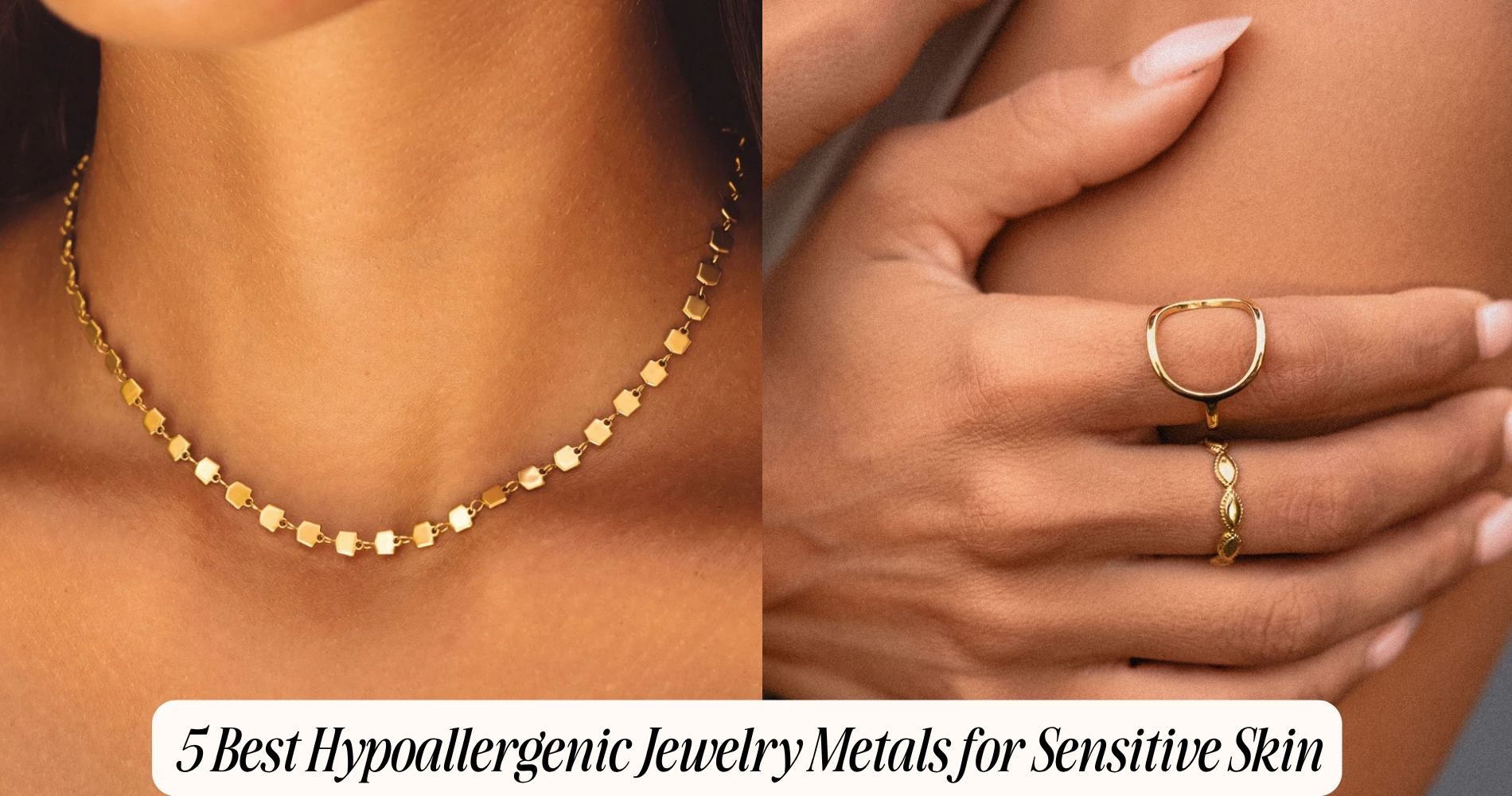
5 Best Hypoallergenic Jewelry Metals for Sensitive Skin
Choosing the right hypoallergenic jewelry metals is essential if you have sensitive skin. Options like titanium, niobium, implant-grade 316L surgical stainless steel, high-karat gold, and well-finished platinum are known for their low reactivity and minimal risk of irritation. These metals resist corrosion, release little to no nickel, and often form stable surfaces that help reduce allergic reactions. To get the best results, verify material quality, opt for solid pieces or durable coatings like PVD or rhodium, and regularly check for wear. Pieces from the Hypoallergenic Jewelry collection are designed with these standards in mind, offering both comfort and durability. Keep reading to discover practical tips on selecting and caring for hypoallergenic jewelry metals to protect your skin.
How to Choose Hypoallergenic Jewelry (Nickel, Purity, Plating, Use)
When choosing hypoallergenic jewelry, focus on the metals and finishes that reduce allergic reactions: pick nickel-free alloys or materials with well-documented low allergenicity (titanium, surgical stainless steel 316L/316LVM, niobium, and high-karat gold).
You should check metal composition labels and ask retailers for certificates or lab reports; trace nickel or mixed alloys often trigger contact dermatitis.
Consider purity: higher karat gold has less base metal content, lowering sensitizer exposure.
Plating can help short-term, but wear and abrasion expose underlying alloys, so prioritize solid or sufficiently thick rhodium plating.
Monitor allergy symptoms—redness, itching, blistering—and stop wear if they appear.
Match metal choice to intended use (piercings, daily wear, water exposure) for sustained low-allergy performance.

Titanium for Sensitive Skin: Lightweight, Strong, Low-Allergy Risk
Because titanium forms a stable, inert oxide layer and contains virtually no nickel, it’s one of the best options for people with metal allergies: clinical studies and dermatology guidelines consistently report very low rates of contact dermatitis with commercially pure titanium and titanium alloys used in jewelry and body jewelry.
You’ll find titanium benefits include exceptional biocompatibility, corrosion resistance, and a low allergic profile, making it suitable for everyday wear and piercings.
It’s lightweight, so you won’t feel heavy earrings or rings, yet its titanium durability resists scratches and deformation better than many softer hypoallergenic metals.
When choosing pieces, prefer commercially pure or implant-grade titanium and verify manufacturer purity claims; anodized surfaces can add color without compromising hypoallergenic properties.
Niobium for Sensitive Skin: Color Options and Excellent Compatibility
If you have sensitive skin and want both reliable biocompatibility and aesthetic options, niobium is an excellent choice: it’s inert, contains negligible allergenic contaminants, and forms stable oxide layers that resist corrosion and irritation.
You’ll find niobium properties favorable for body jewelry and daily wear because it’s non-reactive and rarely triggers dermatitis. Manufacturers can anodize niobium to produce a spectrum of durable hues without coatings that might flake or expose underlying metals, supporting long-term color retention.
You’ll also appreciate its weight and machining ease for custom pieces. Clinically, reported allergic reactions to niobium are extremely rare.
When choosing jewelry, prioritize reputable suppliers who verify alloy composition and surface finish to guarantee you get the hypoallergenic performance and color retention you expect.
Surgical Stainless Steel (316L): Budget-Friendly, Low-Irritation Steel
Although it’s more affordable than titanium or niobium, surgical stainless steel 316L gives you a reliable, low-irritation option for everyday jewelry because it’s manufactured to limit nickel release and resist corrosion.
You’ll find 316L used in surgical applications, which reflects strict alloying and finishing standards that reduce sensitizing ions. Clinical and consumer studies show most people with mild nickel sensitivity tolerate 316L, though true nickel allergy sufferers may still react.
In metal comparisons, 316L balances cost, durability, and hypoallergenic performance better than many plated or mixed alloys.
Choose well-finished, stamped or cast 316L pieces from reputable suppliers to minimize surface impurities.
If you need near-zero reactivity, consider titanium or niobium instead of stainless steel.

Buying & Care Tips: Testing, Plating, Cleaning, and Long-Term Wear
When you shop for hypoallergenic jewelry, testability, surface finish, and long-term maintenance should guide your choices so you avoid surprises down the line.
You should use simple testing methods—magnet checks to detect strong ferrous alloys and small nitric-acid or spot tests (performed by vendors or labs) to reveal nickel leaching—before committing.
Prefer solid nonreactive metals (titanium, niobium, high-karat gold) or well-applied inert platings like PVD, which resist wear better than thin electroplating.
Follow manufacturer cleaning techniques: mild soap, warm water, soft brush, and occasional ultrasonic cleaning if the metal allows. Avoid abrasive cleaners and chlorine.
Inspect jewelry regularly for worn plating or surface pitting, and replate or replace pieces showing degradation to prevent skin reactions over long-term wear.

Frequently Asked Questions
Can Hypoallergenic Metals Cause Reactions With Lotions or Perfumes?
Yes — you can get reactions: lotions interaction and perfumes sensitivity can create residue or ingredients that bind to metals, triggering irritation even with hypoallergenic alloys, so you should test products and clean jewelry regularly to reduce risk.
Are There Hypoallergenic Options for Children’s Jewelry?
Yes — you can choose child friendly materials like titanium, surgical stainless steel, and solid gold; you should prefer nickel-free pieces, request allergy testing when possible, and buy from reputable sellers with clear metal content and safety certifications.
Do Hypoallergenic Metals Affect MRI or Medical Devices?
Yes — many hypoallergenic metals like titanium and surgical stainless steel are MRI compatible and rarely cause medical device interaction, but you should check specific alloy labeling and consult clinicians for implants, pacemakers, or sensitive MRI protocols.
Can Anodized Colors on Niobium Fade Over Time?
Yes — anodized colors on niobium can fade gradually; exposure to abrasion, chemicals, or sunlight reduces anodized durability. You should follow niobium maintenance: avoid harsh cleaners, rough wear, and store pieces protected to prolong color.
Are Hypoallergenic Metals Recyclable or Eco-Friendly?
Yes — you can recycle many hypoallergenic metals, and they can be eco-friendly if produced with sustainable sourcing and high metal purity; you should verify supply chains and certifications to guarantee genuine environmental and health benefits.
Conclusion
Choosing hypoallergenic jewelry comes down to knowing metals, avoiding nickel, and matching pieces to how you’ll wear them. Pick titanium or niobium for minimal reaction, choose surgical 316L steel for budget-friendly durability, and prioritize high-purity or well-sealed plating when needed. Test new items against skin, clean them regularly, and replace worn plating. With careful selection and simple care, you’ll reduce irritation and enjoy stylish, comfortable jewelry for everyday wear.









Leave a comment
This site is protected by hCaptcha and the hCaptcha Privacy Policy and Terms of Service apply.