


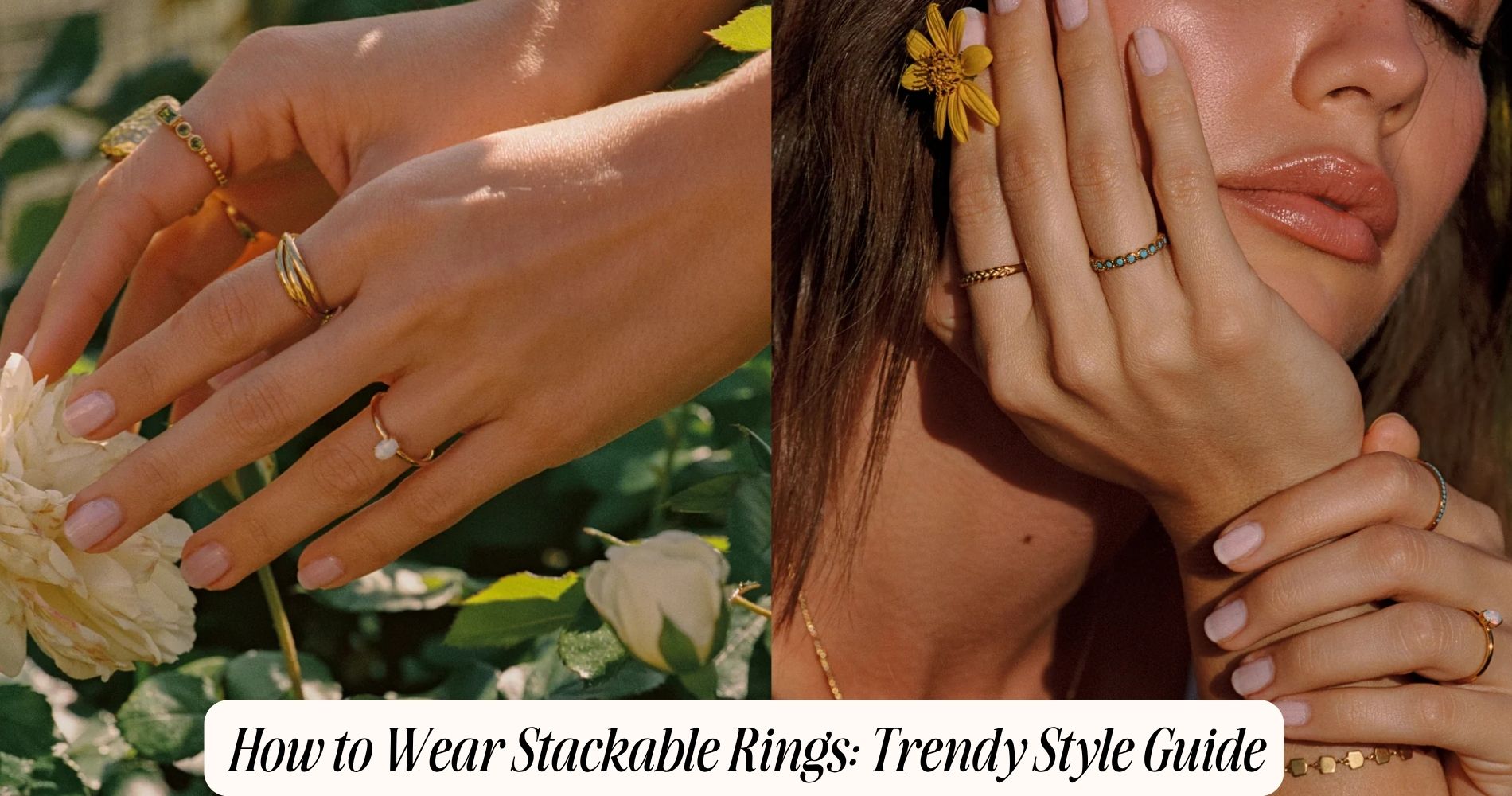
How to Wear Stackable Rings: Trendy Style Guide
A ring stack can look effortlessly composed or like an accidental pile depending on a few specific decisions around proportion, placement, and mixing. Knowing how to wear stackable rings well is not about following rigid rules, but it does involve understanding the principles that make a stack read as intentional rather than random. Minimalist Gold Rings in dainty, stackable widths give you the building blocks for combinations that work consistently. This guide covers how to build a stack from scratch, which fingers and combinations work best, how to mix widths and textures, and the practical sizing and material considerations that make a stack comfortable enough to wear every day.
The Core Principle Behind a Good Ring Stack
Before covering specific combinations, one principle runs through all successful ring stacking: each ring in the stack needs to be visible as an individual piece while contributing to the overall composition. Rings that are too similar in width and profile blend into an undifferentiated band. Rings that are too different in size create visual noise rather than rhythm.
The way to achieve individual visibility within a composed whole is through deliberate variation along one or two dimensions at a time. Vary width (thin bands alongside slightly wider ones), texture (smooth alongside hammered or twisted), or profile (flat alongside domed or beaded). Varying all three simultaneously in the same stack creates complexity without coherence. Varying one or two creates contrast that reads as intentional.
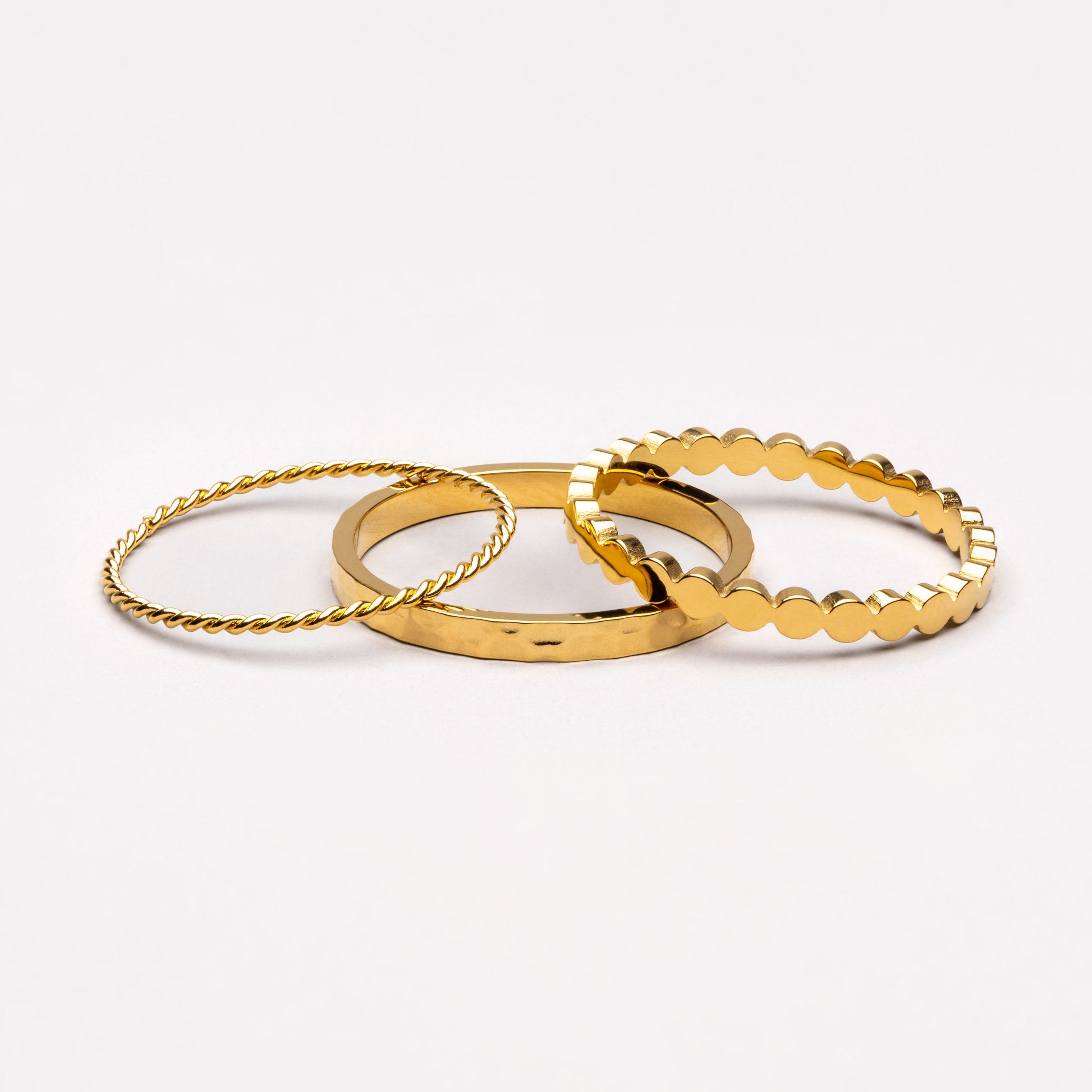
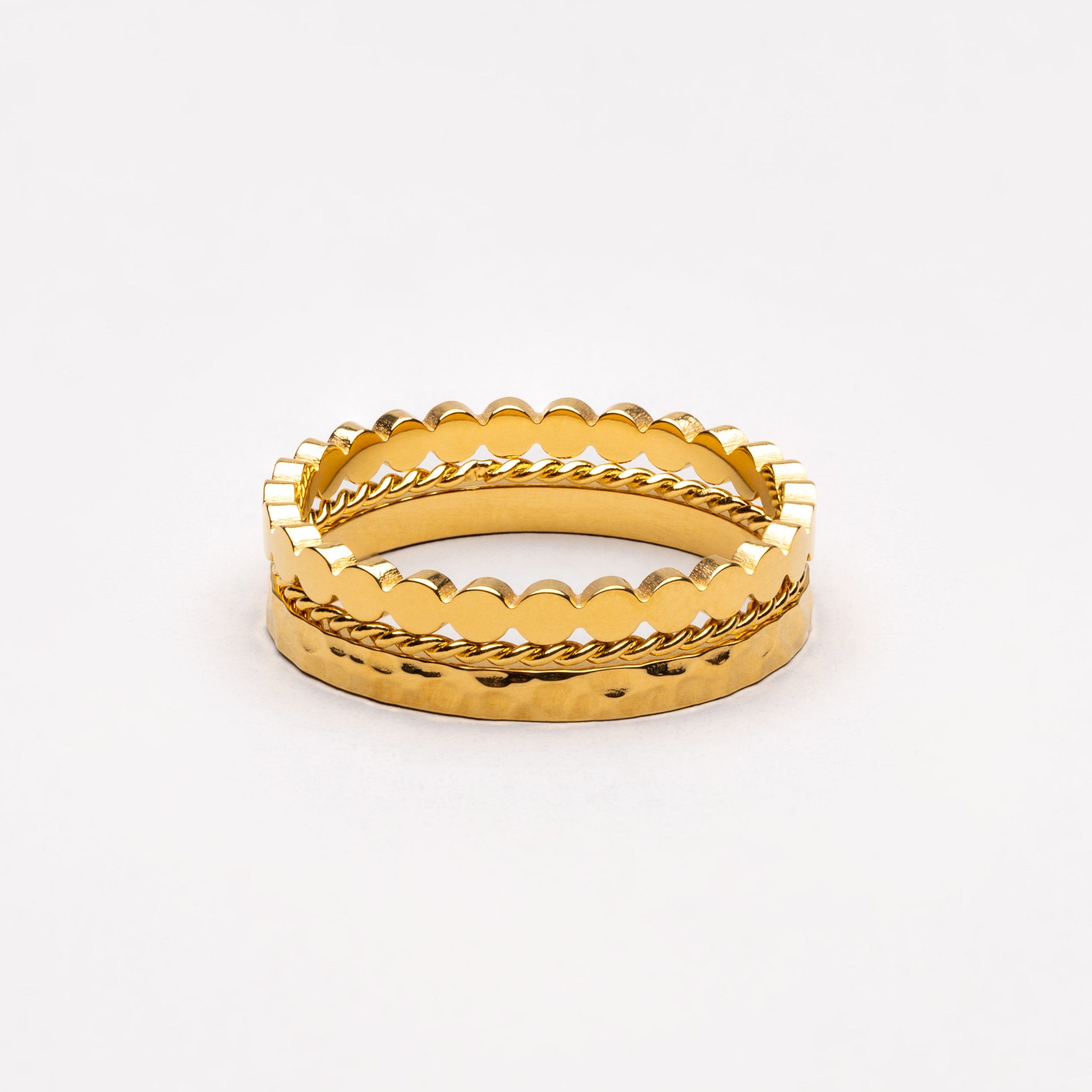
A practical starting framework for a first stack: one anchor ring slightly wider or more detailed than the others, flanked by two to three thin plain bands. The anchor creates the visual focal point. The plain bands create rhythm around it without competing. This combination works on most fingers at most widths because the hierarchy is clear.

How to Wear Stackable Rings: Finger by Finger
Different fingers create different visual effects with a ring stack, and the practical considerations for each vary enough that it is worth working through them individually.
Index finger: The index finger is highly visible during everyday hand use and conversation. A stack here draws immediate attention. It suits two to three rings maximum because the index finger's constant movement makes a very heavy stack uncomfortable over time. Thin to medium bands work better here than very wide stacks that restrict finger flexion.
Middle finger: The middle finger provides the most visual real estate for a prominent stack because it is the longest finger and sits centrally. It handles three to five rings comfortably depending on band widths. A stack centered on the middle finger with rings tapering outward to single bands on the index and ring finger creates a balanced, graduated look that reads as considered.
Ring finger: The traditional ring finger is the natural home for a more personal stack. Combining a more detailed or meaningful ring with thin plain bands on either side of it creates a composed setting for the central piece. The ring finger also connects visually to the pinky when both carry rings, creating a linked composition across the lower two fingers.

Pinky: A single thin band or two very fine rings on the pinky adds visual interest at the edge of the hand without adding weight or bulk. More than two rings on a pinky tends to feel physically restrictive because of the finger's smaller circumference and limited movement range.
Thumb: Thumb rings have moved firmly into mainstream everyday wear. A single medium-width band or two thin bands on the thumb creates a balanced counterpoint to rings on other fingers. The thumb's independent movement range means it handles heavier or wider rings more comfortably than other fingers, which makes it a practical location for a slightly bolder anchor piece.
Building Your Stack: Width, Texture, and Profile
The three design variables that determine how a stack reads are width, texture, and profile. Working through each helps you evaluate individual rings before adding them to an existing stack.
Width: Measured in millimeters, band width is the most immediately visible variable in a stack. Thin bands at 1mm to 2mm create a delicate, layered effect where each ring is present but lightweight visually. Medium bands at 3mm to 4mm add presence and serve well as anchor pieces. Wide bands above 5mm are typically worn as single statement rings rather than stacked because they take up significant finger real estate on their own.
For stacking specifically, a combination of 1mm to 2mm thin bands alongside one 3mm to 4mm anchor reads well across most finger sizes. Adding a second anchor at 3mm to 4mm works on longer fingers where the visual space supports it without the stack looking crowded.
Texture: Smooth bands create a clean, understated foundation. Hammered surfaces catch light differently from smooth ones, creating visual movement within the stack. Twisted or rope-effect bands add a dimensional quality that provides contrast with flat bands without adding width. Beaded or milgrain edges create detail at the band's border that reads clearly even in thin widths.

The most reliable texture combination is two to three smooth thin bands alongside one textured piece. The smooth bands allow the textured ring to stand out clearly rather than competing with other textured surfaces.
Profile: The profile describes the band's cross-section: flat, domed (slightly rounded outward), or concave (curved inward). Mixing flat and domed profiles in the same stack creates subtle but clear variety when the rings sit together. Flat bands sit flush against each other and adjacent rings. Domed bands arch outward slightly, creating visible separation between rings even when sized consecutively.
| Design Variable | Options | Stacking Effect |
|---|---|---|
| Width: thin | 1 to 2mm | Delicate, layered, lightweight visually |
| Width: medium | 3 to 4mm | Anchor presence, clear focal point |
| Width: wide | 5mm and above | Single statement, not typically stacked |
| Texture: smooth | Polished flat surface | Clean foundation, supports other textures |
| Texture: hammered | Irregular faceted surface | Light-catching contrast piece |
| Texture: twisted | Rope or braid effect | Dimensional without adding width |
| Profile: flat | Flush against skin | Sits close, comfortable for daily wear |
| Profile: domed | Slightly arched outward | Creates visible separation between rings |
How Many Rings to Stack and Where to Place Them
The number of rings in a stack and their distribution across fingers affects how the overall hand looks as much as the individual ring choices do.
Single finger stack: Three to four thin bands on one finger with bare fingers on either side creates a focused, deliberate statement. This approach reads as intentional because the concentration is clearly chosen rather than spread by default.
Two finger spread: A stack of two to three on one finger and one to two on an adjacent or non-adjacent finger creates balance across the hand without equal distribution. Stacking on the middle and ring fingers, or the index and middle, creates visual connection across adjacent fingers. Stacking on the index and ring finger with the middle bare creates a framing effect around the empty finger.
Full hand distribution: Rings on four or five fingers simultaneously works when the rings are kept thin and the overall weight of each finger's stack is light. One thin band per finger reads as a considered collection. Heavy stacks on multiple fingers simultaneously creates visual noise and physical discomfort through restricted movement.
The general principle: concentrate rings rather than distributing them evenly. An uneven distribution where one or two fingers carry most of the stack and others carry one or none reads as more intentional than spreading one ring per finger across all five.

Sizing Stackable Rings Correctly
Sizing a ring stack correctly matters more than most people anticipate before experiencing the problem. Rings stacked together on the same finger take up combined vertical space that affects how each ring sits and moves.
A ring sized for a single finger may feel slightly tight once two or three other rings are added below it, because the adjacent rings restrict the natural spreading of skin at the sides of the finger. Sizing stacking rings at your standard size rather than going up a half size tends to produce a better result because the rings sit more securely rather than moving around with the stack.
The bottom ring in a stack, the one sitting closest to the hand, experiences the most downward pressure from the rings above it. It also tends to be the one that rotates most during daily wear. Sizing the bottom ring to fit snugly prevents rotation, which keeps the stack oriented correctly rather than shifting out of position during movement.
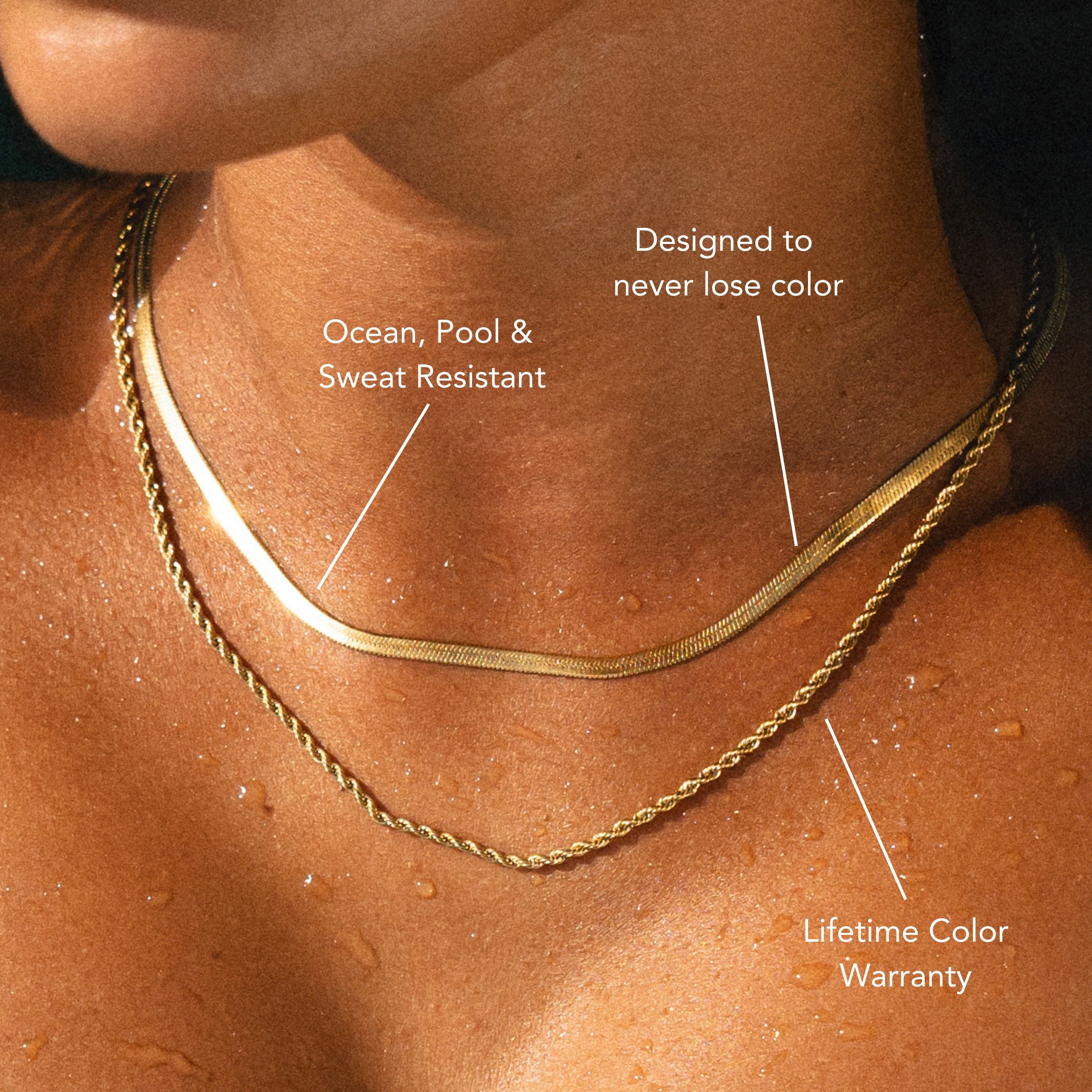
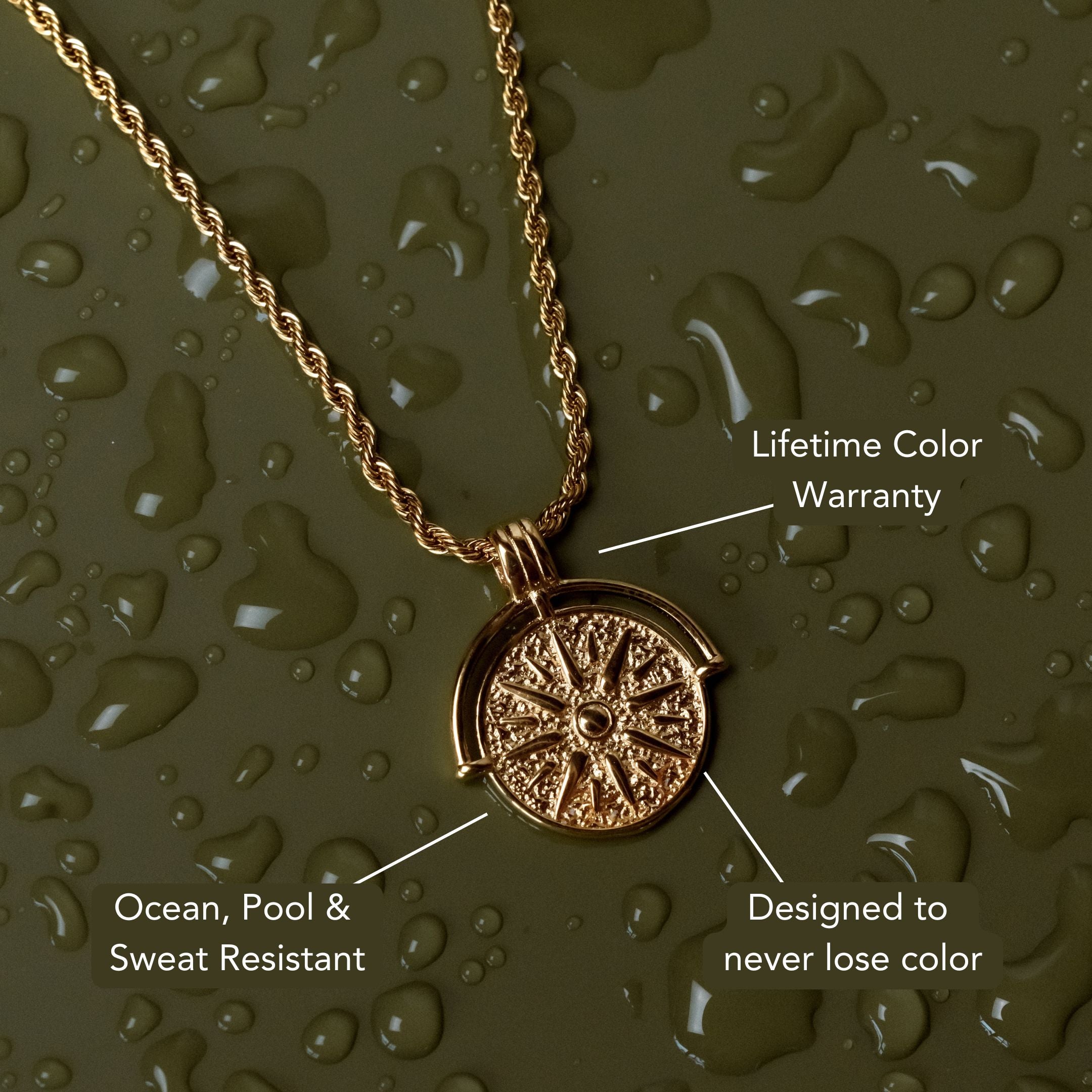
For rings worn all day through gym sessions, beach days, and daily handwashing, PVD-coated stainless steel bands hold their shape through the mechanical demands of active stacking wear. The finish holds through water and sweat exposure without the tarnishing that would develop on sterling silver stacks worn through the same conditions. ATOLEA's minimalist gold ring range is built for stacking wear in thin to medium widths with PVD construction and a lifetime color warranty on every piece.
Frequently Asked Questions
How many rings should you stack?
Two to five rings on a single finger covers the practical range for most people. Two rings read as a simple pairing. Three to four create a composed stack with clear visual rhythm. Five rings on one finger starts to restrict movement and can become uncomfortable through daily wear. Distributing rings across two fingers rather than adding more to one is generally more comfortable and looks more intentional beyond four pieces.
What fingers look best with stacked rings?
The middle finger provides the most visual space for a prominent stack due to its length and central position. The ring finger suits a more personal stack built around a meaningful anchor piece. The index finger suits two to three rings maximum because of its high-visibility and constant movement. The thumb handles wider single pieces or two thin bands as a counterpoint to other finger stacks.
Can you mix gold and silver rings in a stack?
Yes, with two guidelines. One metal tone should dominate, roughly two-thirds of the pieces, while the secondary tone appears in at least two rings to signal intention rather than accident. A mostly gold stack with two silver rings reads as a deliberate mixed-metal choice. An equal split of gold and silver in the same stack reads as indecision. The dominant tone should align with your primary jewelry wardrobe for overall consistency.
How do you keep stacked rings from spinning?
Size the bottom ring in the stack to fit snugly rather than loosely. A ring that fits correctly at the knuckle but has slight room at the base of the finger will spin more than one sized to the base. Choosing rings with slightly different widths also helps: a wider anchor ring at the bottom naturally stays more stable than a very thin band, which has less surface contact with the finger.
What width rings stack best together?
A combination of 1mm to 2mm thin bands and one 3mm to 4mm medium band creates the most versatile stacking combination for most fingers. The thin bands provide layered lightness and the medium band provides an anchor focal point without adding excessive bulk. Avoid stacking two or more wide bands (above 4mm) on the same finger as they tend to crowd the knuckle and restrict comfortable flexion.
Conclusion
How to wear stackable rings comes down to deliberate variation rather than uniform repetition. Varying width, texture, and profile within a clear hierarchy gives each ring individual visibility while creating a composed whole. Concentrating rings on one or two fingers rather than distributing them equally reads as more intentional. Sizing the bottom ring snugly keeps the stack oriented through daily movement. And choosing rings in a material that holds up through handwashing, gym sessions, and daily wear means the stack looks the same at the end of a week as it did at the start.










Leave a comment
This site is protected by hCaptcha and the hCaptcha Privacy Policy and Terms of Service apply.