

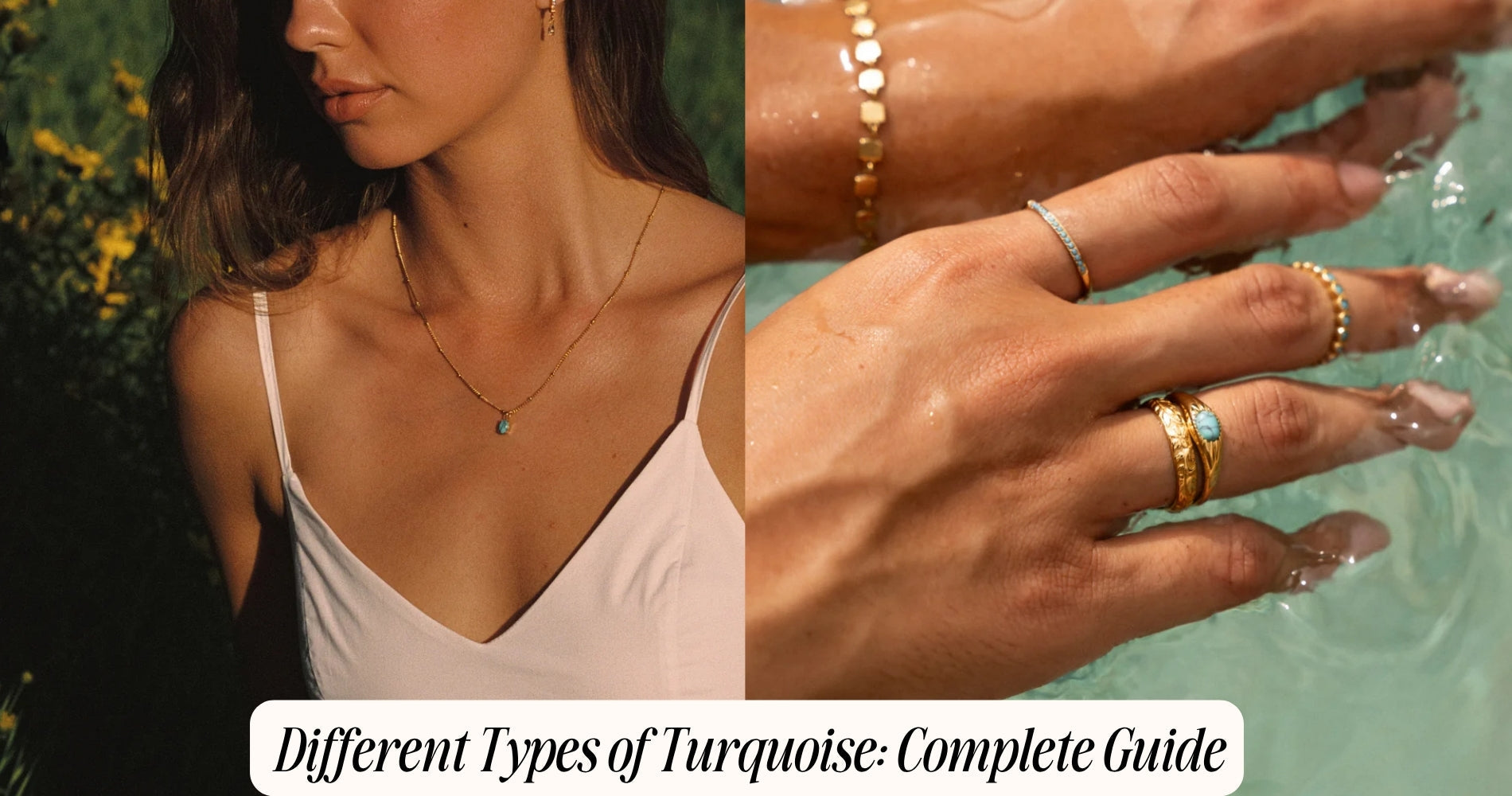
Different Types of Turquoise: Complete Guide
Turquoise is one of the most beloved gemstones in the world, prized for thousands of years for its striking blue and green hues. But not all turquoise is created equal. Depending on where it is mined, the mineral content of the surrounding rock, and the presence of natural veining, turquoise can look dramatically different from one stone to the next. If you are shopping for jewelry, learning about the different types of turquoise will help you understand what you are buying and why prices can vary so widely.
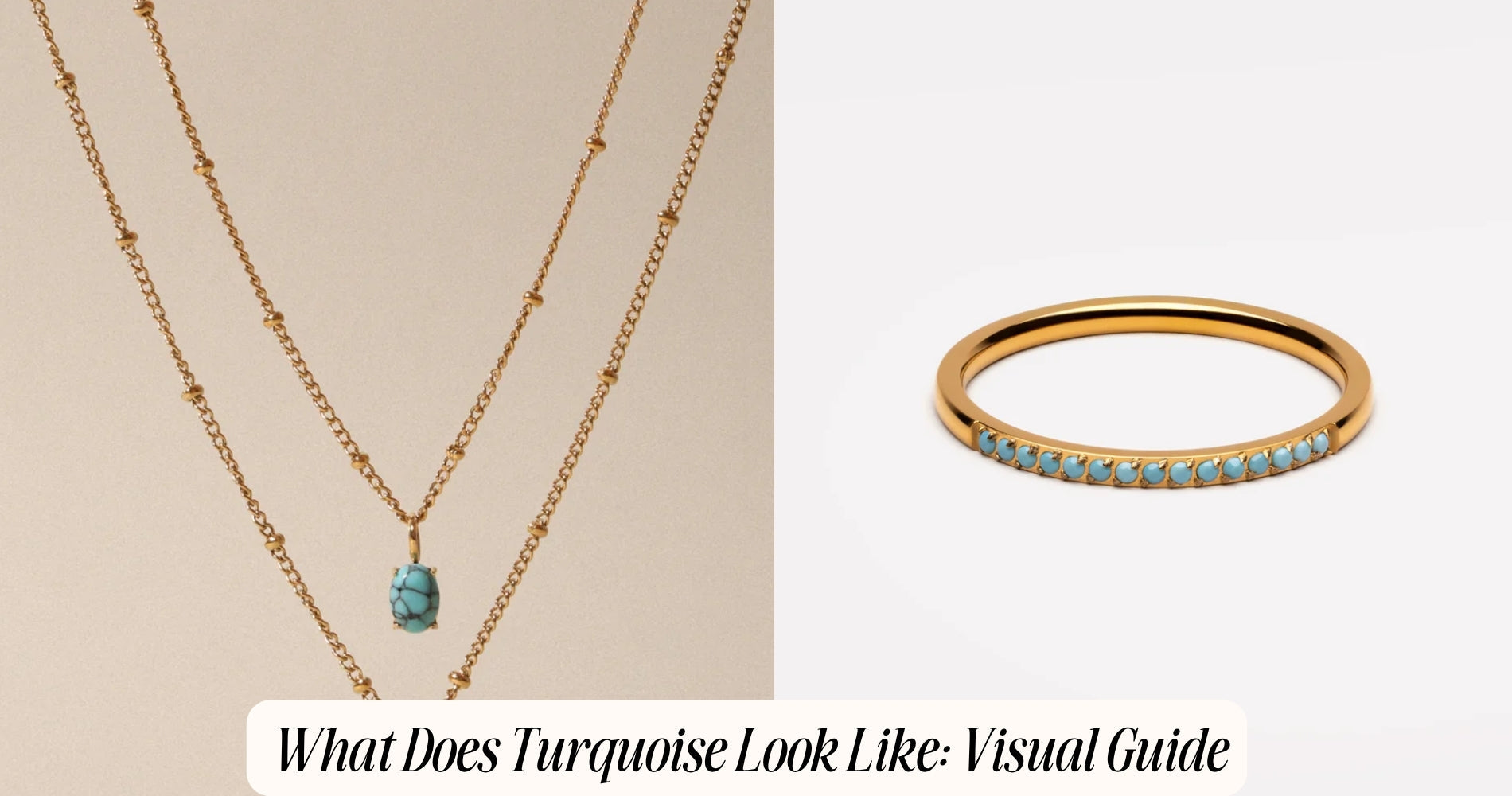
In this guide, we will walk through the most well known types of turquoise, what makes each one unique, and how to spot the qualities that separate a high grade stone from a lower grade one. Along the way, if you want to see how turquoise looks when set into finished pieces, our Stone Collection features a range of natural gemstone jewelry worth browsing.
What Makes Turquoise Unique
Turquoise forms when water containing copper and aluminum seeps through rock and reacts with phosphorus over long periods of time. This slow process is why turquoise deposits are relatively rare and why the mineral often develops alongside other materials like iron, which produces the greenish tones, or matrix, the dark webbing pattern seen in many stones.
Because turquoise formation depends so heavily on local geology, the color, hardness, and pattern of the stone can vary enormously depending on where it comes from. This is why gemologists and jewelry lovers alike separate turquoise into distinct types, each with its own reputation and characteristics.

Sleeping Beauty Turquoise
Sleeping Beauty turquoise comes from a mine in Arizona that has become one of the most recognized names in the turquoise world. This type is known for its smooth, uniform sky blue color with little to no matrix, meaning the stone appears clean and almost solid in tone.
Because Sleeping Beauty turquoise has such a consistent, pure blue color, it is highly sought after for jewelry design. Unfortunately, the original mine closed in 2012, which has made genuine Sleeping Beauty turquoise increasingly rare and valuable over time.
Kingman Turquoise
Kingman turquoise is mined in Arizona and is one of the most widely used types in modern jewelry. It typically ranges from a deep blue to a blue green color and often contains a dark matrix pattern, which many people find adds character and individuality to each piece.
Kingman turquoise is also known for its durability, making it a practical choice for everyday jewelry like rings and bracelets. Because the mine is still active, Kingman turquoise remains more accessible and affordable compared to rarer types.

Bisbee Turquoise
Bisbee turquoise, also from Arizona, is considered one of the rarest and most valuable types available. It is known for its deep blue color with a fine, web like matrix that often includes flecks of pyrite, giving the stone a subtle sparkle.
The Bisbee mine closed decades ago, and the turquoise it produced is no longer being extracted. As a result, authentic Bisbee turquoise is highly collectible and tends to command premium prices, especially in high quality specimens.
Persian Turquoise
Persian turquoise, sourced from Iran, is often considered the gold standard against which other types of turquoise are measured. Historically, this variety set the benchmark for what people picture when they think of turquoise: a rich, robin's egg blue color with little to no matrix.
For centuries, Persian turquoise was used in jewelry, art, and even architecture throughout the Middle East. Today it remains a symbol of quality and tradition, and stones with this pure blue coloring are often referred to as having a Persian quality color, even if they come from a different mine.
Chinese Turquoise
China has become one of the largest producers of turquoise in recent decades, and Chinese turquoise now makes up a significant portion of the turquoise available on the market today. This type varies widely in color and matrix pattern, ranging from deep blue to green, often with striking black or brown veining.
Because Chinese turquoise mines are more actively worked, this type tends to be more widely available and generally more affordable, making it a popular choice for a range of jewelry styles.

Royston Turquoise
Royston turquoise, mined in Nevada, is known for its unusual blend of colors within a single stone. It is common to see blue and green tones swirled together, sometimes alongside a dramatic brown or black matrix. This gives each piece of Royston turquoise a one of a kind appearance, which appeals to people who want jewelry that feels truly unique.
Number Eight Turquoise
Number Eight turquoise comes from a mine in Nevada that has been closed for years, making genuine stones increasingly difficult to find. It typically displays a blue to blue green color with a distinctive black matrix pattern. Like Bisbee, this type is prized by collectors, and its rarity contributes significantly to its value.
Stabilized vs Natural Turquoise
Beyond regional types, turquoise is also categorized by how it has been treated. Natural turquoise is used exactly as it is mined, without any chemical treatment, and tends to be more expensive because of its rarity and durability requirements.
Stabilized turquoise, on the other hand, has been treated with a clear resin to strengthen the stone and enhance its color. This process is extremely common in the industry because raw turquoise is naturally soft and porous, and stabilization allows the stone to hold up better in jewelry over time. Stabilized turquoise is not lower quality, it is simply treated differently, and it tends to be more budget friendly.
How to Identify Quality Turquoise
When shopping for turquoise jewelry, there are a few things worth paying attention to:
- Color consistency. Higher quality stones typically show even, saturated color without dull or chalky patches.
- Matrix pattern. Some buyers prefer a clean stone with little matrix, while others love the character that veining adds. Neither is inherently better, it comes down to personal taste.
- Hardness. Natural, untreated turquoise is generally harder and more durable, though well stabilized stones can also hold up well with proper care.
- Origin. Knowing where a stone was mined can help you understand its rarity and typical price range.

Caring for Turquoise Jewelry
Turquoise is a relatively soft and porous stone, which means it requires a bit of extra care to keep it looking its best. A few simple habits can go a long way:
Avoid exposing turquoise to perfumes, lotions, and household chemicals, since these can affect the stone's color over time. Remove turquoise jewelry before swimming, showering, or exercising, as prolonged exposure to water and sweat can weaken the stone. Store turquoise pieces separately from other jewelry to prevent scratches, and clean them gently with a soft, dry cloth rather than harsh cleaning solutions.
With proper care, turquoise jewelry can last for generations, often developing a slightly deeper patina that many collectors find adds to its beauty over time.
Choosing the Right Type of Turquoise for You
With so many types of turquoise available, choosing the right one often comes down to personal preference. If you love a clean, classic look, Sleeping Beauty or Persian style turquoise may be the best fit. If you prefer bold, one of a kind patterns, varieties like Royston or Number Eight turquoise offer more distinctive character.
Budget is also worth considering. While rare types like Bisbee and Number Eight can be quite valuable, more widely available options like Kingman or Chinese turquoise offer beautiful color and pattern variety at a more accessible price point.

Final Thoughts
Understanding the different types of turquoise helps you make a more informed choice, whether you are buying your first piece of turquoise jewelry or adding to an existing collection. Each type carries its own history, color profile, and rarity, which is part of what makes turquoise such a fascinating gemstone to explore.
Whichever type speaks to you most, turquoise remains a timeless addition to any jewelry collection, connecting the wearer to a stone that has been treasured across cultures for thousands of years.
Frequently Asked Questions
1. What is the most valuable type of turquoise?
Bisbee and Number Eight turquoise are generally considered among the most valuable due to their rarity, since both mines are no longer active.
2. What is the difference between natural and stabilized turquoise?
Natural turquoise is untreated and used as mined, while stabilized turquoise has been treated with resin to strengthen the stone and enhance its color. Both are legitimate forms of turquoise, they simply differ in durability and price.
3. Which type of turquoise is the most common in jewelry today?
Kingman and Chinese turquoise are among the most widely used types in modern jewelry due to their availability and affordability.
4. How can I tell if my turquoise is real?
Genuine turquoise typically has slight variations in color and texture, while imitation materials often look overly uniform. If you are unsure, having a stone evaluated by a gemologist is the most reliable way to confirm authenticity.









Leave a comment
This site is protected by hCaptcha and the hCaptcha Privacy Policy and Terms of Service apply.