

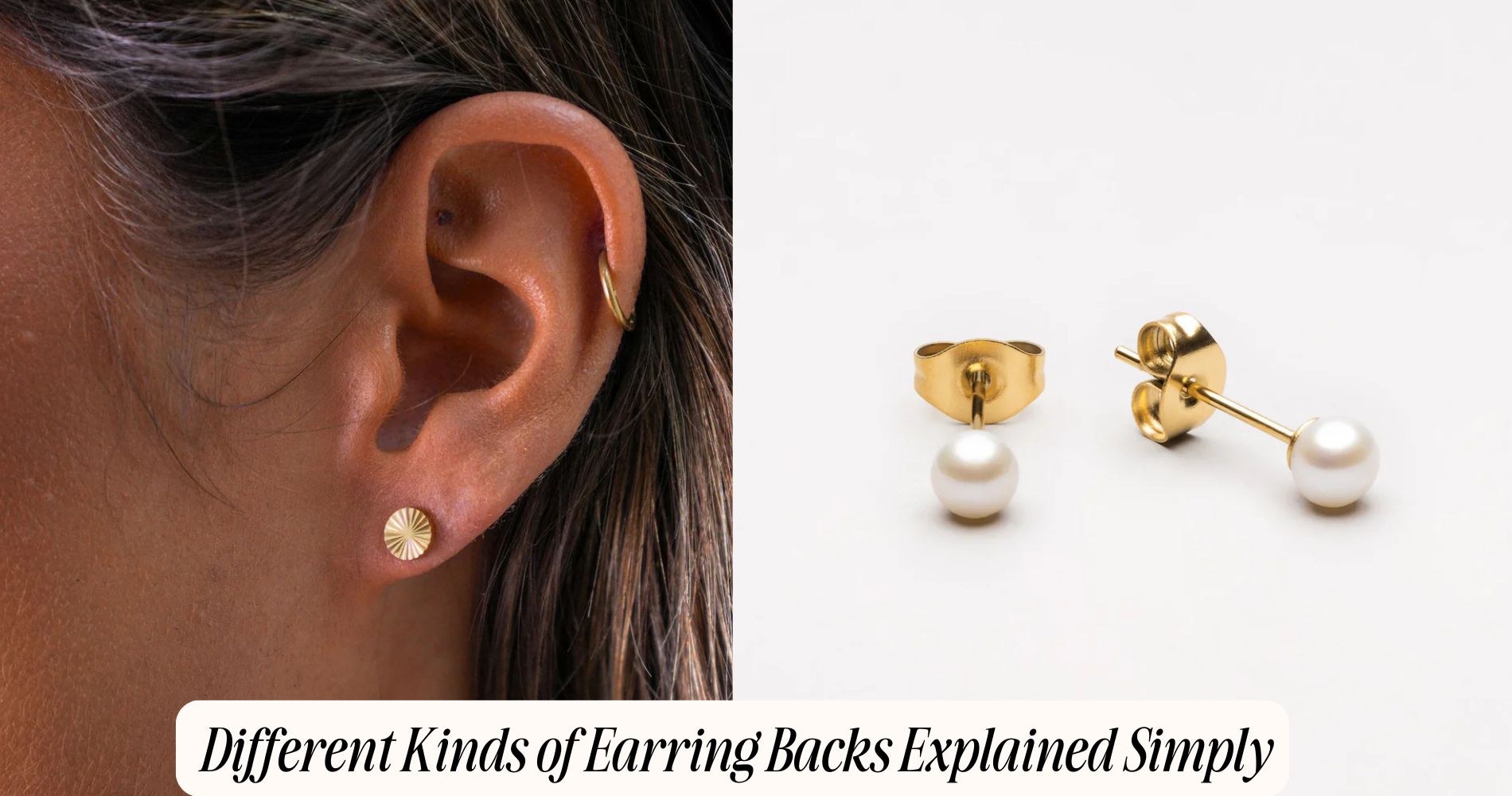
Different Kinds of Earring Backs Explained Simply
The different kinds of earring backs are designed to balance security, comfort, and skin safety. Push backs (butterfly) are quick, low-profile, and easy to wear, while screw backs use threaded posts for maximum security. Friction backs with silicone discs add stability and help prevent tilt, and locking styles like La Poussette click into place to resist pulls. Lever and latch backs offer snag-resistant closures, hinged huggies snap shut flush, and threader or hook styles rely on gravity for a fluid look. Clip-on and comfort backs suit non-pierced ears—and pairing these designs with Allergy-free Earrings helps reduce irritation while keeping your fit secure.
Push Backs (Butterfly Backs)
The workhorse of stud earrings, push backs—also called butterfly backs—use a friction clutch to secure the post. You slide the earring post through the lobe, then press the curled metal clutch along the notched post until it grips. Proper tension creates a reliable hold without tools.
You’ll appreciate push back advantages: quick on/off, low-profile comfort, and compatibility with most post gauges. They’re ideal for daily wear and light to medium-weight studs.
Choose butterfly back styles in standard, jumbo (larger pad for stability), or locking-friction variants that add detents for improved retention. Select hypoallergenic alloys—surgical steel, titanium, or 14k+ gold—to reduce irritation.
Replace worn clutches; loss of spring tension compromises security. For best fit, pair matched posts and clutches from the same manufacturer.

Screw Backs
Screw backs secure stud earrings with a threaded post and a matching threaded nut that you twist on until snug. You engage the nut fully to the post’s threads, then stop when it resists; don’t overtighten or you can strip threads or stress the post.
Key screw back advantages include high retention, tamper resistance, and reduced risk of loss—ideal for diamonds and fine studs.
You’ll find screw back materials in hypoallergenic options like platinum, 14k or 18k gold, and surgical-grade titanium; match metal to the post to prevent galling and wear.
Inspect threads for debris and keep them clean to maintain smooth engagement. If your lobes are sensitive, choose shorter posts and low-profile nuts to minimize pressure and improve daily comfort.
Friction Backs With Silicone Discs
Prefer quick on-and-off over threaded posts? Choose friction backs with silicone discs. A metal butterfly clutch grips the post via spring tension, while a soft silicone flange increases contact area. This hybrid design boosts stability without adding bulk.
You’ll feel immediate friction back comfort. The silicone cushions the lobe, reduces pressure points, and minimizes tilt on heavier studs. It also damps micro‑movement, helping keep the earring centered during daily activity.
Silicone disc benefits include improved weight distribution, better grip on polished posts, and reduced metal-to-skin irritation—useful for sensitive ears. They’re easy to slide on, yet they resist accidental loosening from hair, scarves, or phone use.
Care tips: clean silicone with mild soap, check clutch tension periodically, and replace discs when they yellow, tear, or lose elasticity.
Secure Locking Backs (La Poussette)
Precision meets security with La Poussette backs. You slide the clutch onto a notched post; a spring-loaded locking mechanism engages with audible feedback.
To release, you pinch the side tabs, which retract the internal collet and free the post. This engineered action prevents accidental loss while allowing quick removal.
You’ll get a secure fit without over-tightening. The post’s precision grooves distribute load, reducing wear on both post and clutch.
Because the mechanism grips uniformly, it resists pull, twist, and vibration better than basic friction backs.
Choose this system for diamonds, heirlooms, or heavy studs. Verify compatibility: La Poussette requires matching grooved posts.
Inspect the tabs and spring periodically; debris can impede travel. Clean with mild soap, rinse, dry, and test the click before wearing.

Lever Backs
While locking clutches secure studs, lever backs excel for drops and dangles. You get a curved ear wire that threads through the piercing and a hinged catch that snaps shut behind the lobe. This closed, continuous loop reduces snag risk and loss. It also distributes weight evenly, so statement drops hang balanced.
Key lever back advantages include quick one-handed operation, audible closure feedback, and reduced pressure points during long wear. You’ll appreciate reliable retention without bulky components.
Lever back styles range from minimalist French wires with a hinged latch to embellished fronts that integrate bezels, halos, or filigree. Metals typically include sterling silver, gold alloys, and hypoallergenic titanium.
Choose proportional lengths so the ear wire clears thicker lobes, and confirm smooth hinge action to prevent pinching.
Latch Backs (Hinged Hoops)
Latch backs, often called hinged hoops, use a pivoting post that clicks into a notched catch to form a secure, continuous circle. You insert the post through your piercing, rotate the hoop, and lock the tip into the groove. The mechanism prevents forward and backward slide, so the earring sits balanced and snag-resistant.
You’ll notice latch back benefits immediately: quick one-handed fastening, reliable closure without separate clutches, and even weight distribution that reduces torque on the lobe. The closed ring minimizes hair and mask interference.
Maintenance is simple—periodically check hinge tension and the notch for burrs.
Common latch back styles include classic round hoops, oval and square profiles, pavé-set tubes, inside-out diamond hoops, and lightweight hollow-core designs. Choose a gauge and diameter that match your piercing depth and comfort.
Hinged Huggie Backs
Hinged huggie backs are compact hoop mechanisms that snap closed around your earlobe for a seamless, low-profile fit. You open the ring at a miniature hinge, align the post with a notched catch, and press until you hear or feel a click. That positive closure is the core of their earring security features.
With a curved post and continuous circumference, huggies distribute weight evenly and minimize snag risk. Their hinged design benefits include quick one-handed operation, consistent alignment, and a flush interior that reduces pressure points.
The concealed clasp keeps the silhouette tight, so diamonds or charms sit forward without droop.
Choose solid hinges, crisp detents, and hardened posts for durability. Check the latch tolerance periodically; if the click softens, have a jeweler tighten the catch.

Threader and Hook Backs
Though they look delicate, threader and hook backs rely on simple mechanics to stay put.
Threader styles use a fine, elongated post attached to a chain or bar. You insert the post through the piercing and pull until the center of gravity sits near the lobe, balancing the front drop and back length. Friction along the channel and weight distribution reduce slippage. For sensitive lobes, choose lightweight chains and smooth, polished posts.
Hook designs (French wires, shepherd hooks) curve through the piercing and hang by gravity. A proper arc length and gauge keep them from backing out. Add a silicone stopper behind the lobe for extra security without bulk.
Evaluate metal hardness, wire gauge, and ornament weight so the earring hangs centered and remains stable.
Clip-On and Comfort Backs
While they skip piercings entirely, clip-on and comfort backs still depend on controlled clamping force and load distribution to stay secure without pain. You adjust spring tension so the pads grip the lobule without ischemia.
Look for hinged levers with smooth cam action; they let you fine-tune pressure and reduce slippage.
Clip on styles vary: paddle-back clips with a torsion spring, screw-back clips that let you micro-adjust compression, and omega backs that add a stabilizing cradle. Pair large silicone or foam pads to increase contact area and lower pressure per square millimeter.
Prioritize comfort features: hypoallergenic plating, rounded pad edges, and articulated joints that follow ear contour.
Test wear by checking skin color and hot spots after 30 minutes. For heavier pieces, add a stabilizer strip or ear support patch.
Frequently Asked Questions
Which Earring Backs Are Best for Newly Pierced Ears?
Choose flat-back labret studs with internal threading and secure push-fit ends. They minimize trauma during initial healing and reduce snagging. Select implant-grade titanium or niobium earring materials; avoid nickel. Keep posts slightly longer for swelling, and clean per piercer guidance.
How Do I Choose Backs for Sensitive or Allergic Ears?
Prioritize hypoallergenic materials and avoid common metal sensitivities. Choose titanium, niobium, or implant‑grade stainless steel backs; skip nickel, brass, and plated metals. Opt for screw-backs or secure silicone clutches. Clean routinely; test a single ear first.
What Backs Work Best for Heavy Statement Earrings?
Choose large disc backs or “comfort clutch” stabilizers for heavy earring support. Opt for screw-backs or locking backs (La Poussette) as secure earring options. Balance with support patches. Avoid small butterfly backs; they tilt and strain lobes.
Are There Backs Safe to Wear While Sleeping or Exercising?
Yes. Choose flat screw-backs or silicone disc backs for sleeping safety; they reduce snagging and pressure points. For exercising comfort, use secure latch-backs or hinged huggies; they minimize movement, resist sweat, and maintain retention without sharp posts protruding.
How Do I Prevent Losing Backs While Traveling?
Use dedicated earring storage; secure backs in a pillbox or travel case with foam. Bring spare backs. Tighten threaded posts. Use silicone stoppers over hooks. Remove during transit. Pack pairs in labeled bags. These travel tips minimize loss.
Conclusion
You’ve got plenty of secure, stylish options—now match the back to your earring and lifestyle. Choose push or friction backs for everyday studs, screw backs for maximum retention, and La Poussette for a professional, tamper-resistant fit. Pick lever, latch, or huggie backs for hoops and dangles with smooth mechanics. Opt for threaders and hooks for lightweight movement, or clip-ons for non-pierced comfort. Prioritize material quality, proper fit, and maintenance so your earrings stay aligned, secure, and comfortable all day.








%20are%20quick,%20low-profile,%20and%20easy%20to%20wear,%20while%20screw%20backs%20use%20threaded%20post...)
Leave a comment
This site is protected by hCaptcha and the hCaptcha Privacy Policy and Terms of Service apply.