

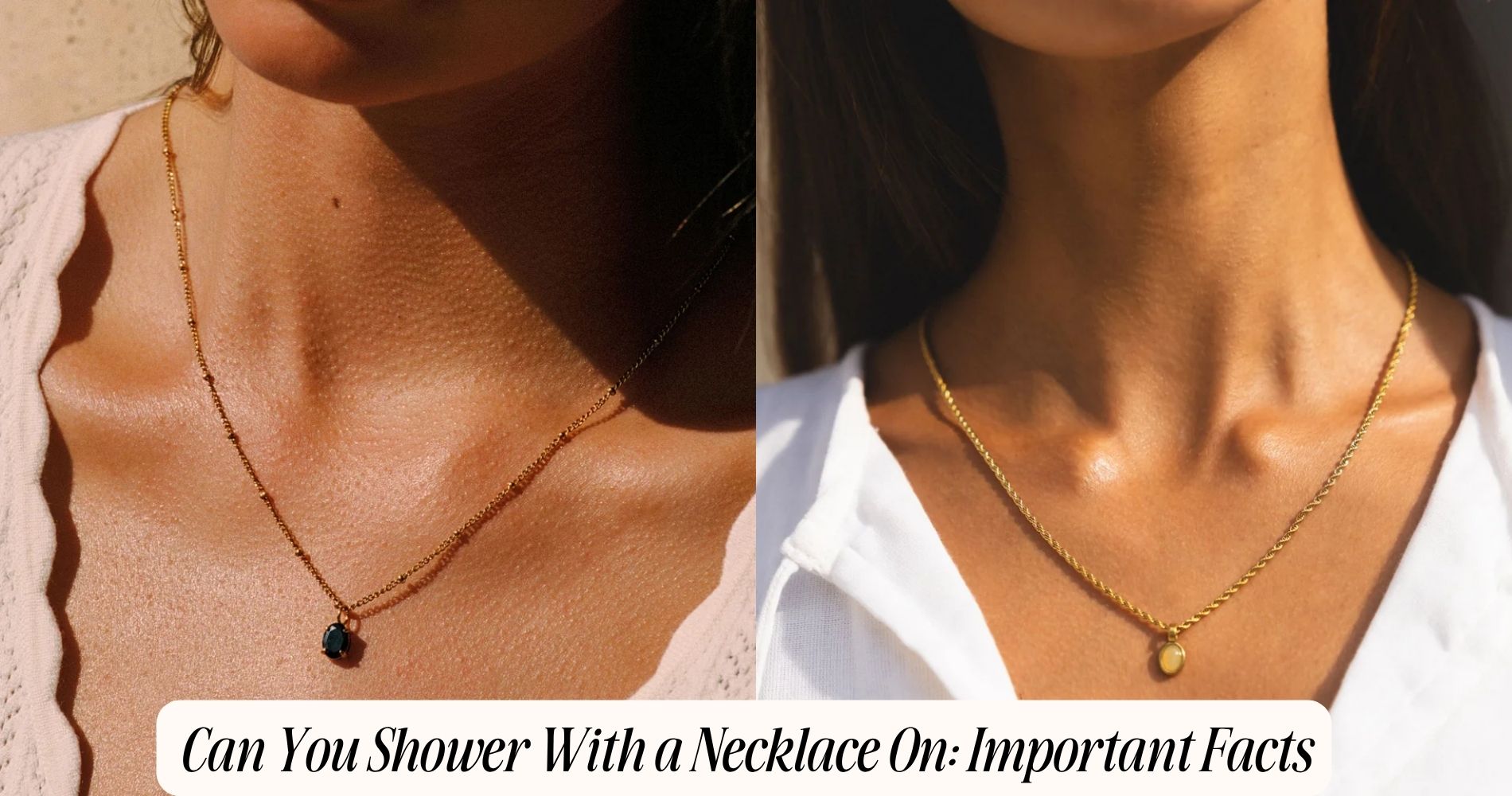
Can You Shower With a Necklace On: Important Facts
Most people take their necklace off before stepping into the shower out of habit rather than a clear understanding of what the water actually does to it. Whether that habit is necessary depends entirely on what the necklace is made from. If you are asking can you shower with a necklace on, the honest answer is: it depends on the material, and the difference between a necklace that handles daily shower wear and one that does not is significant. A Minimalist Gold Necklace built on the right base metal and coating stays consistent through showers without issue. This guide covers exactly what the shower environment does to different necklace materials, which ones hold up, which ones do not, and how to tell the difference before you buy.
What the Shower Environment Actually Does to Necklaces
The shower is not simply water. It is a sustained combination of heat, steam, soap, shampoo, conditioner, and warm running water that creates a specific set of chemical and physical conditions for any jewelry worn through it.
Heat and steam cause metal to expand slightly with each shower cycle. On a necklace with standard electroplated finish, that thermal cycling stresses the bond between the plating layer and the base metal over hundreds of repetitions. The bond weakens gradually and the plating begins to separate at the thinnest points, typically at chain links and clasp edges, long before any visible peeling appears.

Soap and shampoo introduce surfactant compounds that are more chemically active than plain water. These compounds penetrate into link joins and around clasp mechanisms, leaving residue that traps moisture against the metal between showers. That trapped moisture continues reacting with any reactive base metal even when the necklace is dry.
Hard water, common in most municipal tap water supplies, leaves mineral deposits as it evaporates. On a chain with multiple links, those deposits accumulate inside joins and dull the finish progressively. Over weeks and months of daily shower wear, a chain that was bright when new takes on a dull, chalky surface texture from mineral buildup.
None of these factors are catastrophic individually. Together, repeated daily, they represent the actual conditions a necklace faces in the shower, and they separate materials that can handle them from those that cannot.
Can You Shower With a Necklace On: By Material
PVD-coated stainless steel: Yes
PVD-coated 316L stainless steel handles daily shower wear without issue. The stainless steel base resists corrosion through its chromium oxide passive layer, which holds through heat, steam, and soap exposure without reacting. The PVD finish bonded over it at the molecular level produces a coating approximately 10 times thicker than standard electroplating, with a bond that does not lift or soften through repeated thermal cycling.
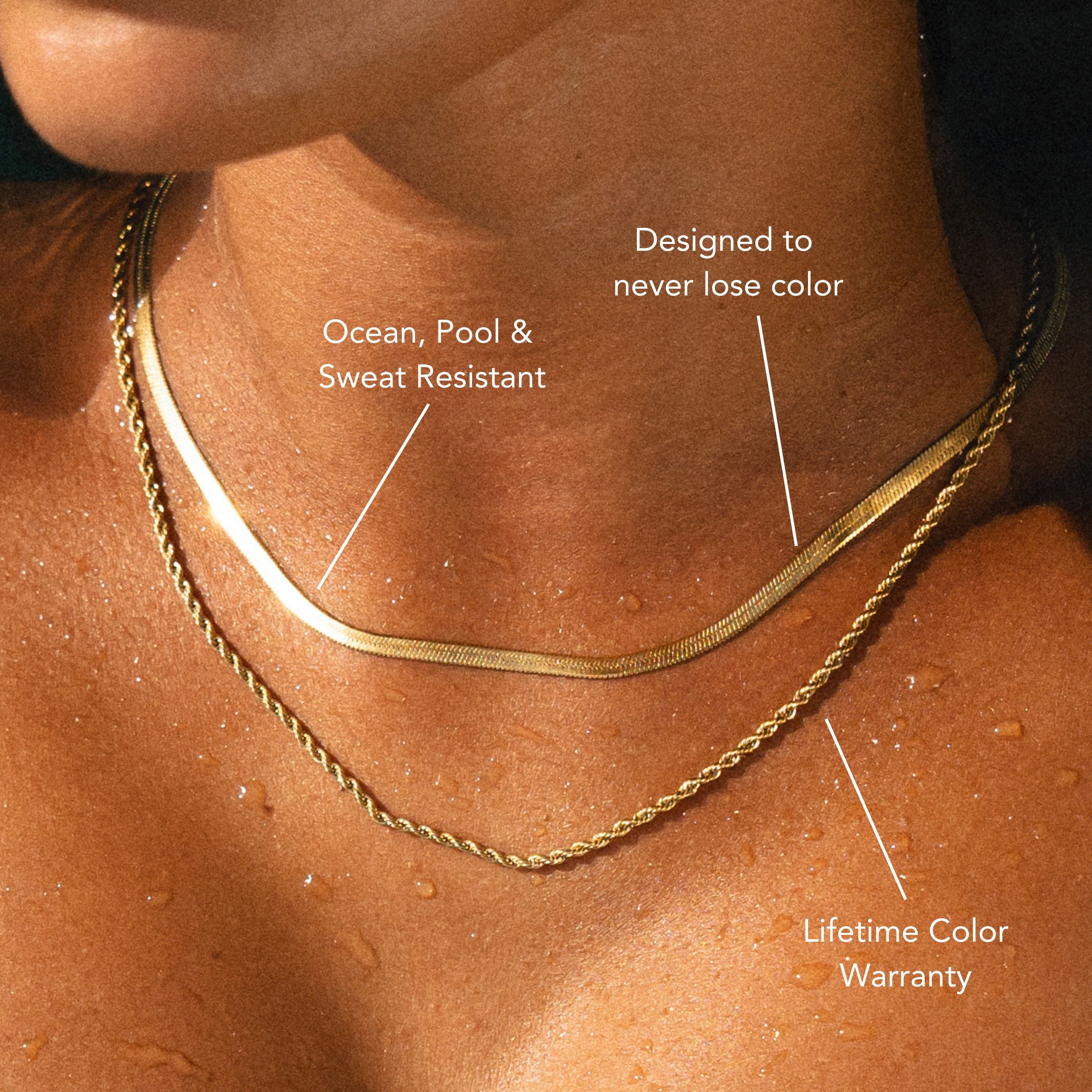
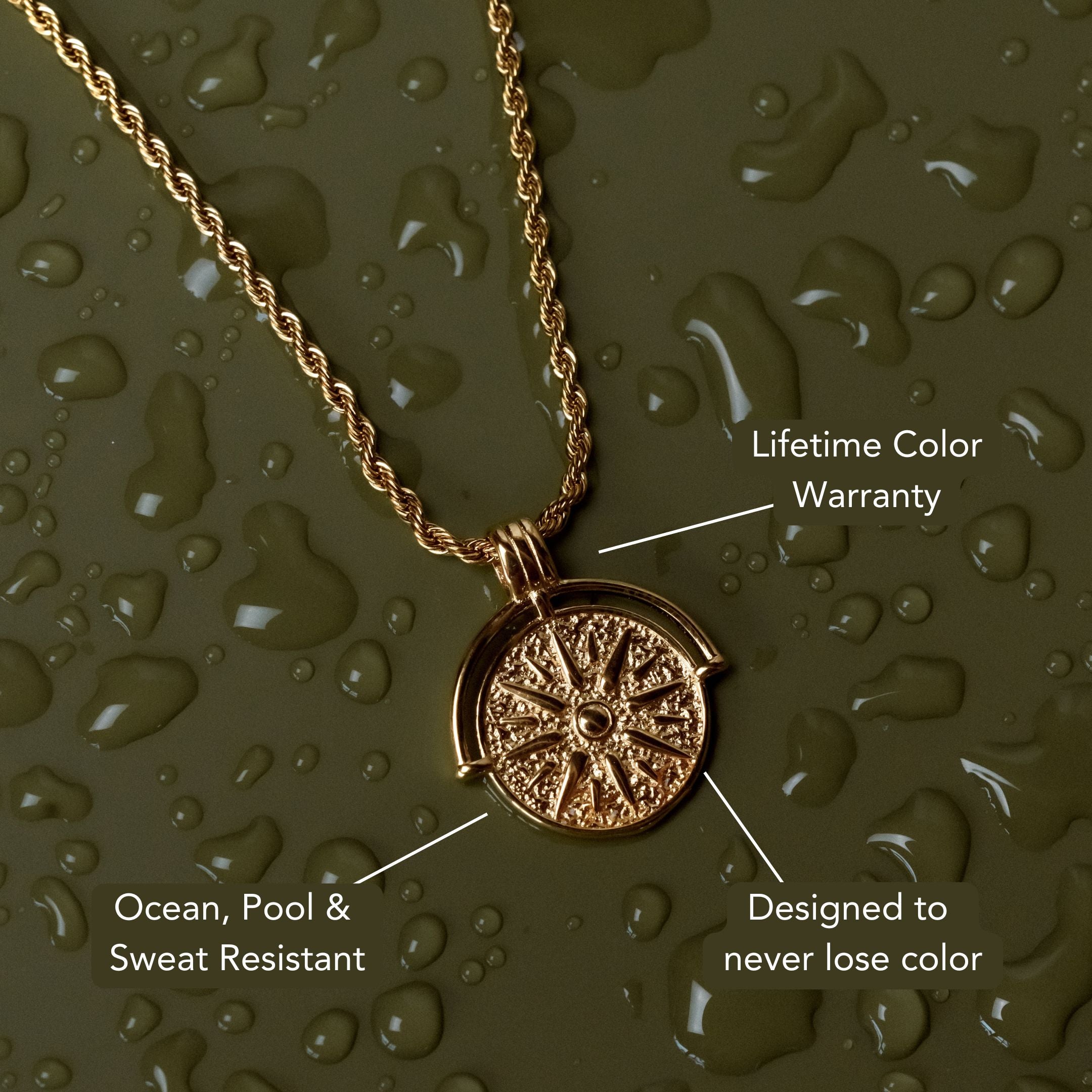
A PVD-coated necklace worn through a daily shower for years holds its appearance consistently because both the base metal and the finish are genuinely stable under those conditions. This is the material used in ATOLEA's waterproof necklace range, with a lifetime color warranty on every piece specifically because the construction holds up to that level of daily use.

Solid gold at 14k and above: Yes
Gold does not react with water, steam, soap, or the mineral compounds in tap water. At 14k and above, the alloy retains gold's chemical stability through daily shower wear without tarnishing, dulling, or suffering finish degradation. A solid gold necklace worn through daily showers looks the same after years of continuous use.
The limitation is price. Solid gold necklaces sit at a cost level that places them in fine jewelry territory, which not all buyers are working with for a piece worn through daily showers.
Titanium: Yes
Titanium's passive oxide surface layer holds through water, soap, and steam exposure without any degradation. It does not react with the compounds in shampoo or conditioner and does not develop mineral deposit buildup the way reactive metals do. Titanium necklaces handle shower wear as reliably as solid gold at a more accessible price point.
Sterling silver: No
Sterling silver should not be worn through daily showers. The combination of steam, warm water, and soap compounds significantly accelerates the sulfur and oxidation reactions that tarnish silver. A sterling silver necklace worn through daily showers typically shows visible tarnishing within days to weeks rather than the months a carefully maintained and stored silver chain might achieve.
The soap residue that accumulates inside chain links is a specific problem for sterling silver because it introduces additional reactive compounds into direct contact with the metal continuously. Regular cleaning can manage this but not prevent the accelerated tarnishing that shower wear produces.
Gold-plated brass: No
Gold-plated necklaces should not be worn through daily showers. The thin electroplated gold layer over a brass or copper base degrades with repeated heat and steam cycling faster than in dry conditions. The clasp and the joins between chain links are the first areas to lose their plating because they experience both the most physical movement and the most moisture retention. Once the plating lifts at those points, the brass base tarnishes and can cause skin discoloration on the neck and décolletage.
Gold-filled: Conditional
Gold-filled necklaces tolerate occasional shower exposure better than standard gold-plated pieces because the gold layer is significantly thicker. For daily shower wear over years, the brass core eventually becomes relevant as the gold layer wears through at high-friction clasp points. For buyers who want to shower with a necklace occasionally rather than daily, gold-filled is a reasonable middle-ground option with realistic lifespan expectations of one to three years before the clasp area shows wear.
Material Comparison for Shower Wear
| Material | Daily Shower Safe | Steam Resistant | Soap Resistant | Typical Lifespan With Daily Shower Wear |
|---|---|---|---|---|
| PVD-coated stainless steel | Yes | Yes | Yes | Years, with lifetime warranty |
| Solid gold (14k+) | Yes | Yes | Yes | Indefinite |
| Titanium | Yes | Yes | Yes | Indefinite |
| Sterling silver | No | No | No | Days to weeks before visible tarnish |
| Gold-plated brass | No | No | No | Weeks to months before plating fails |
| Gold-filled | Conditional | Conditional | Moderate | 1 to 3 years at clasp points |

What Specifically Gets Damaged in the Shower
Understanding the specific damage mechanisms helps you assess what is happening to a necklace over time and recognize early warning signs before damage becomes irreversible.
Clasp degradation happens first on most necklaces because the clasp mechanism involves multiple moving parts with gaps that trap moisture and soap residue. On plated necklaces, the clasp is often the first point of visible plating failure. On sterling silver necklaces, the clasp accumulates tarnish fastest because residue concentration is highest there.
Link join dullness develops gradually as mineral deposits and dried soap residue accumulate inside the joins between chain links. This creates a dull, slightly textured appearance that is distinct from tarnishing but equally difficult to fully reverse through home cleaning.
Color shift at the neck contact point occurs on reactive metal necklaces as the area of the chain that sits directly against skin through a warm, wet shower combines skin acids, soap, and water simultaneously. This zone tarnishes and discolors faster than the rest of the chain and is often the first area where finish problems become visible.
Pendant dulling on necklaces with pendants involves the same mineral deposit and soap residue buildup as the chain, but concentrated on a single surface area that is easier to notice. A pendant that was bright when new develops a chalky, flat appearance from tap water mineral deposits within weeks of daily shower wear if the base metal or coating is not resistant to that buildup.

Frequently Asked Questions
Can you shower with a gold necklace on every day?
It depends on whether the necklace is solid gold or gold-plated. Solid gold at 14k and above handles daily shower wear without tarnishing or degrading. Gold-plated necklaces have a reactive base metal beneath the gold layer that degrades with repeated heat, steam, and soap exposure. The plating at the clasp and chain joins typically fails within weeks to months of daily shower wear.
Does showering ruin necklaces?
Showering ruins necklaces made from materials not designed for water exposure: gold-plated brass, sterling silver, and bronze all degrade with repeated shower contact. Necklaces made from PVD-coated stainless steel, solid gold at 14k and above, and titanium are not damaged by daily shower wear. The material is the determining factor, not the water itself.
Why does my necklace tarnish after showering?
Tarnishing after showering indicates a reactive base metal beneath the finish layer. The soap, steam, and warm water in the shower accelerate the oxidation and sulfur reactions that cause tarnishing on silver-based and copper-based metals. If your necklace tarnishes after showering, the base metal is reacting to the shower environment, and switching to a non-reactive base metal resolves the issue permanently.
Can you shower with a sterling silver necklace?
Not without accepting significantly accelerated tarnishing. Sterling silver reacts with the steam, soap, and moisture of a daily shower far faster than it tarnishes through normal air exposure. A sterling silver necklace worn through daily showers typically needs cleaning every few days rather than every few weeks to maintain its appearance. For shower-safe silver-toned jewelry, PVD-coated stainless steel in a silver finish is the practical alternative.
How do you keep a necklace from tarnishing in the shower?
The most reliable approach is choosing a necklace made from a material that does not tarnish under shower conditions: PVD-coated stainless steel, solid gold, or titanium. For necklaces you already own that are not shower-safe, the only option is removing them before showering, drying them thoroughly if they do get wet, and storing them in airtight conditions when not in use.
Conclusion
Can you shower with a necklace on has a clear material-based answer. PVD-coated stainless steel, solid gold at 14k and above, and titanium handle daily shower wear without tarnishing, dulling, or losing their finish. Sterling silver and gold-plated brass do not, and the damage from daily shower exposure accumulates faster than most people expect. If taking a necklace off before every shower is a habit you would rather not maintain, the material is the one decision that makes daily shower wear practical without ongoing maintenance or accelerated replacement.










Leave a comment
This site is protected by hCaptcha and the hCaptcha Privacy Policy and Terms of Service apply.