

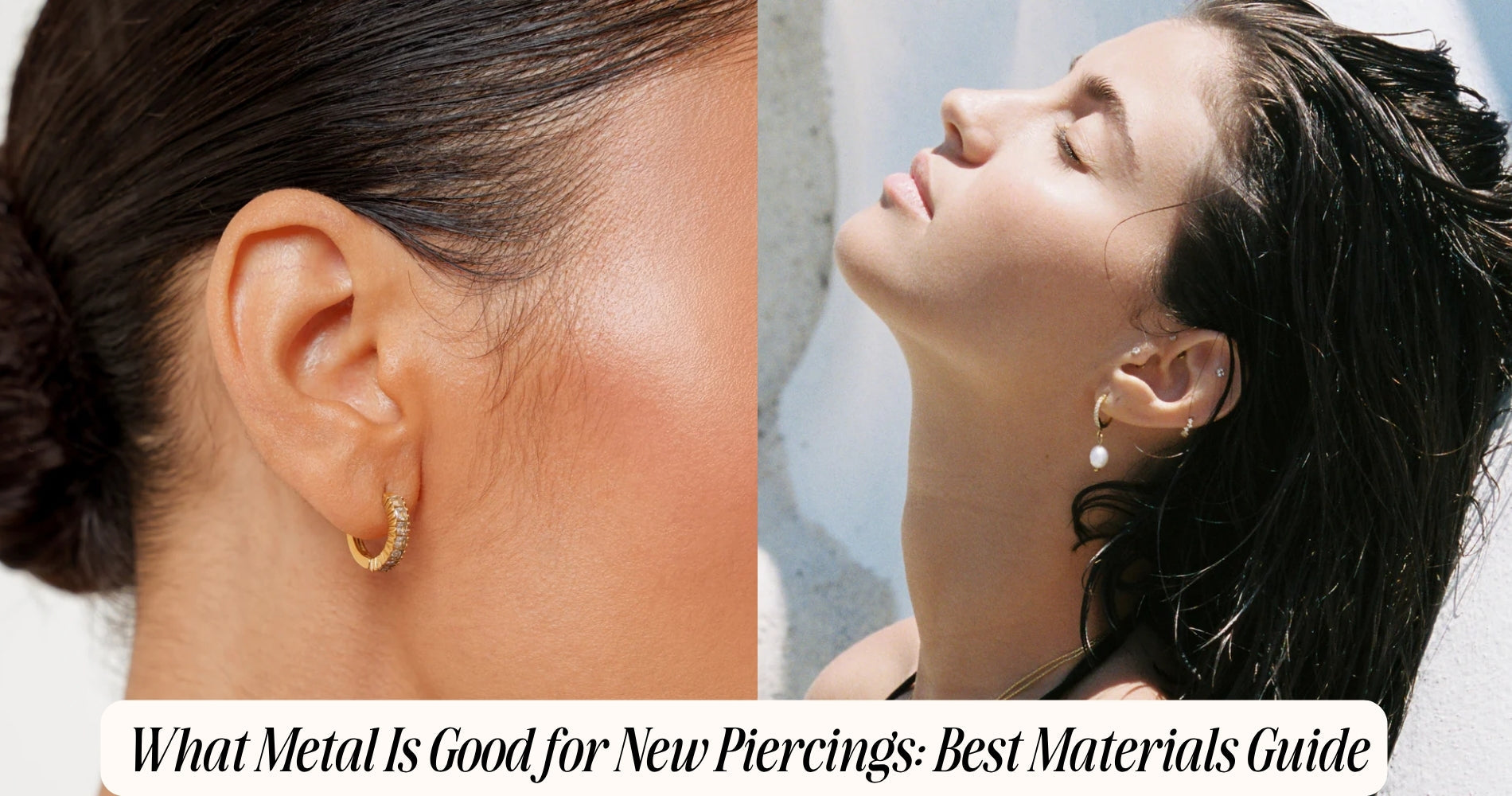
What Metal Is Good for New Piercings: Best Materials Guide
Getting a new piercing is exciting, but the excitement can quickly fade if the wrong metal causes irritation, prolonged healing, or an allergic reaction. Knowing what metal is good for new piercings before you even sit down for your appointment can save you weeks of discomfort and help your piercing heal properly the first time. If you are looking for safe, skin friendly styles to wear once your piercing has healed, our Hypoallergenic Hoop Earrings collection is designed specifically with sensitive ears in mind.
In this guide, we will break down the best metals for new piercings, which materials to avoid, and how to tell if your body is reacting poorly to a piece of jewelry.
Why Metal Choice Matters So Much for New Piercings
A fresh piercing is essentially an open wound, and the jewelry sitting inside it stays in near constant contact with broken skin for weeks or even months during healing. This makes metal choice far more important for a new piercing than for jewelry worn on already healed skin.
Certain metals can trigger allergic reactions, delay healing, or introduce irritants directly into the wound, leading to redness, swelling, discharge, or a stubborn bump that refuses to go away. Choosing the right metal from the very beginning reduces these risks significantly and sets your piercing up for a smoother healing process.

The Best Metals for New Piercings
A handful of metals are widely recommended by piercers and dermatologists for new piercings due to their biocompatibility, meaning they are far less likely to cause a reaction in the body.
Titanium: Widely considered the gold standard for new piercings, titanium is extremely hypoallergenic, lightweight, and resistant to corrosion. It is often used in medical implants, which speaks to how well the body tolerates it. Implant grade titanium, sometimes labeled ASTM F136, is the preferred choice among professional piercers.
Niobium: Similar to titanium in its biocompatibility, niobium is another excellent option for sensitive skin. It is naturally hypoallergenic and does not contain nickel, making it a safe choice for people prone to metal allergies.
Solid 14k or higher gold: Gold in its solid form, rather than plated, is another safe option for new piercings, provided it is nickel free. Higher karat gold, like 14k or 18k, contains less alloy content and is generally better tolerated than lower karat gold.
Platinum: Though less common due to cost, platinum is highly biocompatible and rarely causes allergic reactions, making it a safe though pricier option for new piercings.
Surgical grade stainless steel: While generally safe for most people, some surgical steel alloys still contain trace amounts of nickel, which can be problematic for those with heightened sensitivity. Look specifically for implant grade steel labeled ASTM F138 if choosing this option.

Metals to Avoid for New Piercings
Just as important as knowing which metals are safe is understanding which ones to avoid entirely during the healing process.
Nickel: One of the most common causes of metal allergies, nickel can cause redness, itching, swelling, and prolonged irritation. Many lower quality earrings, especially inexpensive fashion jewelry, contain nickel even when not clearly labeled.
Gold plated or gold filled jewelry: While these may look identical to solid gold, the base metal underneath the plating is often a nickel containing alloy. As the plating wears down, especially during the friction heavy healing period, the base metal can come into direct contact with the wound.
Sterling silver: Although beautiful and popular for healed piercings, sterling silver is generally not recommended for new piercings. It can tarnish and oxidize when exposed to bodily fluids during healing, which may introduce bacteria or irritation into the wound.
Costume or fashion jewelry: These pieces are often made from mixed alloys of unknown composition, frequently including nickel, lead, or other irritants that are unsuitable for a healing piercing.
Avoiding these materials during the initial healing period significantly reduces your risk of complications, even if you plan to wear them later once the piercing has fully healed.

Signs Your Piercing Metal Is Causing a Reaction
It is not always obvious right away whether a metal is causing a problem, especially since some redness and swelling is normal during the first few days after getting pierced. However, a few signs can indicate that the metal itself, rather than normal healing, is the issue.
Persistent itching that does not improve after the first week or two, especially if it worsens rather than fades, can point to an allergic reaction. Ongoing redness or a rash that extends beyond the immediate piercing site is another common warning sign. A hardened or discolored area of skin, sometimes with a shiny or waxy appearance, can indicate a nickel allergy specifically. Discharge that is thick, discolored, or has an unusual odor may suggest infection rather than a metal allergy, and should be evaluated by a professional.
If you notice any of these signs, it is worth switching to a confirmed hypoallergenic metal like titanium or niobium and monitoring whether symptoms improve.
How to Confirm Jewelry Is Safe for a New Piercing
Not all jewelry labeled hypoallergenic actually meets strict biocompatibility standards, so it helps to know what to look for. Reputable piercers use jewelry labeled with specific industry standards, such as ASTM F136 for titanium or ASTM F138 for surgical steel, which indicate the metal has been tested and verified for implant use.
If you are unsure about a specific piece, ask your piercer directly about the exact metal composition before your appointment, and avoid assuming that a piece is safe simply because it is marketed as hypoallergenic without further detail.

When to Switch Jewelry After Healing
Once a piercing has fully healed, which can take anywhere from a few weeks to several months depending on the location, you generally have more flexibility in the metals you can wear. At this stage, the skin has closed around the jewelry and is less vulnerable to reactions from short term contact.
That said, if you have a known metal sensitivity, it is often worth continuing to choose hypoallergenic materials even after healing to avoid future irritation, especially for pieces worn frequently or for long stretches of time, like everyday hoop earrings.
Final Thoughts
So, what metal is good for new piercings? Titanium and niobium are widely considered the safest choices due to their strong biocompatibility and low risk of allergic reaction, with solid gold and platinum serving as excellent alternatives for those willing to invest a bit more. Avoiding nickel, plated jewelry, and unverified alloys during the healing period is one of the simplest ways to protect a new piercing and support a smooth recovery.
Once your piercing has fully healed, continuing to choose high quality, skin friendly materials helps ensure your jewelry stays comfortable for years of everyday wear.
Frequently Asked Questions
1. What metal is good for new piercings? Titanium and niobium are considered the safest metals for new piercings due to their strong hypoallergenic properties, with solid gold and platinum as reliable alternatives.
2. Can I use sterling silver for a new piercing? Sterling silver is generally not recommended for new piercings, since it can tarnish during healing and potentially introduce irritation or bacteria into the wound.
3. How do I know if my piercing is reacting to the metal? Persistent itching, ongoing redness, a hardened or discolored area of skin, or a rash beyond the piercing site can all indicate a metal allergy rather than normal healing.
4. Is gold plated jewelry safe for new piercings? No, gold plated jewelry often has a nickel containing base metal underneath the plating, which can be exposed as the plating wears down during healing.
5. When can I switch to different earring styles after getting pierced? Once a piercing is fully healed, which can take several weeks to months, you generally have more flexibility, though those with known sensitivities should continue choosing hypoallergenic materials.









Leave a comment
This site is protected by hCaptcha and the hCaptcha Privacy Policy and Terms of Service apply.