

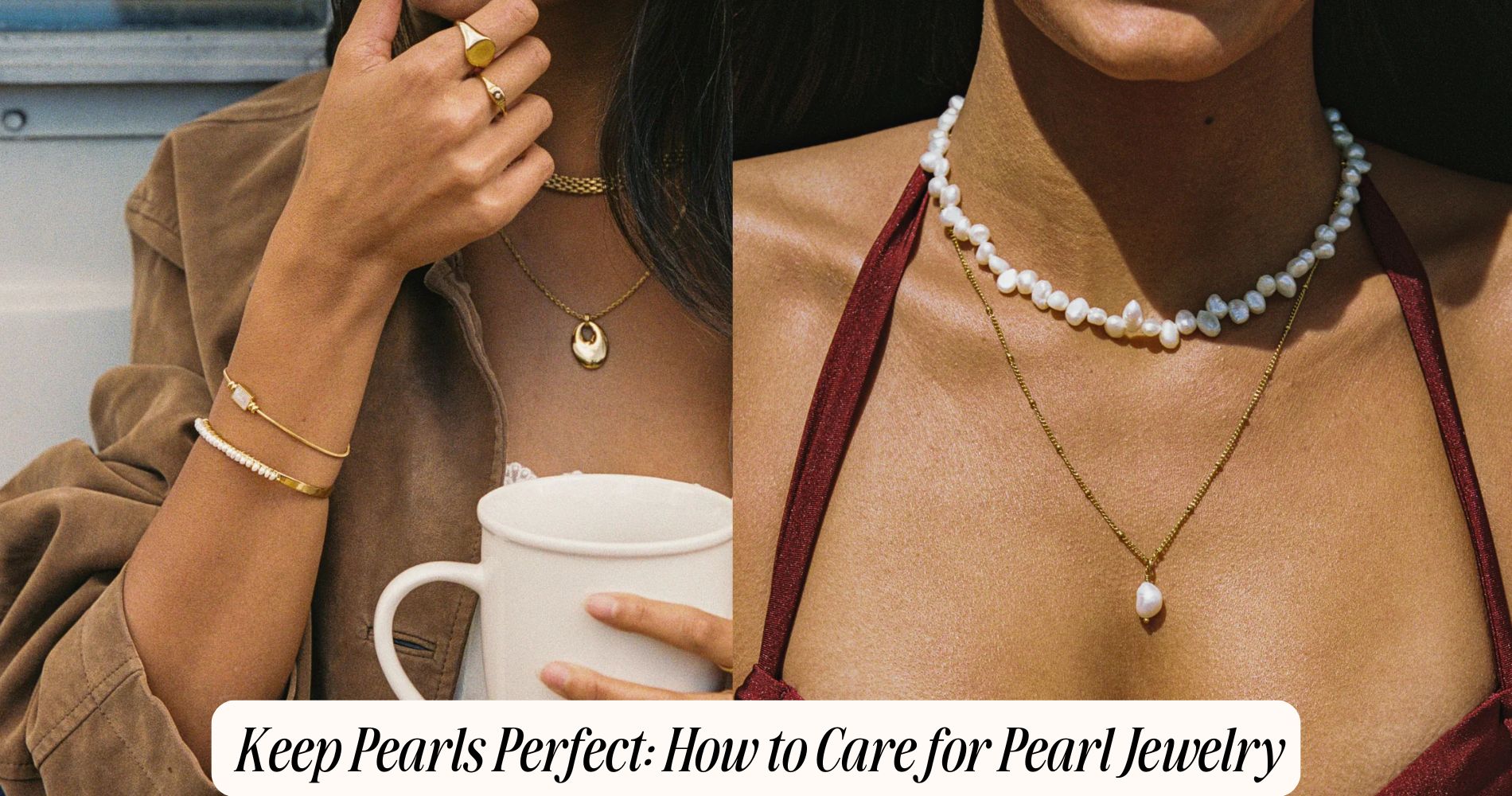
Keep Pearls Perfect: How to Care for Pearl Jewelry
How to care for pearl jewelry? Treat pearls as delicate, organic gems that require thoughtful care. Always put them on after makeup, perfume, and hairspray, and remove them first at night. Gently wipe each piece with a soft cloth after every wear, and clean only with lukewarm water and a tiny drop of mild soap—never soak the strand. To preserve the natural luster of pieces like Mother Of Pearl Jewelry, store them flat in a soft pouch away from heat and dryness. For frequently worn strands, restring every 1–2 years to keep them beautiful for the long term.
Understanding What Makes Pearls Unique
Because pearls aren’t mined but grown inside living mollusks, they’re far more delicate than most gemstones and need gentler handling.
You’re dealing with an organic gem, not hardened mineral crystals, so you must respect its softer surface and vulnerability to heat, acids, and dryness.
To understand this, look at the pearl formation process. A tiny irritant enters the mollusk, which coats it with layers of nacre. Those thin, overlapping plates create your pearl’s unique luster characteristics—the soft, inner glow you can’t fake with synthetics.
You also need to know that nacre thickness, surface smoothness, and color overtones vary from pearl to pearl.
When you recognize these traits, you can judge quality accurately and treat each piece appropriately.

Daily Habits to Protect Your Pearls
Although pearls are delicate, you can keep them beautiful for decades by building a few simple habits into your routine.
Put pearls on last, after makeup, perfume, and hairspray, and take them off first at day’s end. These wearing precautions reduce contact with chemicals that can dry or stain nacre.
Consider lifestyle factors before reaching for pearls. Skip them for workouts, swimming, cleaning, or sunbathing, where sweat, chlorine, detergents, and heat can cause damage.
Instead, choose them for low‑stress settings like the office or dinner.
When you remove your pearls, gently wipe them with a soft, dry cloth, then lay them flat, separate from sharp or metal jewelry, to prevent stretching, tangling, or abrasion during storage.
Safe Cleaning Methods for Pearl Jewelry
When it’s time to clean your pearls, use only the gentlest methods so you preserve their soft luster and delicate nacre.
Begin by wiping each piece with slightly damp soft cloths to remove surface oils and residue. Use lukewarm water, never hot, and avoid soaking strands, which can weaken the silk thread.
If you need more than water, mix a drop of gentle detergents with plenty of water to create a mild solution.
Dip a clean cloth into it, then carefully wipe each pearl, keeping metal components as dry as possible. Rinse with another damp cloth, not under running water.
Finally, lay the jewelry flat on a towel and let it air-dry completely before wearing it again.

Best Practices for Storing Pearls
To keep your pearls beautiful for years, store them so they’re protected from scratches, dryness, and sudden temperature changes.
Place each piece in a soft, lined jewelry box or individual protective pouches made of cotton or microfiber. Avoid plastic bags; they can trap moisture and emit chemicals that dull nacre.
Use gentle humidity control: pearls prefer a slightly humid environment, not extreme dryness. If your home is very dry, keep a small dish of water or a room humidifier nearby, but never store pearls in direct contact with water.
Lay strands flat to prevent stretching and avoid hanging them for long periods.
Keep pearls away from direct sunlight, radiators, and car glove compartments, where heat and light can cause cracking and discoloration.

When to Restring or Repair Your Pearls
Even with careful wear and storage, pearl strands and settings eventually need maintenance, and knowing the right time to act prevents costly damage or loss.
Inspect your necklace or bracelet regularly on a flat, light surface. If you see fraying thread near the clasp or between pearls, gaps between knots, or pearls that slide too freely, it’s time to restring.
Check clasps and earring backs for looseness or discoloration; weak components can fail suddenly.
Don’t wear damaged pieces while you “wait to fix them.” Stop using them and seek professional services. A jeweler experienced with pearls can apply appropriate rescue techniques, match silk or nylon thread, and restore knotting.
As a rule, restring frequently worn strands every 1–2 years.
Frequently Asked Questions
Can Pearls Be Worn Safely in Saltwater or Chlorinated Swimming Pools?
No, you shouldn’t wear pearls in saltwater or chlorinated pools. For saltwater safety and minimizing chlorine exposure, remove pearls before swimming, rinse them with clean water afterward if exposed, and dry them gently with a soft cloth.
Are Cultured Pearls Less Valuable or Durable Than Natural Pearls?
Cultured pearls aren’t necessarily less valuable or durable; you’ll judge them by the same value comparison standards: luster, surface, shape, size, and nacre thickness. Durability factors match natural pearls if nacre’s thick and you handle them gently.
Can I Wear Pearl Jewelry During Exercise or High-Sweat Activities?
You shouldn’t wear pearl jewelry during exercise or high-sweat activities; sweat damage can dull nacre. Take exercise precautions: remove pearls beforehand, wipe them with a soft cloth afterward, and store them separately in a breathable pouch.
How Can I Tell if My Pearls Are Real or Imitation?
You spot real pearl identification by gently rubbing pearls against your teeth; they’ll feel gritty, not smooth. Examine shape, luster, and drill holes. Imitation pearl characteristics include perfect uniformity, glassy shine, and chipped coating.
Do Different Pearl Types (Akoya, Tahitian, Freshwater) Need Different Care Routines?
Yes, all pearl types share similar care routines. You’ll treat akoya, Tahitian, and freshwater pearls alike: avoid chemicals, perfume, and hairspray, wipe them gently after wear, store separately, and restring regularly if worn often.
Conclusion
When you understand how delicate pearls are, you can protect their natural beauty for years. Handle them gently, keep them away from harsh chemicals, and wipe them clean after each wear. Store them separately, in a soft pouch or lined box, so they don’t scratch. Don’t wait to restring or repair them if you see gaps or fraying. With these simple habits, you’ll keep your pearls luminous, secure, and ready to wear anytime.










Leave a comment
This site is protected by hCaptcha and the hCaptcha Privacy Policy and Terms of Service apply.