

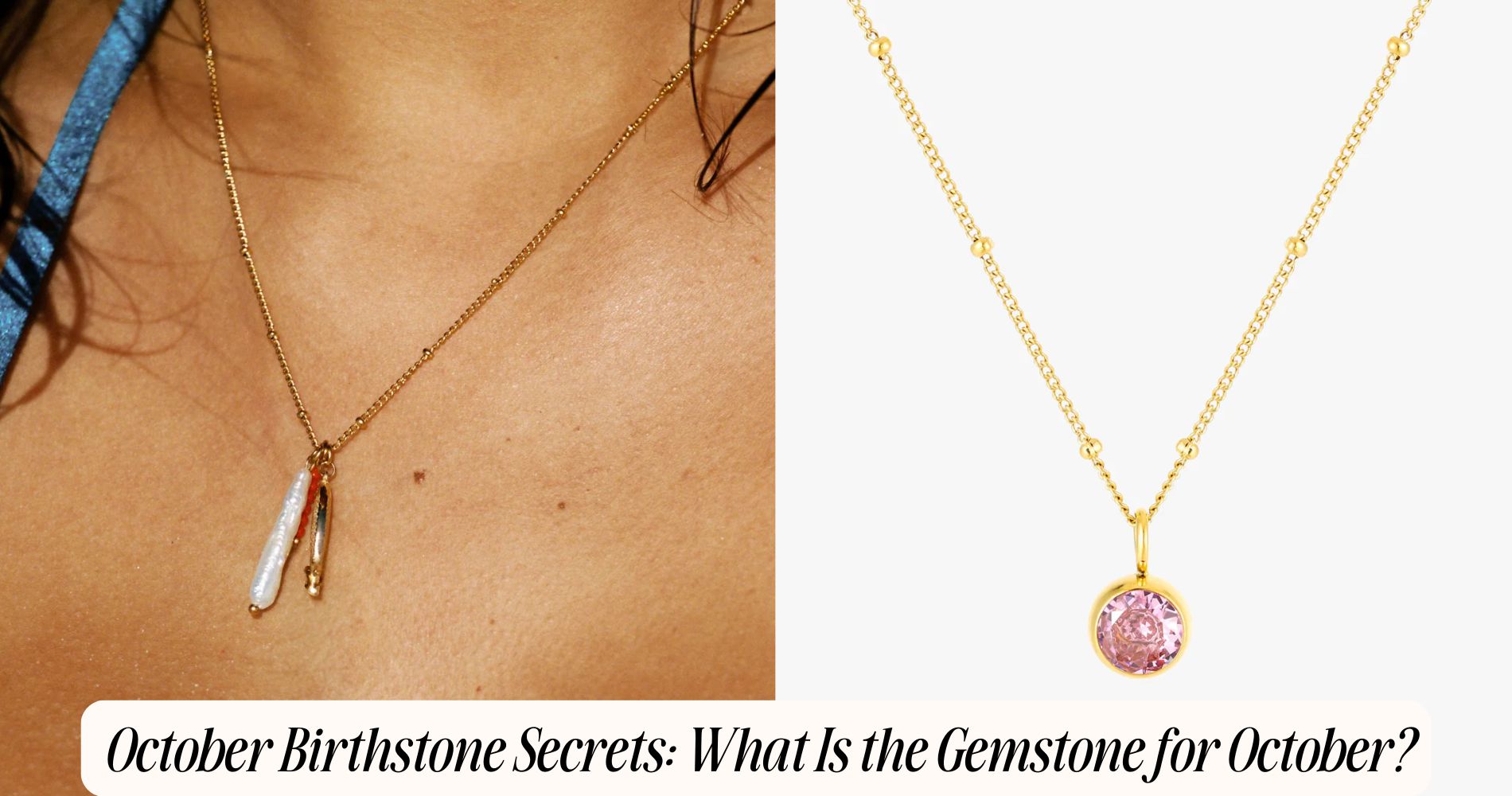
October Birthstone Secrets: What Is the Gemstone for October?
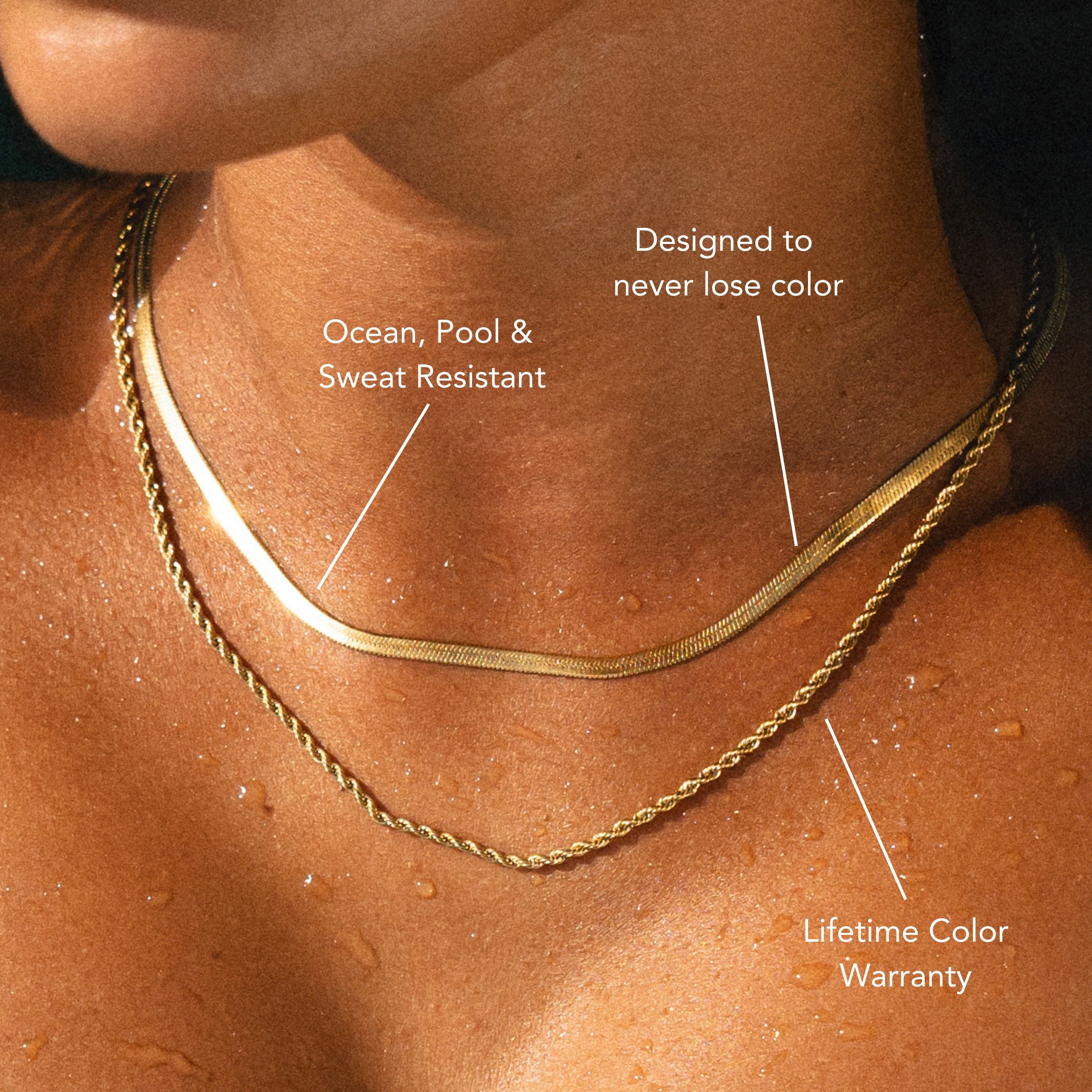
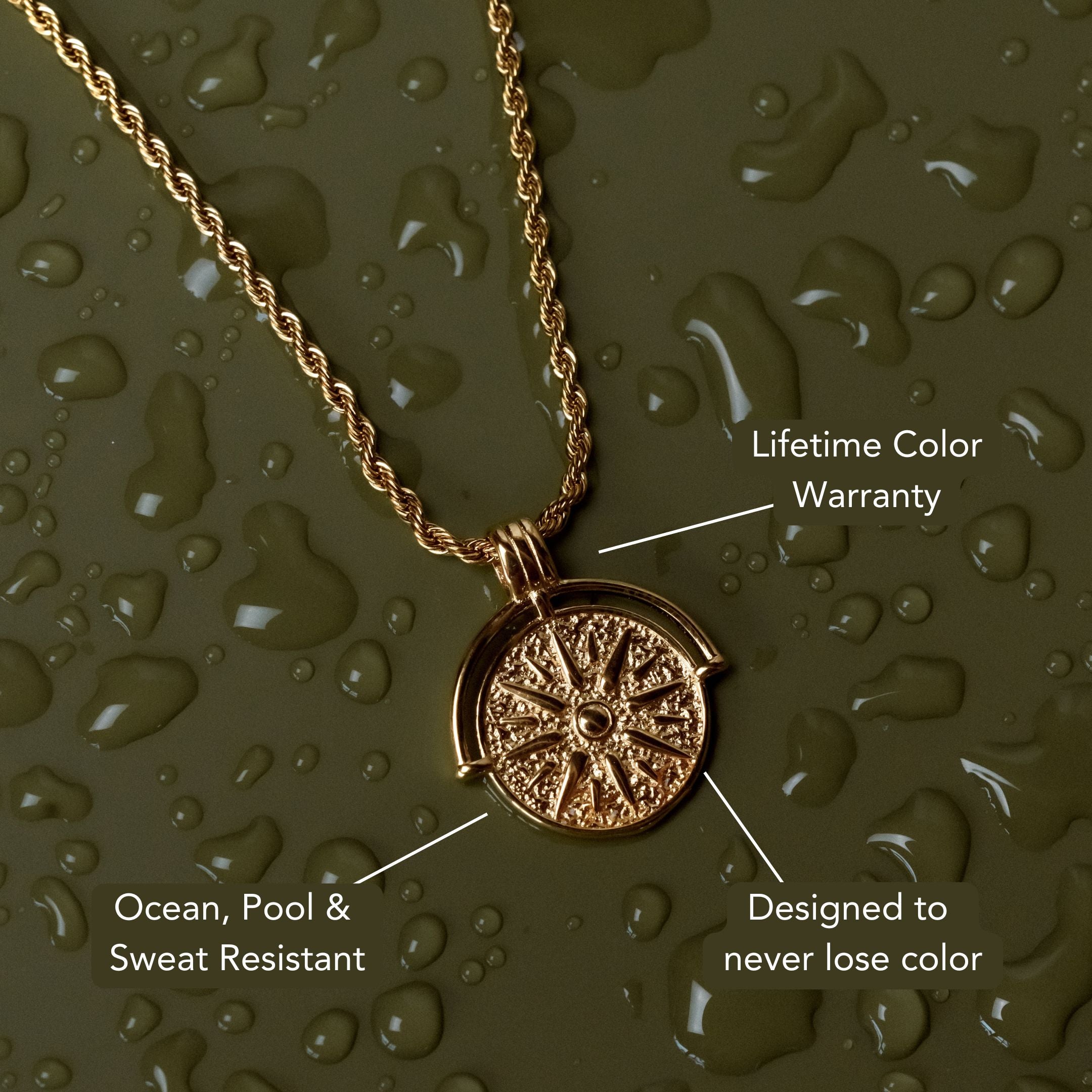
What is the gemstone for October? October is unique in having two official birthstones: opal and tourmaline. Opal is an amorphous, hydrated silica whose microscopic silica spheres create its signature diffraction-based play of color, while tourmaline is a crystalline borosilicate with a structured lattice and an exceptionally wide color range influenced by elements like lithium, iron, and manganese. These contrasting properties give each stone distinct optical and symbolic appeal—and when set in durable designs like Waterproof Jewelry, they can be enjoyed with greater everyday confidence. There’s much more to explore about how these gems compare in beauty, meaning, and wearability.
The Surprising Truth Behind October’s Two Birthstones
Although October’s birthstones appear stylistically opposed, opal and tourmaline share the month because they represent two distinct mineralogical stories: amorphous hydrated silica versus a complex crystalline borosilicate.
When you examine them scientifically, you’re looking at different lattice realities: opal lacks long-range order, while tourmaline crystallizes in the trigonal system with channel-like structures hosting variable cations.
You gain two diagnostic optical experiences: opal’s play-of-color from silica sphere diffraction, and tourmaline’s strong pleochroism from complex crystal chemistry.
This duality underpins many assigned mystical properties and deepens each stone’s cultural significance across jewelry traditions. Instead of one “correct” October gem, you’re offered a structural choice: disordered silica delivering spectral phenomena, or ordered borosilicate offering stable, saturated hues.

Opal’s Enchanted History and Symbolic Meanings
Tourmaline offers ordered chromatic stability, while opal’s amorphous silica framework has historically invited more speculative meanings. Cultures have repeatedly read its play-of-color as evidence of latent power.
When you examine opal at a microstructural level, you’re seeing silica spheres in semi-regular arrays diffracting light, a physical basis for myths that it stores multiple colors’ virtues in one lattice-free gemstone.
In classical opal folklore, Romans linked opal with foresight and invincibility, while medieval lapidaries claimed it enhanced vision and intellect.
Later European superstition briefly recast it as a harbinger of misfortune, a view modern mineralogists dismiss.
Contemporary metaphysical traditions of opal healing attribute it with emotional stabilization, creativity amplification, and subtle-field cleansing, mirroring its complex internal optical dynamics.
Tourmaline’s Rise: From Hidden Gem to October Star
Once considered a collector’s curiosity rather than a mainstream jewel, tourmaline has become October’s co-headlining birthstone by combining geologic diversity with modern gemological appeal.
You’re not just choosing a colorful stone; you’re choosing a complex borosilicate mineral with variable sodium, calcium, aluminum, lithium, iron, and manganese content, expressed across multiple tourmaline varieties.
You’ll see elbaite, dravite, schorl, and rare liddicoatite, each identified by distinct cation chemistry, pleochroism, and crystallization within trigonal prisms.
This structural versatility yields everything from neon copper-bearing “Paraíba” to classic bi-color and watermelon sections.
As you evaluate gemstone symbolism, tourmaline’s rise reflects its perceived alignment with protection, grounding, and emotional balance—attributes increasingly verified in consumer demand, market valuations, and its formal adoption as an official October birthstone.

Color, Energy, and Symbolism: Opal vs. Tourmaline
Two distinctly different mineral systems anchor October’s birthstones, and their color behavior shapes how people interpret their “energy” and symbolism.
Opal, an amorphous hydrated silica, owes its opal color to orderly silica sphere arrays that diffract light, producing spectral “play-of-color.” You perceive shifting hues as emotional fluidity, intuition, and creative surge, making opal a symbol of adaptive thinking and perceptual sensitivity.
Tourmaline, by contrast, is a crystalline borosilicate with complex solid-solution chemistry. Trace-element substitutions generate stable body colors—from iron-rich greens to manganese-pink and lithium-induced paraíba blues—often in zoned crystals.
You tend to associate this structured tourmaline energy with grounding, polarity balancing, and focused intention, reading its linear crystal habit and enduring color as markers of direction, resilience, and calibrated personal power.

How October’s Birthstones Are Formed in Nature
The way opal and tourmaline carry color and “energy” starts with the very environments that build them atom by atom.
You’re looking at two distinct formation processes shaped by contrasting natural environments.
Opal forms at low temperatures when silica-rich waters percolate through fractures in rock. As water evaporates, it deposits amorphous silica spheres.
When these spheres pack in orderly arrays, they diffract light and create precious opal’s play-of-color; random packing yields common opal.
Tourmaline crystallizes from late-stage, boron-rich pegmatitic fluids. As these hot aqueous melts cool, complex borosilicate structures grow, incorporating elements like iron, manganese, lithium, or chromium.
Those trace elements determine hue, while zoning records shifts in fluid chemistry, pressure, and temperature during crystal growth.

Choosing the Right October Gemstone for Your Style
How do you translate opal’s fluid light-play or tourmaline’s sharply defined hues into pieces you’ll actually wear?
Start by mapping your style preferences to each mineral’s optical behavior. If you favor subtlety, choose white or crystal opal with fine, pinfire play-of-color set in minimalist bezels. For bolder looks, black opal or boulder opal delivers higher contrast and visual saturation.
If you like precision and geometry, tourmaline’s prismatic crystal habit and strong pleochroism suit step cuts, baguettes, and linear designs. Pink, green, and indicolite tourmaline create sophisticated gemstone combinations, especially in ombré layouts that exploit their continuous solid-solution series.
Match metal color to undertone: cooler opals and blue‑green tourmalines pair with white metals; warmer varieties with yellow or rose gold.
Caring for Opal and Tourmaline Jewelry
Because opal and tourmaline differ sharply in structure and stability, you need to treat October’s gems as two distinct care cases, not one.
Opal’s hydrated amorphous silica framework makes it sensitive to rapid temperature change, low humidity, and ultrasonic or steam cleaners. Use the gentlest cleaning techniques: lukewarm water, mild detergent, soft brush, then blot dry; never soak doublets or triplets.
Tourmaline’s trigonal borosilicate crystal is harder and less porous, but still vulnerable to thermal shock and harsh chemicals; clean it similarly, but you may use a soft polishing cloth to restore luster.
For storage tips, keep opals in a padded, humidity-stable box, ideally separate from harder gems; store tourmalines individually to prevent scratching and pleochroic color zoning visibility issues.
Modern Trends and Unique October Birthstone Alternatives
Once you understand how opal and tourmaline behave in daily wear, you can start exploring how October’s palette now extends far beyond the classic pair.
You’ll see modern designs using iridescent moonstone (a feldspar with adularescence) as a softer, more cleavage‑resistant stand‑in for opal. High‑saturation pink and bicolor spinel, with a Mohs hardness of 8, offers greater durability than many tourmalines.
You can also choose sapphire in pastel pink or teal; its corundum structure and excellent toughness make it ideal for rings.
For unique settings, designers bezel‑set fragile stones, add protective halos, or suspend cabochons in open, engineered galleries to minimize impact.
Lab‑grown opal and tourmaline provide consistent color zoning, controlled porosity, and budget‑friendly options without sacrificing visual complexity.
Frequently Asked Questions
Can October Birthstones Be Used for Engagement Rings or Wedding Bands?
You can use October birthstones for engagement ring styles and wedding band options, but prioritize durability: select high-quality opal with protective settings or sapphire-quality tourmaline, verify hardness, cleavage, treatment history, and secure gemstone orientation during mounting.
Are There Spiritual or Healing Practices Specific to October Birthstones?
You’ll find specific spiritual or healing practices: meditations using opal’s play-of-color to enhance intuition and emotional release, and tourmaline’s pyroelectric structure to “ground” energy, stabilize mood, and symbolically transmute negativity—core spiritual significance and healing properties.
How Do October Birthstones Compare in Investment and Resale Value?
You’ll find October birthstones show modest investment potential and unpredictable resale trends. Fine natural opal remains illiquid, sensitive to condition; precision-cut, untreated pink tourmaline offers comparatively stronger price stability, market transparency, and more consistent long‑term appreciation prospects.
Can Men Wear October Birthstone Jewelry, and What Styles Suit Them Best?
You can absolutely wear October birthstone jewelry; choose men’s jewelry styles like bezel-set opal or tourmaline signet rings, cufflinks, or tie bars. Prioritize darker bodycolor, strong play‑of‑color, and gemstone color meanings aligned with creativity and emotional balance.
Are There Culturally Specific October Birthstone Traditions Around the World?
You’ll find culturally specific October birthstone traditions in Hindu, Japanese, and European systems, where opal or tourmaline carry cultural significance, gemstone folklore, and protective, love‑enhancing, or visionary properties, often embedded in talismans, marriage tokens, and ritual jewelry.
Conclusion
When you choose an October birthstone, you’re aligning yourself with two very different mineral marvels. Opal, a hydrated amorphous silica with a unique play-of-color, speaks to fluidity, intuition, and iridescent nuance. Tourmaline, a complex borosilicate with striking pleochroism, offers structure, durability, and chromatic range. By understanding their distinct crystal chemistry, optical behavior, and care requirements, you can select, wear, and preserve the October gemstone that best reflects your personal style and energetic preferences.










Leave a comment
This site is protected by hCaptcha and the hCaptcha Privacy Policy and Terms of Service apply.