


Different Types of Chains for Jewelry
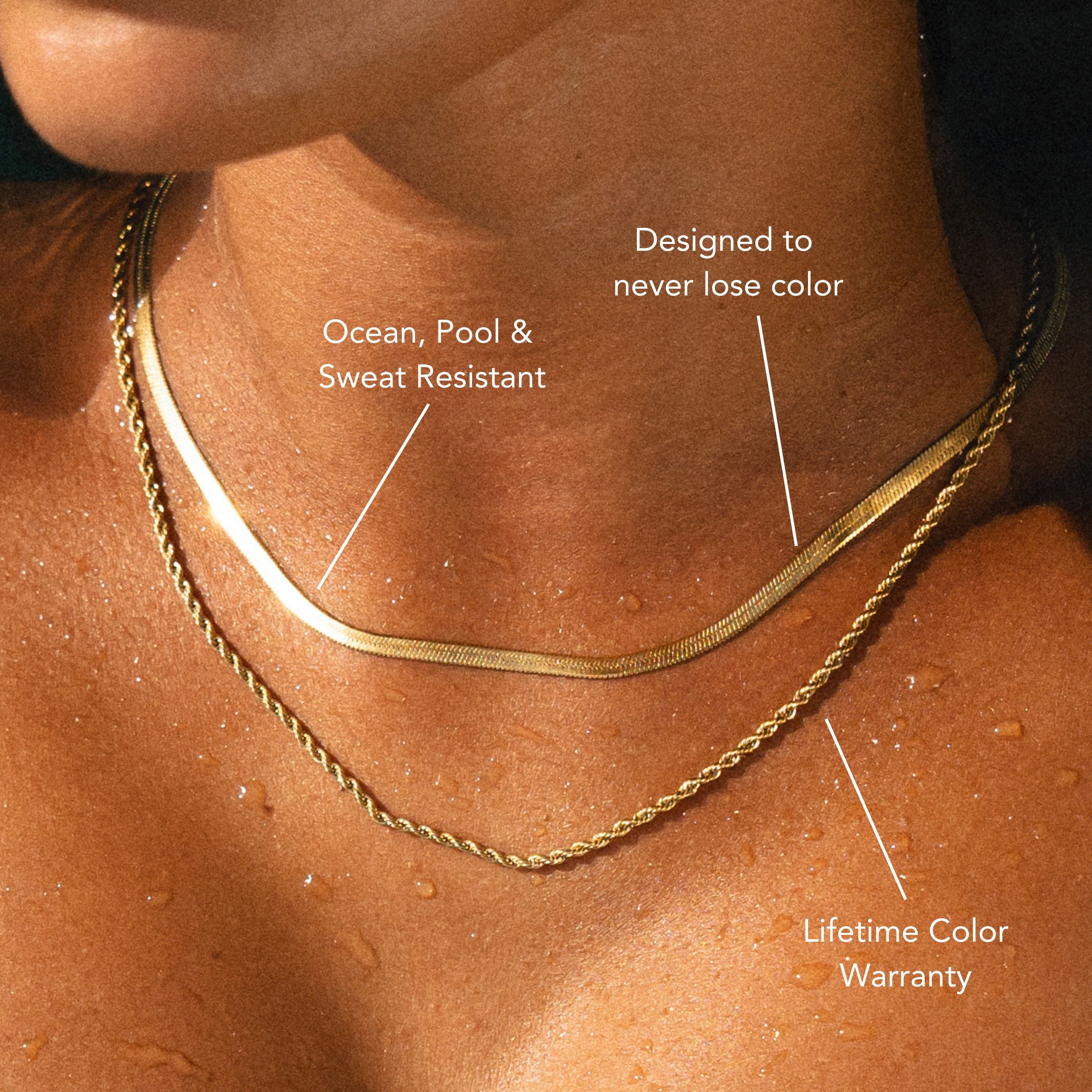
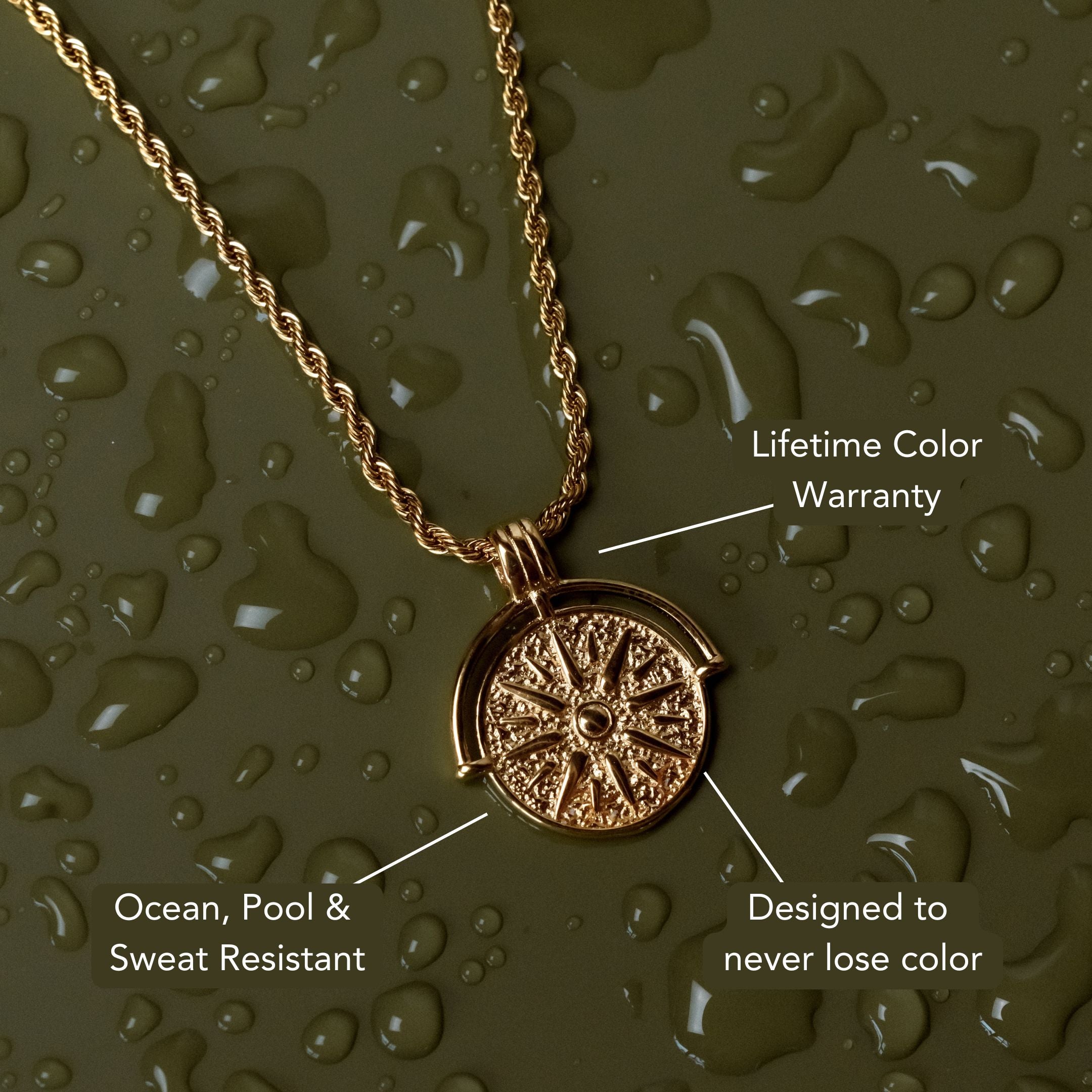
Explore different types of chains for jewelry by understanding how link geometry, gauge, and finish shape both style and durability. Cable chains offer uniform versatility, while curb and Figaro designs lie flat with beveled facets for dense, low-profile shine. Rope chains weave strands to share load and resist kinks, box chains provide square-link stability for charms, and snake chains deliver fluid, tube-like smoothness. Singapore chains twist for lightweight flexibility and high reflectivity, while wheat chains braid for supple strength. For long-lasting comfort and water-resistant performance, explore our Waterproof Necklaces collection. Next, discover how dimensions and materials fine-tune drape, sparkle, and strength.
Cable Chain
The cable chain is the fundamental link style: uniform, round or oval links connected end to end, resembling miniature anchor chain.
You’ll recognize its symmetrical geometry, consistent wire gauge, and predictable articulation, which deliver balanced tensile strength and dependable drape. Among cable chain styles, you can specify round vs. oval links, micro-cable for delicate pendants, or heavy-gauge variants for durability.
Choose open or soldered links depending on load-bearing needs and snag resistance.
Evaluate cable chain materials by application: 14k or 18k gold for fine jewelry, sterling silver for brightness and value, platinum for superior wear and hypoallergenic performance, and stainless steel or titanium for high strength and abrasion resistance.
Consider link diameter, aspect ratio, and finish (polished, matte, diamond-cut) to optimize aesthetics and attachment integrity.

Curb Chain
Unlike simple cable links, a curb chain features oval or round links twisted and precision-planed so they lie flat in a single plane, creating a low-profile, high-contact surface that reflects light uniformly.
You get excellent drape, abrasion resistance, and a mirror-like luster that suits daily wear and pendant suspension. Evaluate curb chain styles by gauge, link pitch, and bevel angle; tighter pitches yield a denser visual field, while broader pitches emphasize individual links.
Select curb chain materials based on mechanical demands and finish. Solid 14k or 18k gold offers ductility and tarnish resistance; sterling silver delivers brightness with moderate hardness; stainless steel provides high tensile strength; platinum maximizes durability.
Consider soldered links, precision machining, and lobster or box clasps for load-bearing reliability and long-term service.
Figaro Chain
Building on the curb chain’s flat-lying geometry, a Figaro chain alternates a repeating sequence—typically two or three short curb-style links followed by one elongated link—creating a rhythmic cadence of mass and negative space.
You get beveled, twisted, or high-polish facets that enhance reflectivity while preserving low profile drape. The pattern’s metric—often 3+1 or 2+1—governs visual tempo and tensile performance.
Understanding figaro chain history informs selection: originating in Italy and popularized by Neapolitan goldsmiths, the motif references operatic cadence and Mediterranean artisanal traditions.
Evaluate figaro chain styles by gauge, link ratio, and finish. Thicker gauges deliver greater yield strength and pendant-bearing capacity; finer gauges favor layering.
Choose solid-link construction for durability, soldered joints for wear resistance, and hypoallergenic alloys for daily use.
Rope Chain
Helix-inspired geometry defines a rope chain: interlaced links twist into a helical strand, creating continuous visual torque and multi-axial load sharing. You get a dense, flexible cable that resists kinking and distributes stress along multiple vectors, boosting rope chain durability under daily wear.
Link diameters, pitch, and strand count govern mass, light return, and tensile performance.
When you evaluate rope chain styles, choose between tight-twist micro-rope for subtle scintillation, standard single-strand for balanced drape, or double/triple-rope constructions for enhanced torsional rigidity and bolder presence.
Solid links maximize wear life and polish retention; hollow variants reduce weight but dent more easily. Pairing with heavier pendants, size up gauge and clasp rating for load compatibility.
For finish, high-lustre diamond-cut facets amplify sparkle, while smooth-cut options favor continuous sheen and snag resistance.

Box Chain
Architecture with intention: a box chain assembles square or rectangular links into a continuous, four-sided profile that delivers planar stability, clean geometry, and low-friction articulation.
You get a consistent cross-section that resists kinking and distributes tensile load efficiently, enhancing box chain durability under daily wear. Precision-soldered or laser-welded seams reduce snag points, while tight tolerances yield a smooth drape and controlled flexion.
Choose gauges strategically: slimmer links suit pendants requiring minimal visual bulk; thicker dimensions support heavier charms without deformation.
For clasp interfaces, match end caps and soldered jump rings to preserve axial alignment.
Explore box chain design ideas such as mixed-metal segments, graduated link sizes, or matte versus high-polish finishes to tune reflectivity.
You’ll value its structural integrity, straightforward servicing, and timeless, modular aesthetics.
Snake Chain
Where box links create articulated squares, a snake chain forms a near-continuous tube by tightly interlocking slightly curved plates or wedge-shaped cups around a cord-like axis.
You get a fluid, drape-ready profile with minimal visual segmentation, ideal for pendants that demand uninterrupted reflectivity. Common snake chain styles include round, square, and hexagonal cross-sections, plus diamond-cut variants that amplify specular highlights.
You’ll find flexible solid-core constructions and hollow-core options that reduce weight but require gentler handling.
Prioritize snake chain maintenance: avoid kinking by coiling loosely, remove before high-impact activity, and store flat in a lined tray.
Clean with lukewarm water, mild detergent, and a soft brush, then dry thoroughly. Inspect end caps, soldered joints, and clasps for torsional stress, replacing worn components promptly.
Singapore Chain
Although often mistaken for a simple twisted curb, a Singapore chain uses interlaced, diamond-cut links pre-twisted along the axis to produce a torque-set, faceted ribbon that shimmers with pronounced scintillation.
You’ll recognize the geometry by its helical drape, high torsional stability, and exceptional light return under minimal movement. In Singapore chain design, the alternating, offset links create micro-chamfers that amplify brilliance while maintaining flexibility and kink resistance.
Choose Singapore chain materials that match your wear profile: 14k or 18k gold for tensile strength and luster retention, platinum for superior durability and hypoallergenic performance, or sterling silver for high reflectivity with routine polishing.
Opt for soldered links and a secure lobster clasp. Keep pendants lightweight to avoid torque fatigue. Clean ultrasonically; store untwisted to preserve the calibrated helix.
Wheat Chain
Even before you spot its velvety drape, a wheat chain reveals itself by the interlocking, chevron-oriented links formed from oval or teardrop wire, braided in a four-strand pattern to create a continuous, grain-like profile.
You’ll appreciate its flexible articulation, minimal snagging, and balanced torsional resistance. Jewelers favor it for pendants because the cross-sectional density distributes load evenly, preserving alignment at the bail.
Understanding wheat chain history helps you evaluate provenance; the design evolved from Byzantine and Spiga constructions, refined by precision milling and laser-soldering for consistent geometry.
You can trust wheat chain durability: tightly nested links resist kinking, while soldered joints mitigate creep and deformation.
Specify thicker gauges (1.5–2.5 mm) for heavier charms, choose solid over hollow links, and verify clasp integrity.
Frequently Asked Questions
Which Chain Styles Are Best for People With Metal Allergies?
Opt for cable or box chains crafted from hypoallergenic materials like titanium, niobium, or 316L surgical stainless steel. You’ll minimize skin sensitivity by avoiding nickel-plated alloys; choose solid 14k+ gold or platinum, passivated finishes, and ASTM-compliant compositions.
How Do I Choose the Right Clasp for Each Chain Type?
Match clasp styles to chain structure: lobster for heavy cable/curb; spring ring for fine box/rope; toggle for chunky links; magnetic for arthritic use, add safety. Prioritize clasp materials: soldered precious alloys, corrosion‑resistant stainless, strong titanium; avoid weak plated bases.
What Chain Thickness Is Ideal for Heavy Pendants?
Choose 2.5–4 mm thickness for heavy pendants. This gauge provides sufficient chain weight, tensile strength, and pendant balance. Prefer solid cable, curb, or rope links, soldered joints, and high-yield alloys (14k gold, stainless) to prevent elongation, kinking, or failure.
Are Certain Chain Styles Better for Layered Necklaces?
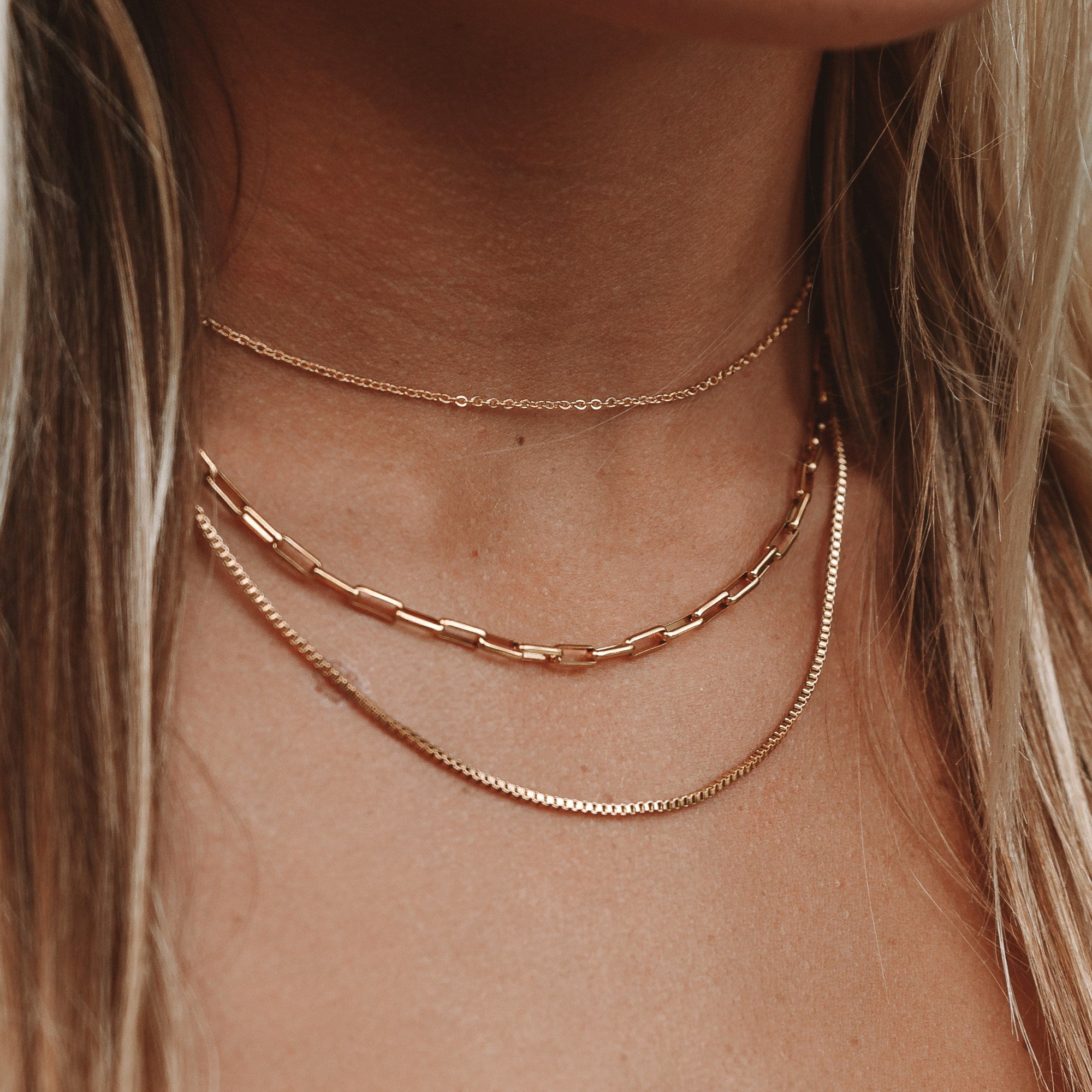
Yes. You’ll optimize layering techniques using varied chain lengths and distinct profiles: cable or rope as base, curb or figaro mid-tier, satellite for texture, and box or snake for sleek contrast. Add extenders, staggered drops, and balanced weight distribution.
How Do I Prevent Tangling When Storing Delicate Chains?
Use vertical chain storage with individual hooks, anti-tangle tabs, and microfiber pouches. Separate chains by length and metal, clasp them, and route through straws or silicon sleeves. Employ desiccants, anti-tarnish strips, modular jewelry organization, and labeled compartments.
Conclusion
You’ve got a solid grasp of chain architectures and their mechanical profiles. Now, match form to function: prioritize tensile strength and kink resistance for daily wear (rope, box, wheat), opt for drape and fluidity for pendants (snake, Singapore), and choose classic link geometries for repairability and durability (cable, curb, Figaro). Evaluate link gauge, soldered joints, metal hardness, and clasp integrity. With these parameters, you’ll specify chains that balance aesthetics, longevity, and load-bearing performance.











Leave a comment
This site is protected by hCaptcha and the hCaptcha Privacy Policy and Terms of Service apply.