

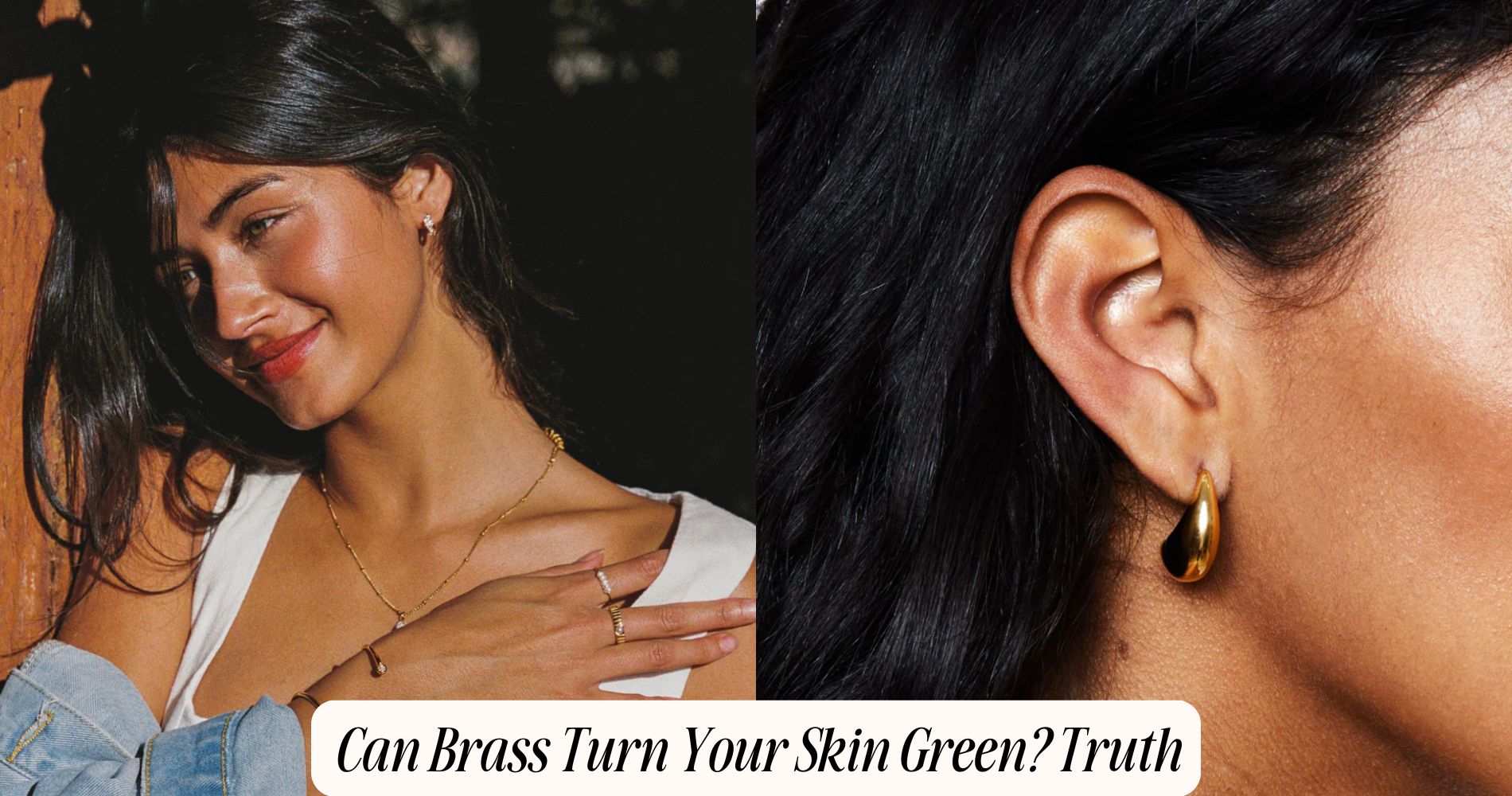
Can Brass Turn Your Skin Green? Truth
Can brass turn your skin green? Yes—brass can tint your skin green. Its copper content oxidizes when exposed to sweat and air, forming soluble copper salts that can transfer to skin. Moisture, acidity, and chlorides (from sweat, lotions, or pools) accelerate the process. This is a benign cosmetic stain, not a toxicity issue. Reduce discoloration by keeping brass dry, removing jewelry before exercise or bathing, cleaning with mild detergent, and sealing pieces with a clear lacquer or wax. If you have sensitive skin or dermatitis, consider nickel-free alternatives like gold, titanium, or styles from our Hypoallergenic Hoop Earrings
collection. Practical prevention methods follow.
What Brass Is Made Of and Why It Matters
Although you encounter it in doorknobs, instruments, and fittings, brass isn't a pure metal; it’s an alloy primarily of copper and zinc, whose proportions dictate its properties and applications.
You evaluate brass composition by percent copper versus zinc: higher copper content increases electrical and thermal conductivity, ductility, and corrosion resistance; higher zinc raises strength and hardness but can reduce corrosion resistance in specific media.
Lead, tin, or small nickel additions fine-tune alloy properties—improving machinability, dezincification resistance, or color.
You’ll see standardized designations (e.g., C260 cartridge brass ~70% Cu, 30% Zn) used to match mechanical requirements, formability, and surface finish.
For wear-prone components, alpha-beta brasses deliver higher strength; for cold-forming and decorative use, alpha brasses provide superior ductility, polishability, and consistent luster.

The Chemistry Behind Green Skin Stains
When brass contacts sweat and ambient oxygen, copper atoms at the surface oxidize and then complex with chloride, carbonate, and carboxylate ions from perspiration, forming green copper salts that transfer to your skin.
You’re observing surface redox chemical reactions: metallic copper (Cu0) oxidizes to Cu+, then Cu2+, which binds anions to yield malachite-like carbonates and basic copper chlorides. These salts are loosely adherent and smear onto the stratum corneum.
Acidity, chloride concentration, and humidity accelerate corrosion kinetics. Friction disrupts passivation films, exposing fresh metal and maintaining ion release.
If you wash hands, you shift equilibria and remove soluble complexes. Skin sensitivity doesn’t cause the pigment, but it can modulate local pH and barrier integrity, increasing copper ion availability and deposition without indicating systemic copper overload.
Who Is Most Likely to See a Green Tint
Who’s most prone to a green tint from brass? You’re more likely to notice discoloration if you’re a frequent jewelry wearer, have sensitive skin, or exhibit higher cutaneous moisture.
Individuals with rapid transepidermal water loss or naturally humid skin microclimates facilitate ion exchange between brass alloys and the stratum corneum. If you prefer snug rings or cuffs, prolonged occlusion increases contact time and residue transfer.
You’ll also see a higher likelihood if you have a history of contact reactivity to copper-containing alloys, though this is a surface staining phenomenon rather than an allergic dermatitis.
Jewelry wearers with active lifestyles, warmer peripheral skin temperatures, or thicker callused areas can accumulate copper salts more visibly.
New, uncoated brass components and worn plating also raise the probability of a green tint.
Everyday Triggers: Sweat, Ph, and Products
Because daily chemistry drives most brass discoloration, sweat composition, skin pH, and topical products modulate copper ion release and green residue formation.
When you perspire, chloride ions, lactic acid, and urea alter sweat acidity, accelerating brass corrosion and soluble copper salts at the skin–metal interface. If your baseline skin pH trends acidic, you’ll mobilize more copper; if it’s alkaline from cleansers, you may still increase ionic exchange.
Skin sensitivity and higher eccrine output amplify contact time and moisture, sustaining reactions.
Cosmetics and topicals matter. Sunscreens with organic acids, retinoids, or avobenzone, plus moisturizers containing AHAs, BHAs, or urea, can chelate or reduce copper, enhancing transfer.
Hand sanitizers and fragrance ethanol dehydrate transiently, then rebound moisture with residues, facilitating deposition and visible green films.
How to Prevent Brass From Staining Skin
Understanding how sweat chemistry, pH, and topical agents mobilize copper sets up practical ways to stop brass from marking skin. You can implement preventive measures that reduce ion release and surface corrosion.
Prioritize jewelry care: keep brass dry, remove pieces before exercise, bathing, or chlorinated exposure, and cleanse with mild detergent, then dry thoroughly to minimize chloride and acid residues.
Apply a thin, nonreactive barrier—clear polymer sealant, microcrystalline wax, or a hypoallergenic lacquer—to isolate skin from copper alloys. Choose tight-grain finishes and well-plated brass (nickel-free palladium or rhodium flash) to slow tarnish.
Rotate wear to limit prolonged moisture contact. Maintain skin pH with fragrance-free moisturizers; avoid acidic lotions, retinoids, or benzoyl peroxide on contact sites.
Store brass in low-humidity containers with anti-tarnish strips.
Quick Fixes if Your Skin Turns Green
Even if you’ve prepped and maintained your brass, you can stop visible green transfer quickly with simple, low-risk steps.
First, remove the item immediately. Wash the area with lukewarm water and a mild, fragrance-free cleanser to eliminate copper salts. Pat dry; don’t abrade.
Apply a bland emollient (petrolatum or dimethicone) to create a temporary barrier. If discoloration persists, use a cotton pad with micellar water or 70% isopropyl alcohol for brief contact, then moisturize. For sensitive skin care, prefer hypoallergenic moisturizers containing ceramides.
If irritation occurs, apply 1% hydrocortisone for 1–2 days; discontinue if stinging develops. Resume wear only when the skin is clear and dry.
As quick remedies during wear, place a transparent, breathable barrier (liquid bandage or hydrocolloid strip) on the contact site. Avoid occlusion if you’re sweating.
Safe Cleaning and Care for Brass Jewelry
While brass is durable, it tarnishes and sheds copper salts without routine upkeep, so clean it with methods that minimize abrasion and moisture exposure. Use a mild detergent in lukewarm water, then rinse, pat dry, and air-dry completely.
For patina removal, select non-abrasive brass polishing techniques: apply a microcrystalline wax polish or diluted lemon juice with baking soda, using a soft microfiber cloth and light pressure. Avoid steel wool, toothpaste, ammonia, and prolonged soaking, which accelerate dezincification and surface pitting.
Seal cleaned pieces with a clear lacquer, polymer barrier, or carnauba-based wax to reduce skin contact with copper ions.
Implement jewelry storage tips: store items individually in anti-tarnish pouches, silica-gel–ventilated boxes, or acid-free tissue. Keep away from humidity, cosmetics, sweat, and chlorinated water.
Comparing Brass to Gold, Silver, and Stainless Steel
Despite its resilience and warm hue, brass differs markedly from gold, silver, and stainless steel in composition, durability, and biocompatibility.
Brass is a copper–zinc alloy; it can leach copper ions in sweat, especially at low pH, increasing the risk of green discoloration.
In a brass durability comparison, you’ll find moderate hardness but variable corrosion resistance depending on zinc content and any lacquer.
When Green Staining Might Signal a Problem
If green staining spreads beyond the jewelry contact area, persists after washing, or accompanies erythema, pruritus, burning, or vesicles, treat it as a potential contact dermatitis rather than benign copper transfer.
You should assess timing, distribution, and symptom intensity. Nonirritating green staining causes typically involve superficial copper salts forming with sweat, lotions, or acidic pH and resolve quickly.
Problematic skin reactions suggest allergic contact dermatitis to nickel, zinc, or brass alloys, or irritant dermatitis from friction, occlusion, or moisture.
Document triggers: new jewelry, prolonged wear, exercise, or topical products.
Examine for sharply demarcated plaques, edema, fissures, or weeping. If symptoms persist beyond 48–72 hours, stop exposure and cleanse with mild surfactant.
Consider topical corticosteroids for inflammation and seek evaluation for patch testing to identify sensitizers.
Choosing Hypoallergenic and Low-Reaction Alternatives
Because recurrent reactions often reflect metal sensitization, select materials with low allergenic potential and minimal corrosion in sweat. You’ll reduce dermatitis risk by choosing hypoallergenic materials verified for low nickel release.
Prioritize implant-grade titanium (ASTM F136), titanium niobium, niobium, or platinum; these demonstrate inert surfaces and minimal ion shedding. For gold, use 14k–18k solid, nickel-free alloys; avoid gold-plated brass. Surgical stainless steel (316L/316LVM) may be tolerated, but nickel-sensitive individuals should trial cautiously.
For piercings, prefer internally threaded or threadless titanium posts. Consider ceramic, medical-grade silicone, or glass as nonmetal jewelry alternatives for short-term wear.
Guarantee smooth finishes, tight sealants, and dry skin contact to limit galvanic corrosion. Verify labeling (EU nickel directive compliance). If reactions persist, consult dermatology for patch testing and individualized guidance.

Frequently Asked Questions
Can Dietary Supplements Influence Brass-Related Skin Discoloration?
Yes, supplements can indirectly influence brass-related discoloration. If dietary copper increases systemic copper, perspiration and skin absorption may rise, accelerating brass ion transfer and verdigris formation. You’d see intensified green staining, especially with acidic sweat, friction, or occlusive contact.
Do Certain Climates Increase Brass Skin Staining Risk?
Yes. You’re more likely to experience brass staining in high humidity levels and significant temperature variations. Moisture enhances copper ion transfer; perspiration acidity and chloride content accelerate patination. Dry, stable environments mitigate contact corrosion and reduce dermal discoloration likelihood.
Will Nail Polish Barrier Affect Brass Patina Development?
Yes. A clear-coat barrier reduces patina formation by limiting oxygen and moisture contact. Nail polish effects include decreased ion transfer and tarnish, improving brass durability. However, coatings wear; expect edge breakdown, microcracking, and uneven patina where coating fails.
Can Brass Cause Stains on Clothing or Fabrics?
Yes, brass can stain fabrics. You’ll see green or brown discoloration from brass corrosion transferring onto fibers, especially with moisture, sweat, or acidic conditions. Reduce fabric reaction by sealing brass, minimizing humidity, promptly laundering, and avoiding prolonged contact.
Are There Wearable Tech Reactions With Brass Jewelry Sensors?
Yes. You may experience wearable tech interference and skin reactions with brass jewelry sensors. Brass can oxidize, alter impedance, and leach nickel or copper, provoking contact dermatitis, false readings, and motion artifacts. Use barrier coatings, surgical‑grade interfaces, or hypoallergenic materials.
Conclusion
You can enjoy brass without the green surprise if you understand the chemistry and manage the triggers. Copper in brass reacts with sweat, acids, and cosmetics to form copper salts that transfer to skin. You’re more prone if you perspire heavily, have lower skin pH, or use acidic products. Minimize exposure, apply a barrier coating, keep pieces dry, and clean them safely. If irritation occurs or discoloration persists, stop wear and choose hypoallergenic alloys like surgical stainless steel, titanium, or high-karat gold.









Leave a comment
This site is protected by hCaptcha and the hCaptcha Privacy Policy and Terms of Service apply.