


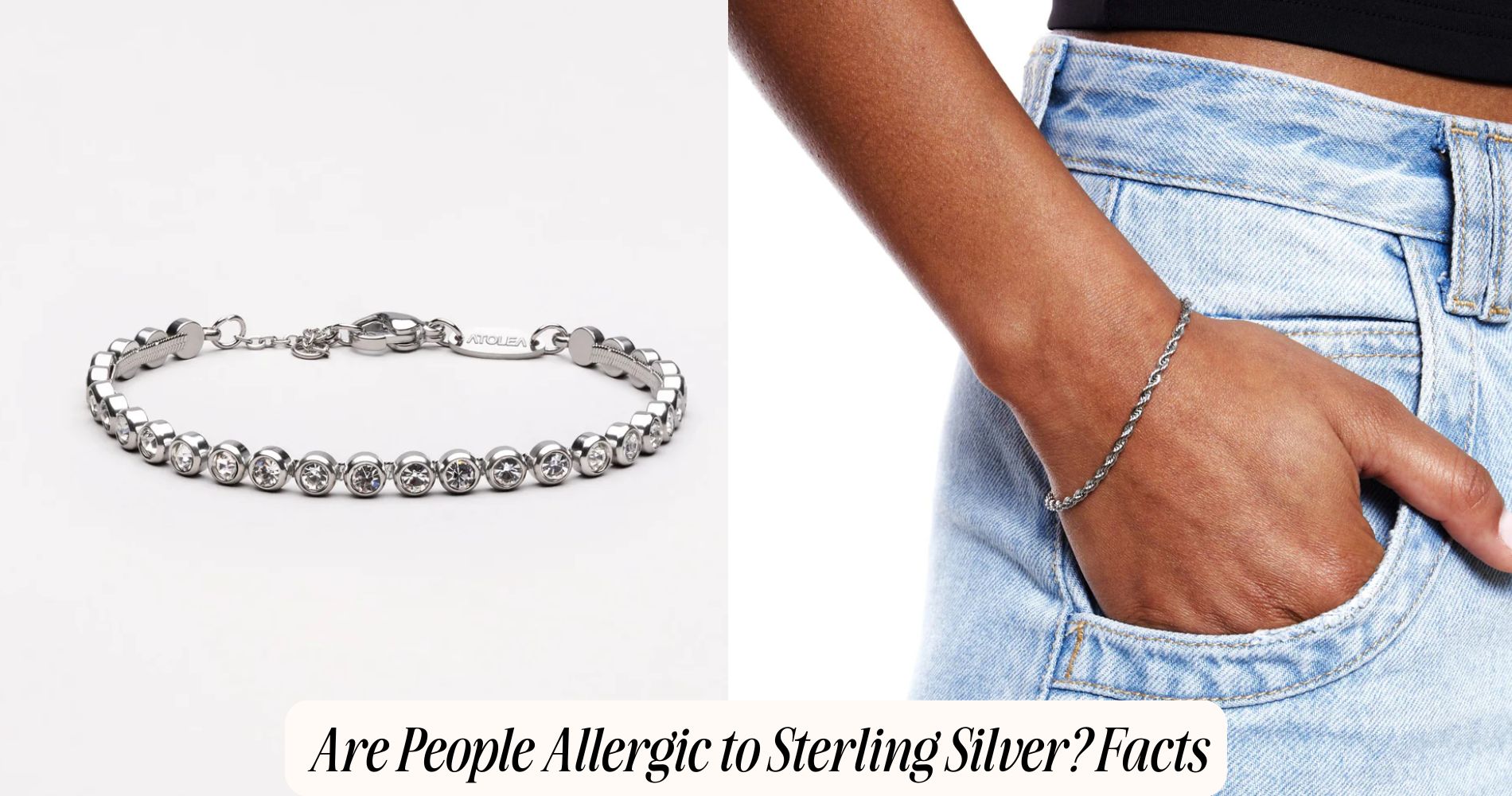
Are People Allergic to Sterling Silver? Facts
Are people allergic to sterling silver? Yes—you can react to sterling silver. Sterling is 92.5% silver mixed with copper (and sometimes trace nickel), which can release ions in sweat, low pH, and heat. Those ions may bind to skin proteins and trigger type IV hypersensitivity, causing itching, redness, and eczematous irritation. Tarnish can also trap sweat components and accelerate corrosion, making reactions more likely. Patch testing helps distinguish nickel sensitivity from a copper reaction. To reduce risk, clean jewelry often, store it dry, use barrier coatings, and remove pieces during exercise. For sensitive skin, options like a Hypoallergenic Necklace are a safer everyday alternative—and there’s more to know about choosing the right metal.
What Sterling Silver Is Made Of
Sterling silver is a metal alloy composed of 92.5% elemental silver (Ag) and 7.5% other metals, most commonly copper, added to increase hardness and durability.
You can confirm these composition details by hallmarking standards: “925” indicates the mass fraction of silver. The copper fraction raises yield strength, reduces creep, and improves wear resistance compared with fine silver, which is too soft for routine use.
Some manufacturers substitute part of the copper with zinc, germanium, or platinum-group elements to optimize tarnish resistance and casting behavior without altering the nominal 92.5% silver threshold.
You’ll also see its historical significance: medieval guilds codified the 925 standard, and modern ISO and ASTM specifications maintain it.
Mechanistically, the alloy’s microstructure—silver-rich matrix with dispersed solutes—governs hardness, tarnish kinetics, and workability.

Why Some People React to Sterling Silver
Although silver itself is largely inert on skin, you can react to the alloy’s minor constituents and corrosion products.
You’re not reacting to pure silver; you’re responding to small amounts of other metals and the ions they release with wear, sweat, and cosmetics. Moisture, acidity, and chloride from skin or environments accelerate tarnish and ion release, increasing exposure.
If you have baseline skin sensitivity, disrupted barrier function (eczema, friction, recent shaving), or prior metal allergies, your risk rises.
Ionic species act as haptens, binding epidermal proteins and triggering a type IV delayed hypersensitivity response mediated by T cells.
Clinically, you may notice pruritus, erythema, and eczematous plaques at contact sites.
Patch testing confirms sensitization patterns, guiding avoidance and material selection.
Nickel vs. Copper: The Usual Culprits
Some blame nickel, others point to copper—and both can be right. In sterling silver, trace contaminants or added alloys can drive distinct immune pathways.
If you’ve had prior nickel exposure, your risk for type IV hypersensitivity rises; memory T cells recognize nickel ions complexed with skin proteins, triggering eczematous dermatitis. Even low parts-per-million levels can reactivate sensitization.
Copper behaves differently. With copper sensitivity, divalent copper ions can bind histidine-rich proteins and alter antigen presentation, also provoking delayed hypersensitivity.
You might notice localized erythema, pruritus, and papules at contact points. Patch testing distinguishes mechanisms: standardized nickel sulfate detects nickel allergy; copper sulfate screens copper reactivity.
When results are positive, you’ll benefit from alloys certified nickel-free and low-copper formulations, plus vigilant labeling review to limit cumulative exposure.
Tarnish, Sweat, and Skin Chemistry
Beyond alloy composition, what happens on the metal’s surface—and on your skin—often determines whether you react. Silver oxidizes and sulfides form tarnish; these films can trap chloride, lactic acid, and urea from sweat, increasing ion release from copper or trace nickel.
Low pH sweat, higher temperature, and abrasion accelerate corrosion, raising metal ions that penetrate stratum corneum and bind proteins. You’re not reacting to “silver dust” but to bioavailable ions produced at the interface.
You can modify that interface. Prioritize tarnish prevention with frequent cleaning, dry storage, and anti-tarnish strips that limit sulfur exposure.
Improve sweat resistance by removing jewelry during exercise, rinsing skin after sweating, and drying thoroughly. Barrier coatings (rhodium plating, clear polymer films) reduce ion flux while preserving appearance.

Signs of True Allergy vs. Irritation
Because rashes from jewelry have different drivers, you need to distinguish allergic contact dermatitis from simple irritant reactions.
In a symptoms comparison, allergic dermatitis typically presents with delayed onset (12–72 hours after exposure), intense pruritus, well-demarcated erythema, papules or vesicles, and possible spread beyond the contact site via an immune-mediated cascade.
Irritant reactions appear quickly, sting or burn more than itch, stay confined to pressure or friction zones, and show dryness, scaling, or fissuring without vesicles.
Allergy triggers in sterling contexts usually involve trace nickel or copper leached by sweat, then haptenate skin proteins and activate T cells.
Irritants include acidic sweat, soap residues, and mechanical abrasion disrupting the barrier.
Chronicity favors allergy; rapid relief after removing the irritant favors irritation.
How to Test and Confirm Sensitivities
While symptoms offer clues, you confirm metal sensitivity by pairing controlled exposure tests with objective detection of allergenic metals.
Use dermatology-directed sensitivity testing to separate nickel contamination from true silver intolerance. Standardized patch testing applies calibrated allergens (nickel sulfate, cobalt chloride, palladium, silver nitrate) to your back for 48 hours, with readings at 48–96 hours. A positive, delayed eczematous reaction indicates T-cell–mediated contact allergy.
If ambiguous, repeat testing or perform use tests by taping the actual jewelry to intact skin under occlusion.
Augment this with metal release assessment. A dimethylglyoxime (DMG) swab detects nickel ions liberating from sterling components.
Consider XRF screening through a jeweler to identify alloy composition. Document exposures, timing, and lesion morphology to correlate dose, metal ion release, and clinical response.
Tips to Prevent Reactions When Wearing Silver
Although sterling silver is mostly inert, prevention hinges on limiting allergen release and skin penetration. Apply a thin barrier—petrolatum or silicone-based coating—on contact points to reduce ion transfer.
Keep pieces dry; sweat acidifies the microenvironment and accelerates corrosion, releasing nickel or copper ions. As preventive measures, remove jewelry before exercise, swimming, or sleep.
Clean items regularly with mild detergent, then dry thoroughly; polishing removes tarnish that can irritate.
Optimize skin care: moisturize with ceramide-based creams to strengthen the stratum corneum and reduce permeability.
Treat dermatitis flares early with short courses of low‑potency topical corticosteroids as guided by a clinician. Rotate wear to allow recovery of irritated sites.
Choose snug but not occlusive fit to minimize friction and maceration. Document triggers to refine exposure control.
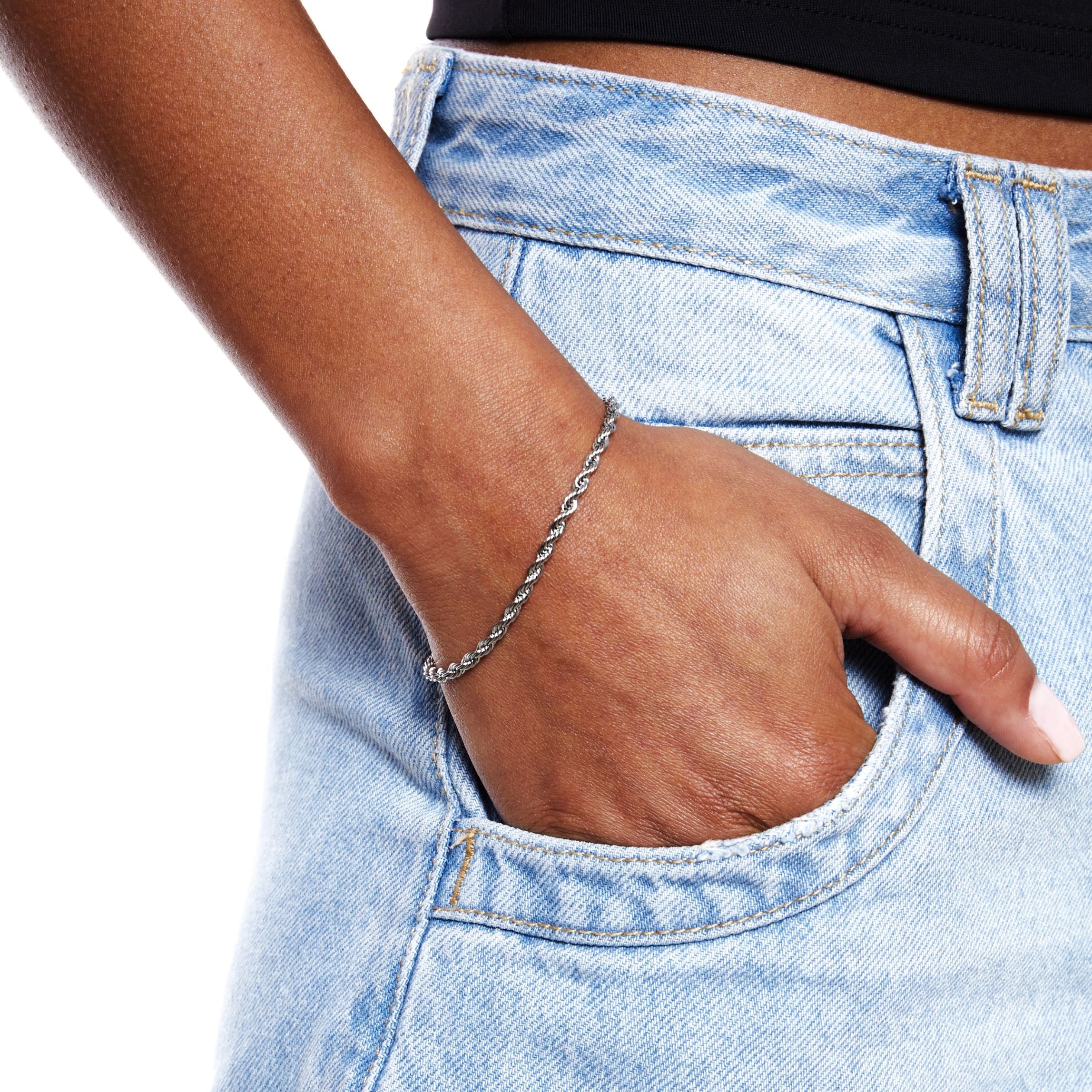
Alternatives and Hypoallergenic Options
Two reliable pathways reduce metal-triggered dermatitis: switch to inert materials and select verified low‑release alloys.
If you react to sterling silver, you’re likely responding to trace nickel or copper ions. Choose hypoallergenic metals with minimal ion release: medical‑grade titanium (Ti-6Al-4V ELI) and implant-grade niobium show excellent skin tolerance due to stable oxide layers. High‑karat platinum (≥950 Pt) and palladium are similarly inert.
For budget jewelry alternatives, look for 316LVM surgical steel; avoid generic “stainless” without composition data. Gold works if you use 18k or higher and confirm nickel‑free alloys.
Consider PVD‑coated pieces that physically block ion diffusion; ceramic, glass, or silicone provide fully nonmetal options. Verify “nickel‑free” claims with EU REACH-compliant testing or manufacturer release data to minimize sensitization and flares.
Frequently Asked Questions
Can Diet or Supplements Influence Reactions to Sterling Silver?
Yes, indirectly. Your dietary habits and supplement interactions can modulate skin barrier integrity and immune reactivity. Nickel contamination drives most issues; optimize zinc, essential fatty acids, and vitamin D, avoid high-nickel foods, and review biotin, collagen, and herbal supplements that provoke dermatitis.
Do Geographic Climates Affect Silver Sensitivity Prevalence?
Yes, geographic climates affect silver sensitivity prevalence. You’re influenced by geographic diversity via humidity, temperature, and sweat rates, which increase nickel ion release from alloys. Climate impact modifies skin barrier hydration, friction, and microbial flora, altering sensitization and elicitation thresholds.
Are Children More Susceptible to Sterling Silver Reactions?
Yes, but primarily due to nickel content, not silver. Children’s skin has thinner stratum corneum and higher permeability, increasing sensitization risk. You’ll see allergic reactions like pruritus and eczematous dermatitis. Choose nickel-free sterling or rhodium-coated pieces to reduce exposure.
Can Sterling Silver Cause Reactions Through Pierced Ears Only?
Yes, reactions can occur at pierced ears, but not exclusively. You’ll react wherever sterling contacts skin, depending on skin sensitivity and nickel content. Choose hypoallergenic piercing materials (titanium, niobium, implant-grade steel) to reduce ion release and inflammatory dermatitis.
Does Antique Silver Differ in Allergenicity From Modern Sterling?
Yes. You may react differently because antique silver properties often include higher nickel, copper, or unknown alloys, while modern silver composition (925 sterling) is standardized. Allergenicity hinges on nickel release, corrosion, and sweat-mediated ion dissolution. Patch-test guides decisions.
Conclusion
You don’t have to avoid sterling silver if you understand what triggers reactions. Most issues stem from nickel contamination, copper oxidation, and sweat-driven tarnish chemistry, not pure silver. Differentiate allergy (delayed eczematous dermatitis) from irritant reactions, then confirm with patch testing for nickel or copper. You can mitigate risk with rhodium plating, barrier coatings, dry skin care, and frequent cleaning. If symptoms persist, switch to verified nickel-free alloys, titanium, or implant-grade stainless steel for reliable biocompatibility.










,%20which%20can%20release%20ions%20in%20sweat,%20low%20pH,%20and%20h...)
Leave a comment
This site is protected by hCaptcha and the hCaptcha Privacy Policy and Terms of Service apply.